
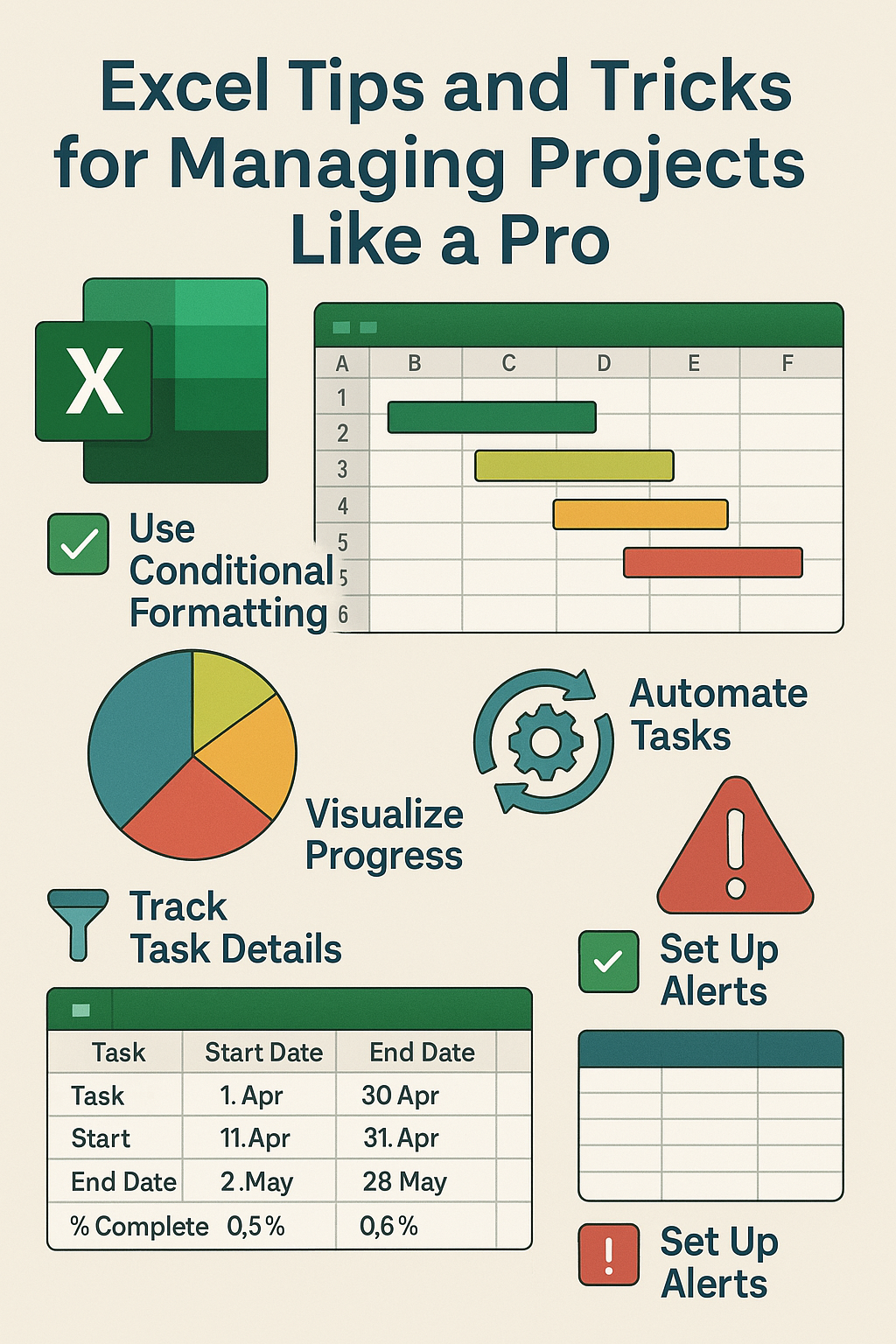
Excel Tips and Tricks for Managing Projects Like a Pro
Behind every successful project manager sits a spreadsheet that holds the chaos together. While fancy project management software dominates headlines, Excel remains the quiet workhorse that millions of professionals rely on daily. This familiar green-and-white grid transforms from a simple number cruncher into a sophisticated project command center when you know the right techniques.
Excel’s true power for project management lies not in its complexity, but in its flexibility. Unlike rigid software platforms, Excel adapts to any project structure, budget, or timeline. Whether you’re coordinating a small team initiative or overseeing a complex multi-phase project, the right Excel setup can streamline your workflow and keep stakeholders informed without breaking the budget or requiring extensive training.
Setting Up Your Project Management Foundation
Creating an effective project management system in Excel starts with proper structure and organization that will support your project from start to finish.
Designing Effective Project Templates
A well-designed template serves as the backbone of your project management system, providing consistency across different projects while saving time on setup. Start with a master workbook that includes separate sheets for different project aspects – timeline, budget, resources, and status tracking.
The key to template success lies in standardization. Use consistent column headers, date formats, and naming conventions across all sheets. This consistency makes it easier to switch between projects and reduces the learning curve for team members who need to access or update project information.
Consider creating multiple template versions for different project types. A software development project requires different tracking elements than a marketing campaign or construction project. Having purpose-built templates ensures you capture relevant information without cluttering the workspace with unnecessary fields.
Essential Worksheet Organization
Proper worksheet organization turns a chaotic collection of data into a coherent project management system. Each worksheet should serve a specific purpose and connect logically to other sheets in the workbook.
Key worksheets for comprehensive project management include:
- Project overview and summary dashboard
- Detailed task list with dependencies and assignments
- Resource allocation and capacity planning
- Budget tracking with actual vs. planned costs
- Risk register and issue tracking log
Link related information between worksheets using formulas and references. When you update a task completion date on the detail sheet, it should automatically reflect in your summary dashboard. This connectivity reduces manual updating and minimizes errors that occur when information gets out of sync.
Advanced Excel Features for Project Tracking
Excel’s built-in features provide powerful capabilities for project monitoring and analysis when properly configured and utilized.
Mastering Conditional Formatting for Visual Management
Conditional formatting transforms static data into dynamic visual indicators that highlight important information at a glance. For project management, this feature becomes essential for quickly identifying issues, bottlenecks, and priorities across complex project data.
Set up color-coded systems that immediately communicate status. Red cells can indicate overdue tasks, yellow for items due soon, and green for completed work. Use data bars to show progress percentages and icon sets to represent priority levels or risk ratings.
Create rules that automatically update based on data changes. When a task deadline passes without completion, the cell should turn red without manual intervention. When progress reaches 100%, the formatting should reflect completion status. This automation ensures your visual indicators remain accurate as the project progresses.
Leveraging Pivot Tables for Project Analysis
Pivot tables excel at summarizing and analyzing large amounts of project data, revealing patterns and insights that might be hidden in detailed task lists. These powerful tools help project managers understand resource utilization, identify bottlenecks, and generate reports for stakeholders.
Common pivot table applications for project management include analyzing task completion rates by team member, summarizing budget spending by category, and tracking milestone progress across different project phases. The ability to quickly reorganize and filter data makes pivot tables invaluable for answering specific questions that arise during project execution.
Creating Dynamic Charts and Dashboards
Visual dashboards communicate project status more effectively than rows of numbers, especially when presenting to executives or clients who need high-level information quickly. Excel’s charting capabilities, combined with dynamic data connections, create professional-looking dashboards that update automatically.
Build charts that tell the project story – budget burn rates, task completion trends, resource utilization patterns, and milestone achievement timelines. Use combination charts to show multiple metrics together, such as planned versus actual progress over time.
Link charts to your data tables so they update automatically as information changes. When you mark a task complete or update budget figures, the corresponding charts should reflect these changes immediately without manual chart editing.
Time Management and Scheduling Techniques
Effective project scheduling in Excel requires understanding how to work with dates, durations, and dependencies to create realistic and manageable timelines.
Building Gantt Charts That Actually Work
While Excel doesn’t include built-in Gantt chart functionality, you can create effective project timelines using stacked bar charts and clever formatting. A well-constructed Excel Gantt chart provides visual project scheduling without the cost and complexity of specialized software.
Start with a task list that includes start dates, durations, and finish dates. Use Excel’s date functions to calculate finish dates automatically based on start dates and durations. This automation ensures consistency and makes it easy to adjust schedules when changes occur.
Format your Gantt chart with colors that distinguish between different types of tasks, team assignments, or project phases. Add milestone markers to highlight key deliverables and decision points. Include today’s date as a vertical line to show current progress against the planned schedule.
Managing Dependencies and Critical Paths
Project dependencies determine which tasks must complete before others can begin, creating the critical path that drives overall project duration. Excel can track these relationships and help identify potential scheduling conflicts.
Essential dependency tracking features include:
- Automatic start date calculation based on predecessor completion
- Highlighting of critical path tasks that impact project completion
- Buffer time calculation for non-critical tasks
- Dependency conflict identification and resolution
- What-if scenario analysis for schedule changes
Use Excel’s logical functions to create dependency rules that prevent scheduling conflicts. When a predecessor task gets delayed, dependent tasks should automatically adjust their start dates to maintain logical sequencing.
Resource Management and Budget Control
Successful project management requires careful attention to both human resources and financial constraints, areas where Excel’s analytical capabilities prove particularly valuable.
Tracking Team Capacity and Workload
Resource overallocation causes project delays and team burnout, making capacity planning essential for project success. Excel helps track individual and team workloads to ensure realistic task assignments and identify potential bottlenecks before they impact project delivery.
Create resource calendars that show individual availability, taking into account vacation time, other project commitments, and working schedules. Calculate total available hours for each team member and track allocations against capacity to prevent overcommitment.
Monitor workload distribution to ensure balanced assignments across team members. Some Excel consulting professionals recommend using capacity utilization charts to visualize resource allocation patterns and identify opportunities for better load balancing.
Budget Tracking and Variance Analysis
Project budgets require constant monitoring to prevent cost overruns and ensure financial objectives are met. Excel’s calculation capabilities make it ideal for tracking actual spending against planned budgets and analyzing variances to understand spending patterns.
Key budget tracking elements include:
- Planned vs. actual cost comparison by category
- Cumulative spending curves showing burn rate trends
- Variance analysis with explanations for significant differences
- Forecast-to-complete calculations based on current spending patterns
Set up automated alerts using conditional formatting to highlight budget categories that exceed predefined thresholds. This early warning system helps project managers take corrective action before minor variances become major problems.
Communication and Reporting Excellence
Clear communication keeps stakeholders informed and engaged while reducing the time spent answering status questions and preparing ad-hoc reports.
Automated Status Reports
Manual report preparation consumes valuable project management time that could be better spent on actual project work. Excel’s automation capabilities can generate professional status reports that update automatically as project data changes.
Design report templates that pull key information from your project tracking sheets – milestone progress, budget status, risk updates, and upcoming deliverables. Use lookup functions and conditional logic to populate report sections automatically based on current project data.
Create executive summary sections that highlight the most important information for senior stakeholders, while providing detailed backup data for team members who need operational details. This layered approach ensures each audience gets relevant information without information overload.
Stakeholder Communication Tools
Different stakeholders need different information at varying levels of detail and frequency. Excel can support multiple communication needs from a single data source, reducing duplication while ensuring consistency across all project communications.
Develop standardized communication formats for regular project updates, including dashboard views for executives, detailed progress reports for team leads, and specific metric tracking for functional managers. Link all communications to the master project data to ensure accuracy and reduce preparation time.
Troubleshooting Common Excel Project Management Challenges
Even experienced Excel users encounter obstacles when managing complex projects, but most issues have straightforward solutions that improve overall system reliability.
Understanding common problems helps prevent issues before they impact project delivery. File size limitations can slow performance when projects generate large amounts of data. Version control becomes critical when multiple team members need access to project information. Data integrity risks increase when manual entry creates opportunities for errors.
Address these challenges through proper file organization, clear update procedures, and automated data validation rules. Regular file maintenance, including archiving completed projects and cleaning up unnecessary data, keeps Excel running smoothly throughout the project lifecycle.
These Excel tips and tricks for project management help transform Excel from a basic spreadsheet tool into a comprehensive project command center. The key lies in understanding how Excel’s features work together to create integrated systems that support all aspects of project delivery.
Conclusion
Excel transforms from a simple calculation tool into a sophisticated project management platform when configured thoughtfully and used systematically. The techniques outlined here provide a foundation for managing projects more effectively while maintaining the flexibility and cost-effectiveness that make Excel appealing to organizations of all sizes.
Success depends on the consistent application of best practices rather than advanced technical skills. Start with solid organizational principles, add automation gradually, and focus on creating systems that support decision-making rather than consuming time with maintenance tasks. With proper setup and execution, Excel becomes a powerful ally in delivering successful projects on time and within budget.
Read More: Crackstreams review