
Snapchat Planets Explained: Meaning of the Friend Solar System
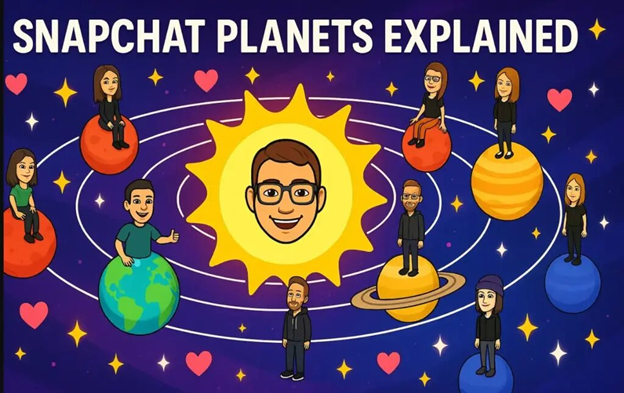
Have you ever been curious about the Snapchat Planets feature? You’re in for a treat. Many users ponder over the same question: “What does my Friend Solar System say about me?” This guide unravels one of Snapchat’s most intriguing features. The Friend Solar System features your eight closest friends, presenting them as planets orbiting around you, the Sun. The closer the planet, the higher that friend ranks in your interactions on Snapchat. It’s not just a design, it’s a fun way to visualize your Snapchat activity.
This design isn’t just for fun. Many users treat it as a measure of closeness, asking, “Why is someone Mercury instead of Jupiter?” Why did my planet change overnight? Because the system is tied to your activity, it shifts as you send snaps, maintain streaks, and chat. That’s why your planet rank might feel meaningful one day and surprising the next. It’s this dynamic nature that keeps the feature interesting and worth exploring.
The feature has also sparked debate. Some people enjoy seeing their “place” in a friend’s orbit, while others feel anxious about being pushed further out. Snapchat eventually made it optional, available only through Snapchat+, after complaints about stress and comparison. Remember, it’s your choice to use this feature. If it adds unnecessary stress, you can always deactivate it.
In this article, you’ll learn what the Snapchat Friend Solar System is and what each planet’s position means. You’ll also find tips on how to use the feature without causing unnecessary stress in your friendships. Let’s break it down step by step.
Table of Contents
What is Snapchat Friend Solar System?
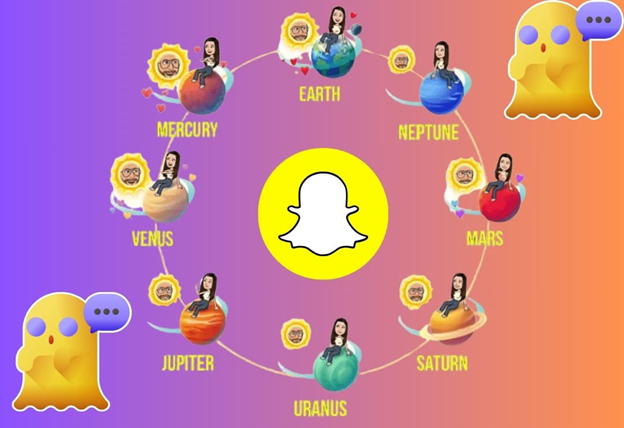
The Snapchat Friend Solar System is part of Snapchat+, the paid subscription that adds experimental features. In this system, your friends are shown as planets while you appear as the Sun. It’s a visual way of displaying your Best Friends list.
Each of the eight planets represents a ranking. Mercury is in first position, Venus is second, and so on until Neptune in eighth place. The closer the planet is to the Sun, the stronger the interaction between you and that friend. For example, if someone is your Mercury, you exchange snaps, chats, and streaks with them more than anyone else. If they are Neptune, they are still in your top eight but with less frequent activity.
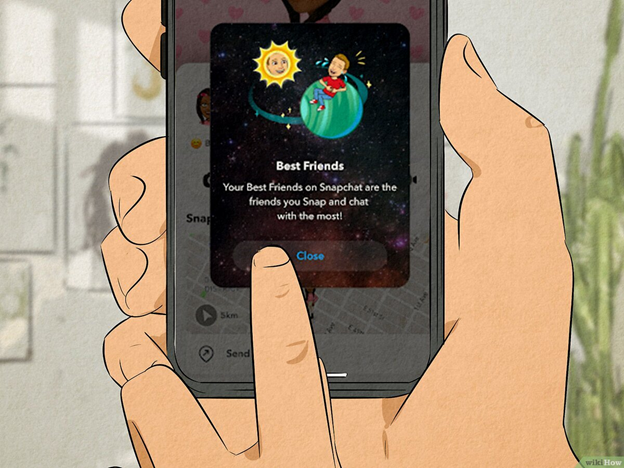
You can see the planets by going to a friend’s Friendship Profile. If both of you subscribe to Snapchat+, a small badge appears. Tapping this badge opens the Solar System view. If the badge says Best Friends, it means you’re in each other’s top eight. If it says Friends, you’re in their top eight, but they aren’t in yours.
The feature doesn’t expose exact numbers of snaps or streak lengths. Instead, it simplifies the ranking into a space theme. That makes it easy to glance at where you stand, but also easy to misinterpret if you treat it as a measure of real-life closeness.
Exclusive to Snapchat+ → Only subscribers can use and see the planets.
Top 8 friends only → Each is assigned a planet from Mercury to Neptune.
Algorithm-driven → Based on snap frequency, chats, and group activity.
Dynamic positions → Rankings change quickly as habits shift.
Not about feelings → Planet placement doesn’t measure real friendship.
Optional feature — feel free to turn it off whenever you like if it’s not needed unhelpful.
How Snapchat Planets Work?
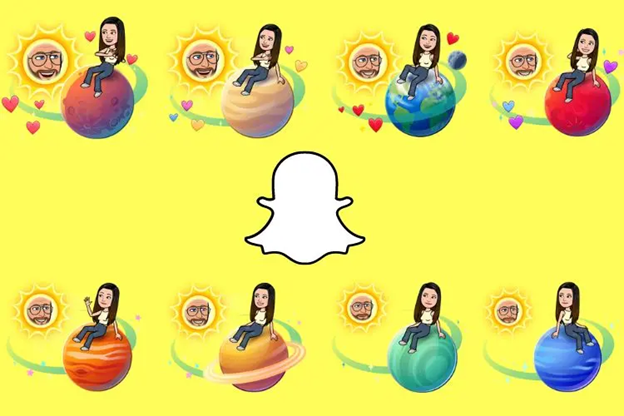
The Snapchat Friend Solar System looks simple, but there are specific rules behind it. Here’s how it actually works:
Where To Find The Planets
- Open a friend’s Friendship Profile.
- If you both use Snapchat+, you’ll see a small badge under their name.
- Tap the badge → this opens the Solar System view.
- You’ll see yourself as the Sun and your friend as one of the eight planets.
The Order Of Planets
- Mercury → #1 spot (your closest friend on Snapchat).
- Venus → #2.
- Earth → #3.
- Mars → #4.
- Jupiter → #5.
- Saturn → #6.
- Uranus → #7.
- Neptune → #8.
- This order never changes. What changes is which friend sits in which position based on your activity.
What Counts As “Interaction”
Snapchat doesn’t publish the exact formula, but users report the following affects your planet ranking:
- Sending and receiving snaps.
- Maintaining streaks.
- Direct chats.
- Sharing stories and viewing each other’s snaps.
- Frequency and recency of contact.
- The system updates regularly, which is why someone can move from Venus to Saturn in just a few days if your chat slows down.
Best Friends Vs Friends Badge
- Best Friends badge → You are in each other’s top 8.
- Friends badge → You are in their top 8, but they aren’t in yours.
- This difference often causes drama, since people assume it reflects feelings rather than app activity.
Important Limits To Remember
- Only Snapchat+ subscribers see the Solar System.
- Only your top eight friends are included.
- The display is based on activity, not emotions.
- Positions shift often, sometimes daily.
What Each Planet Position Means
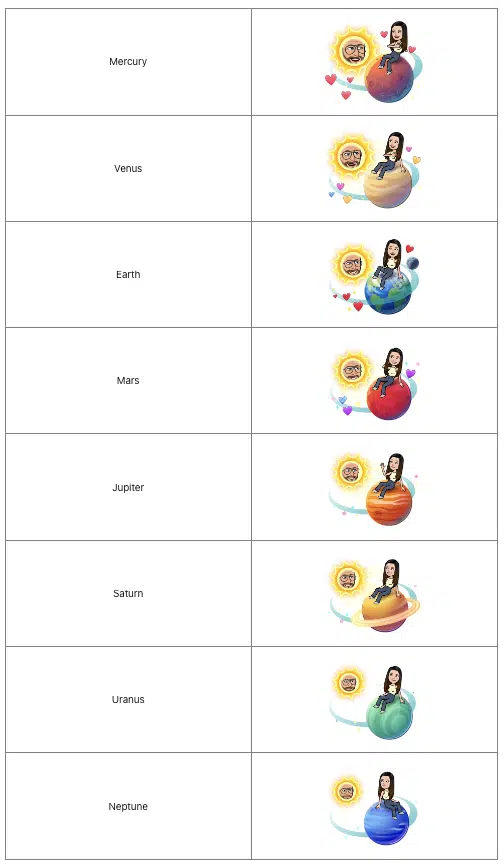
Below, I explain each planet, what rank it represents, the app behaviors that typically produce that rank, the social signal it sends, and one short, practical action you can take. Use this as a working map — the planets reflect app activity, not emotional truth.
Mercury — #1 (your closest on the app)
What it means: You exchange the most snaps and chats with this person.
Typical behaviors: Daily snaps. Long streaks. Fast open times. Frequent one-to-one chats.
Social signal: They’re your top contact on Snapchat. That indicates frequent, regular interaction — not necessarily a more profound friendship offline.
If you want it: Snap first, keep streaks, reply fast to their stories.
If they ask: “We chat a lot — that’s why you’re Mercury.” (Short, factual.)
Venus — #2
What it means: Second-most frequent interactions.
Typical behaviors: Regular snaps and DMs. Often in the same small group chats.
Social signal: Close contact, but slightly less than Mercury. Often a close friend or frequent contact.
If you want it: Increase short, regular check-ins (a quick snap a few times a week).
If they ask: “You’re nearly my top snap mate — just less than Mercury.”
Earth — #3
What it means: Third-highest interaction.
Typical behaviors: Often opens your snaps, reacts sometimes, replies to stories.
Social signal: Stable, friendly interaction. You appear in their regular rotation.
If you want it: Send more personal snaps (not just memes). One meaningful snap every few days helps.
If they ask: “We talk regularly; that’s Earth.”
Mars — #4
What it means: Mid-rank friend.
Typical behaviors: Intermittent chats and occasional streaks. Interaction is consistent but not constant.
Social signal: A solid friend or an active acquaintance. You matter, but you’re not in the top circle.
If you want it: Start a small streak or reply to their snaps faster, go ahead.
If they ask: “You’re in my regular friends list, Mars — not the daily top two though.”
Jupiter — #5
What it means: Casual but recurring interaction.
Typical behaviors: You exchange snaps sometimes; you might interact mostly in group stories.
Social signal: Friendly, often social/contact-based rather than close.
If you want it: DM more one-to-one content. Stop relying only on group posts.
If they ask: “You pop up in my feed — that’s why you’re Jupiter.”
Saturn — #6
What it means: Occasional contact.
Typical behaviors: Rare direct snaps. You show up in story viewers sometimes.
Social signal: You are on their radar but not a go-to.
If you want it: Send short, personal snaps now and then. A single interesting snap can move you up.
If they ask: “You’re still among my top eight — just not often.”
Uranus — #7
What it means: Low but present engagement.
Typical behaviors: Mostly passive (views stories, reacts rarely). Little direct chat.
Social signal: A distant contact or occasional friend.
If you want to start a one-off conversation, ask something specific. If they reply, you climb.
If they ask: “You’re in my top eight, but we don’t chat a lot.”
Neptune — #8 (the outer slot)
What it means: The least-engaged person in someone’s top eight.
Typical behaviors: Infrequent snaps, occasional views, possibly seasonal (summer friend, holiday contact).
Social signal: You’re still notable, but not active. People sometimes panic about being Neptune; don’t.
If you want it: Reintroduce yourself with a casual snap. One or two thoughtful messages in a week can shift you.
If they ask: “We’re still in each other’s top eight — just less often.”
History & Controversy of Snapchat Planets
The Friend Solar System is one of the most talked-about features in Snapchat+, but it’s also one of the most controversial. To understand why, it is helpful to examine when it was launched, how users reacted, and the debates it sparked.
When Snapchat Introduced The Planets
Snapchat first launched its paid subscription service, Snapchat+, in June 2022. Alongside early perks like profile badges and custom icons, the Friend Solar System was rolled out as a premium feature. The idea was straightforward: instead of simply listing your top friends, the app would visualize them as planets orbiting around you, the Sun. By linking digital friendship with a playful planetary ranking system, Snapchat created a feature that instantly caught attention.
Why Snapchat Created It
The design wasn’t accidental. Snapchat aimed to make friendships feel more engaging and visual, while also providing users with a reason to subscribe to Snapchat+. The planets tapped into Gen Z’s interest in astrology, symbols, and personality-based representations. It also encouraged viral sharing — screenshots of Mercury, Venus, or Neptune placements quickly spread on other social platforms, boosting Snapchat’s visibility.
Initial Reactions
Initial reactions were mixed. Some users loved the feature because it added a playful, light-hearted element to their interactions. Seeing themselves as Mercury in a friend’s orbit felt validating and fun. Others appreciated the astrological vibe, treating it as entertainment rather than a serious matter. But not everyone saw it positively. For many, the feature was too revealing. It laid out a clear order of closeness that could easily be misinterpreted. Instead of being a harmless badge, it started to create tension between friends.
Criticism And Backlash
Criticism grew as the feature gained attention. Some users felt the Solar System pressured people into maintaining streaks or constant communication just to hold onto a planet position. Others raised mental health concerns, pointing out that the feature encouraged unhealthy comparison and insecurity. Several tech writers and cultural commentators raised questions about whether gamifying intimacy was a good idea. Privacy was another concern — even though the system required both people to have Snapchat+, it still revealed information about who users interacted with most frequently.
Why Snapchat Made It Opt-In
Snapchat responded to some of this by making the feature opt-in. You only see the planets if both people subscribe to Snapchat+ and agree to participate. This move reduced the risk of exposing private interactions to people who didn’t want to share them. It also allowed Snapchat to frame the Solar System as a “fun extra” rather than a core part of the platform. Still, even with this limitation, it remains one of the app’s most controversial features — loved by users who enjoy the playfulness, and disliked by those who feel it complicates relationships unnecessarily.
Practical Tips for Using Snapchat Planets
The Snapchat Friend Solar System can be entertaining, but it also has the potential to cause unnecessary stress. If you want to make the most of it without letting it complicate your friendships, there are a few practical ways to approach it.
Remember, It Reflects Activity, Not Emotion
The Snapchat Friend Solar System is based only on how often you interact with someone on the app. It doesn’t measure the depth of your relationship. You might see a best friend in real life placed as Neptune simply because you don’t exchange many snaps. Keeping this in mind stops you from attaching unnecessary emotional meaning to your planet position.
Expect Frequent Changes
Your planet position isn’t permanent. It changes when your snapping habits change. If you’ve been active with one person for a week, they may move closer to Mercury. If you’ve been inactive, you may slide out toward Saturn or Neptune. These shifts happen quickly, so don’t read them as signs of weakening friendship — they are simply reflections of recent activity.
Control What You See And Share
The Solar System is available only to Snapchat+ users who enable it. If you find that the feature causes stress, jealousy, or arguments, you can simply avoid turning it on. Since it’s optional, you won’t miss out on core Snapchat functions. Sometimes the best way to avoid drama is not to use the feature at all.
Use It As A Fun Signal, Not A Competition
Being Mercury in someone’s orbit can feel validating, but being placed further out doesn’t make you less important. Instead of treating the planets as a ranking to compete over, you can use them playfully. For example, joke about being Saturn or challenge a friend to snap more often so you can “move closer to the Sun.” Treating it lightly makes the feature more enjoyable.
Separate Online And Offline Friendships
Snapchat only records what happens inside the app. It doesn’t reflect the time you spent together in person or your conversations on other platforms, such as WhatsApp, Instagram, or regular texting. If someone isn’t your Mercury, that doesn’t mean the friendship is weaker — it just means your bond shows up in other spaces. Keeping this separation in mind helps you avoid overvaluing the planets.
Comparison with Other Social Media "Ranking" Features
Platform | Feature | How It Works | Difference from Snapchat Planets |
Close Friends | You manually select who sees your private Stories. | Complete control, no ranking, privacy-focused. | |
TikTok | Besties / Interaction Signals | The algorithm prioritizes the people with whom you interact the most. | There is no visible ranking; influence occurs quietly in the feed. |
Facebook (past) | Top Friends | You hand-picked friends to feature on your profile. | Manual selection, not algorithm-driven, was eventually removed due to drama. |
Misconceptions and Myths about Snapchat Planets
Myth 1: Planet Position Equals Friendship Value
Many people assume that being Mercury means you are someone’s “best friend” in real life, while Neptune means you are less critical. In reality, the ranking only reflects how often you interact on Snapchat. It doesn’t measure loyalty, trust, or emotional closeness. A childhood best friend might still appear as Neptune if you rarely use Snapchat to talk to them.
Myth 2: Planets Are Permanent
Some users believe that once they reach Mercury, they’ll stay there. The truth is, rankings are constantly shifting. A brief break from snapping or chatting can transport someone to Mars or Saturn within a matter of days. Positions are dynamic, not fixed.
Myth 3: Group Chats Don't Count
It’s easy to think only one-on-one snaps matter, but group chats can also push someone higher in your orbit. If you’re active in a busy group, people from that chat might suddenly move up in your Solar System. This often surprises users who don’t realize group activity plays a role.
Read More: What is Snapinsta
Myth 4: Everyone Can See Your Planets
Some assume all their friends can see who is in their Solar System. In fact, only Snapchat+ subscribers who enable the feature can view it, and both people must have Snapchat+ for the planets to appear. It’s not automatically public information.
Myth 5: Different Views Mean Cheating Or Lying
Sometimes you’ll see a friend as Mars, but they see you as Jupiter. This doesn’t mean someone is hiding something. The Solar System is based on each user’s perspective, so that rankings can differ. Sync delays or algorithm quirks can also cause mismatches.
Conclusion: Snapchat Planets
The Snapchat Friend Solar System is one of the most creative features in Snapchat+. Turning your closest friends into planets orbiting around you makes digital connections feel visual and playful. But at the same time, it also creates space for misunderstanding.
The key thing to remember is that the Solar System is an activity-based, not an emotion-based, system. Your position as Mercury, Saturn, or Neptune only reflects how often you interact on Snapchat, not the strength of your real-life bond. Friendships are much bigger than streaks, stories, or snaps.
For some, the feature is entertaining as it is a light way to see who they’re snapping most. For others, it can create jealousy or drama. That’s why Snapchat made it part of Snapchat+ and kept it optional. You can use it if you enjoy it, or ignore it if it causes stress.
FAQ: Snapchat Planets
Yes. The Friend Solar System is only available to Snapchat+ subscribers. Both you and your friend must have Snapchat+ enabled to see each other’s planet positions.
Only your top eight friends are shown. Each one is assigned a planet, from Mercury (closest) to Neptune (least close in the top eight).
No. The ranking is automated and based entirely on interaction activity. You cannot manually place someone in a particular orbit.
The Solar System is unique to each user. Your top eight may not match your friend’s, so you could appear as Mercury for them while they appear as Mars for you. This is normal and doesn’t mean something is wrong.
Yes. Activity in group chats counts toward interaction. If you’re in an active group, those friends may rise higher in your Social Circle.
Yes. Since it’s part of Snapchat+, you can turn off the feature. If you don’t want anyone to see your planets, you can turn them off in settings.