
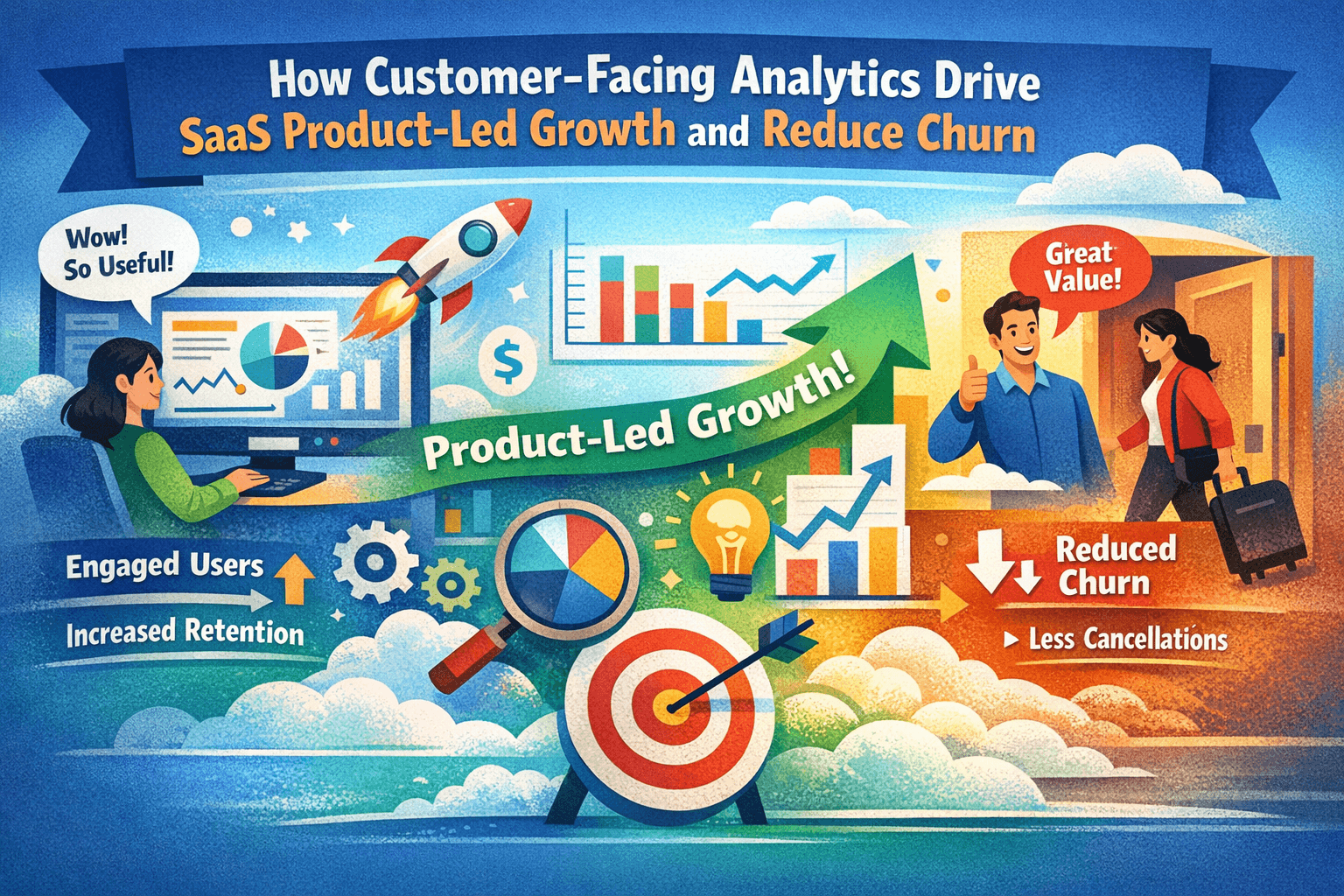
How Customer-Facing Analytics Drive SaaS Product-Led Growth and Reduce Churn
In the competitive SaaS landscape, product-led growth (PLG) has emerged as a dominant strategy. But what fuels this engine of acquisition, retention, and expansion? The answer lies in data, specifically, the insights gleaned from customer-facing analytics. By embedding analytics directly into their products, SaaS companies can empower users, demonstrate value, and create a virtuous cycle of engagement and growth. This is not just a trend; it’s a fundamental shift in how software companies create value.
For SaaS businesses, the ability to retain customers is just as important as acquiring them. High churn rates can cripple even the most promising ventures. Customer-facing analytics provide a powerful antidote to churn by offering a clear, data-backed view of how users are interacting with the product. This allows for proactive interventions, personalized onboarding, and a deeper understanding of user needs. The strategic implementation of customer-facing analytics is no longer a “nice-to-have” but a critical component of a successful PLG strategy.
The Symbiotic Relationship Between PLG and Customer-Facing Analytics
Product-led growth is a go-to-market strategy that relies on the product itself as the primary driver of customer acquisition, conversion, and expansion. This approach is in stark contrast to traditional sales-led models, where growth is driven by a large sales team. For PLG to be effective, the product must be intuitive, engaging, and, most importantly, demonstrate its value quickly. This is where customer-facing analytics come into play.
Empowering Users with Actionable Insights
By embedding analytics directly into the user experience, SaaS companies can provide customers with immediate, actionable insights. This not only enhances the value of the product but also fosters a sense of empowerment. When users can see the direct impact of their actions and make data-driven decisions, they are more likely to become engaged, loyal customers. This is a core tenet of the PLG model: the product sells itself by demonstrating its value.
Creating a Frictionless User Experience
In a PLG model, the user journey must be as frictionless as possible. Any barriers to entry or moments of confusion can lead to drop-off. Customer-facing analytics can help to streamline the user experience by providing clear, concise information at the point of need. This can include everything from interactive dashboards to personalized reports. The goal is to make the product so intuitive that users can onboard themselves and start realizing value immediately. This is a key lesson from many Successful SaaS Startups: Lessons from Industry Leaders.
Leveraging Customer-Facing Analytics to Reduce Churn
Customer churn is the silent killer of SaaS businesses. Even a small increase in churn can have a significant impact on revenue and growth. Customer-facing analytics provide a powerful arsenal of tools to combat churn by enabling a proactive, data-driven approach to customer retention.
Identifying At-Risk Users
By tracking user engagement and behavior, SaaS companies can identify at-risk users before they churn. This can include users who are not fully utilizing the product, those who have experienced technical issues, or those whose usage has declined over time. Once these users have been identified, targeted interventions can be implemented to re-engage them and address their concerns. This proactive approach is far more effective than waiting for users to cancel their subscriptions.
Personalizing the Onboarding Experience
A poor onboarding experience is a major driver of churn. If users do not understand how to use the product or do not see its value quickly, they are likely to abandon it. Customer-facing analytics can be used to personalize the onboarding experience by providing users with relevant, timely information based on their specific needs and goals. This can include interactive tutorials, guided walkthroughs, and personalized recommendations. By tailoring the onboarding experience to each user, SaaS companies can significantly increase the likelihood of long-term adoption.
Demonstrating ROI
At the end of the day, customers will only continue to use a product if they believe it is providing a positive return on investment. By providing users with data on their usage, performance, and outcomes, an embedded analytics platform can make a powerful case for the value of their product. This is particularly important for B2B SaaS companies, where purchasing decisions are often based on a clear business case.
The Future of SaaS is Data-Driven
The SaaS landscape is constantly evolving, but one thing is clear: the future is data-driven. As competition intensifies, the ability to leverage data to create a superior customer experience will be the key differentiator. Customer-facing analytics are at the heart of this transformation, enabling SaaS companies to build better products, reduce churn, and drive sustainable growth.
For SaaS companies that have not yet embraced customer-facing analytics, the time to act is now. The tools and technologies are more accessible than ever, and the potential rewards are immense. By putting data at the center of their product strategy, SaaS companies can unlock new levels of growth and create a sustainable competitive advantage.
In the age of the customer, a product-led growth strategy powered by customer-facing analytics is the key to success in the SaaS industry. By empowering users with data, personalizing the customer experience, and demonstrating a clear return on investment, SaaS companies can reduce churn, increase customer loyalty, and drive sustainable growth. As you embark on this journey, remember that data security and compliance are paramount.