
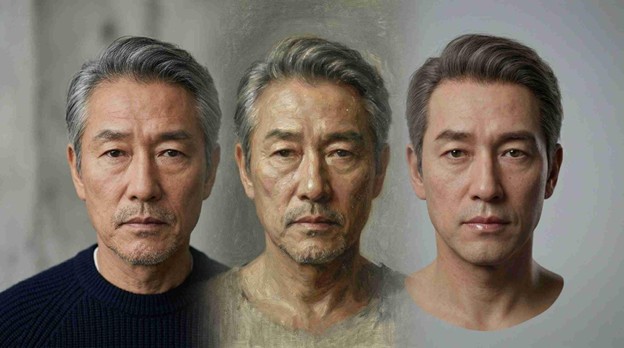
How Face Swap AI Works Across Photos, Artistic Styles, and Rendered Visuals
Creative ideas rarely stay in one format anymore.
A single concept might begin as a product image, evolve into a stylized illustration, and later appear inside a rendered visual for advertising or motion content. The real challenge is not creating each version individually, but keeping identity consistent as it moves across these formats.
That is where most workflows start to lose alignment.
Faces, expressions, and visual tone often shift depending on how the content is produced. Even when the core idea remains the same, the output can feel disconnected.
Face Swap introduces a different approach. Instead of rebuilding identity for each format, it focuses on adapting identity across them. Early in the workflow, Face Swap can be used within the Higgsfield ecosystem to maintain consistency across visual styles without recreating the entire composition.
Why Identity Breaks Across Formats
Each visual format follows its own logic.
Photographs depend on real-world lighting and texture. Artistic visuals reinterpret form through style and abstraction. Rendered visuals simulate depth, structure, and controlled environments.
Because of these differences, identity does not translate directly.
A subject that looks natural in a photograph may feel out of place in a stylized version. Recreating identity manually across formats introduces inconsistencies and slows down the process.
Moving Away From Rebuilding Visuals
Traditional workflows treat every format as a separate task.
Designers and creators often:
- Recreate faces manually
- Adjust visuals for each format
- Accept slight inconsistencies
This approach works, but it does not scale.
Face Swap changes this by shifting from recreation to adaptation.
Instead of rebuilding identity, it modifies it within the existing visual structure. This reduces duplication and improves consistency.
How Face Swap AI Adapts Across Styles
Modern face swap systems do more than replace faces.
They reinterpret identity based on the visual context.
This involves:
- Matching lighting conditions
- Adjusting texture and detail
- Aligning with the composition of the image
The result feels integrated rather than layered.
Higgsfield Face Swap is built around this principle, ensuring that identity adapts naturally whether the output is realistic or stylized.
Working With Photographic Content
Photographs are still the most common use case.
Here, accuracy matters.
The system needs to:
- Align facial structure precisely
- Blend with existing lighting
- Maintain consistent skin tones
Higgsfield Face Swap preserves these elements while keeping the original composition intact.
Because the base image is unchanged, the output remains stable and usable for production.
Adapting Identity to Artistic Styles
Artistic visuals introduce a different kind of challenge.
They are not based on realism, but interpretation.
This means identity must be adjusted to match:
- Color palettes
- Texture styles
- Levels of abstraction
Face Swap handles this by adapting identity instead of forcing realism.
This allows a subject to appear naturally within:
- Illustrations
- Digital artwork
- Stylized campaign visuals
Higgsfield Face Swap ensures that identity remains recognizable even when the visual style changes significantly.
Applying Face Swap to Rendered Visuals
Rendered visuals add another layer of complexity.
They simulate depth, perspective, and controlled lighting environments.
Instead of working with flat images, the system must align identity with these structured visuals.
Face Swap supports this by adapting identity to visuals that represent:
- Product renders
- Virtual environments
- Motion-ready assets
Within workflows on the Higgsfield, this creates a connection between static and dynamic content.
Why This Changes Creative Workflows
The ability to adapt identity across formats changes how content is produced.
Instead of building separate assets, creators can:
- Start with a base visual
- Extend identity across formats
- Maintain consistency throughout
This reduces production time and simplifies workflows.
It also makes it easier to experiment with different creative directions.
A More Unified Creative Process
Creative workflows are often fragmented.
Different formats require different tools and processes.
Face Swap introduces a more unified approach.
By allowing identity to move across formats, it reduces fragmentation and improves alignment.
Higgsfield Face Swap plays a key role in this shift by supporting outputs that work across multiple visual styles.
Where Cross-Style Adaptation Matters Most
This capability becomes especially valuable in scenarios where consistency is critical.
For example:
- Campaigns spanning multiple formats
- Brand identity across platforms
- Projects combining realistic and stylized visuals
Instead of recreating identity for each format, it can be adapted directly.
This improves efficiency and reduces inconsistencies.
From Editing to Identity Adaptation
Face swap is no longer just about editing images.
It is about adapting identity across visual environments.
This requires:
- Understanding different formats
- Preserving key identity features
- Integrating seamlessly into each context
Higgsfield Face Swap reflects this shift by enabling flexible and consistent outputs.
Why This Matters Now
Content is no longer static.
Ideas move across platforms, formats, and styles.
Creators need tools that help maintain consistency while adapting to different visual contexts.
Face Swap makes identity portable.
Instead of being tied to a single format, it can move across multiple environments without losing coherence.
Conclusion
Face swap technology has evolved far beyond simple image editing.
Its ability to work across photos, artistic styles, and rendered visuals makes it a powerful tool for modern content creation.
By enabling identity to adapt across formats, it supports more consistent and scalable workflows.
Higgsfield Face Swap, as a dedicated tool within the Higgsfield ecosystem, represents this shift toward more flexible and integrated creative processes.
As content continues to expand across formats, this level of adaptability will become essential.