
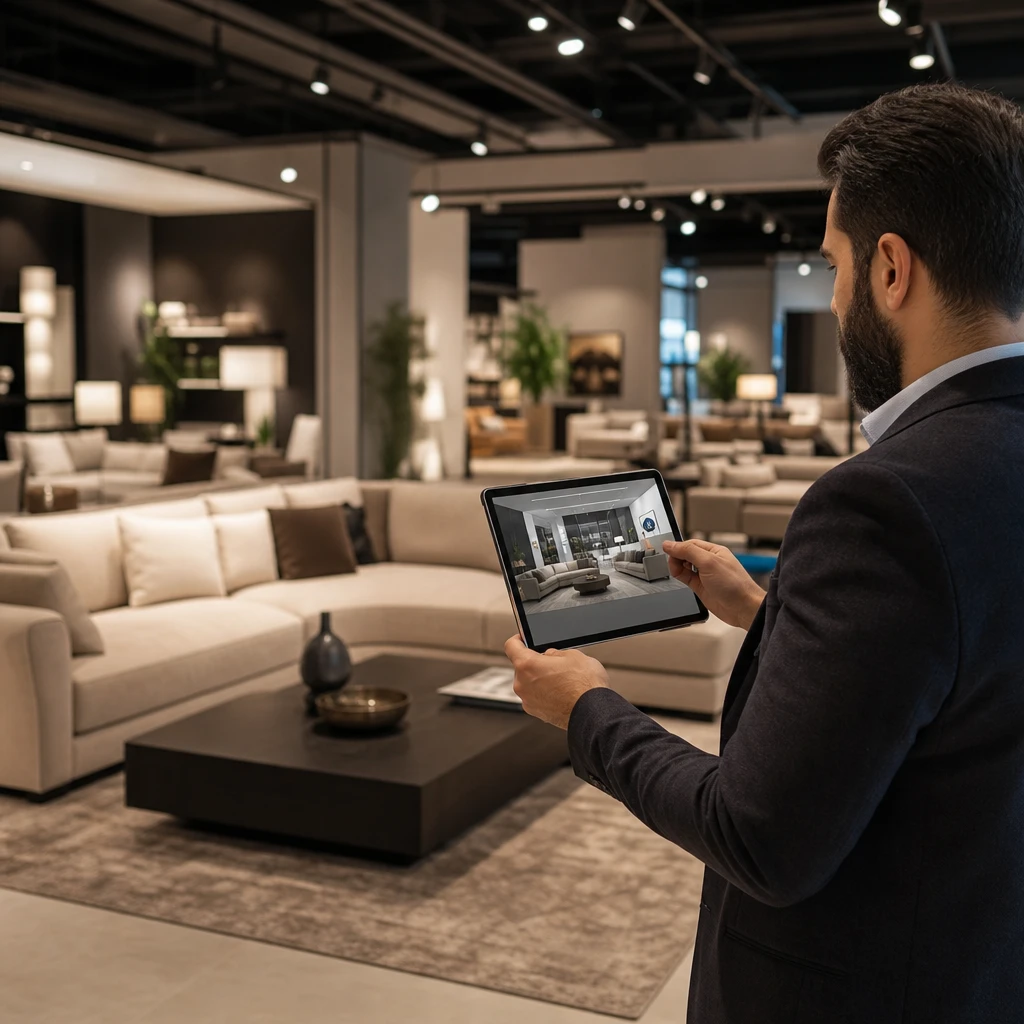
How Retail Technology Is Transforming Furniture Stores
The furniture retail industry has always operated on a unique rhythm — long sales cycles, high-ticket transactions, complex inventory management, and deeply personal customer relationships. For decades, furniture stores relied on manual processes, paper-based records, and disconnected systems that made scaling difficult and customer experience inconsistent. Today, that landscape is changing rapidly. A convergence of point-of-sale innovation, e-commerce integration, and intelligent marketing automation is giving furniture retailers the tools they need to compete in a market that increasingly demands both in-store excellence and seamless digital engagement.
The Unique Challenges Facing Furniture Retailers Today
Furniture retail is not like selling clothing or electronics. The average transaction involves significant deliberation, multiple store visits, custom orders, and delivery logistics that can span weeks. Managing all of this without a robust operational backbone leads to missed opportunities, frustrated customers, and revenue leakage that is difficult to trace. Inventory alone presents a formidable challenge — furniture stores often carry hundreds of SKUs across multiple finishes, sizes, and configurations, with stock distributed across showrooms and warehouses.
Beyond inventory, the customer journey in furniture retail is fragmented. A shopper might browse online, visit a showroom, speak with a sales associate, and then complete the purchase days later through a different channel entirely. Without a unified system that tracks this journey end to end, retailers lose visibility into what is driving conversions and where customers are dropping off. This is precisely why technology investment in this sector has accelerated so dramatically in recent years.
Why Point-of-Sale Systems Are the Operational Core
At the heart of any modern furniture retail operation is the point-of-sale system. Unlike generic retail POS platforms, furniture-specific solutions are built to handle layaway plans, custom order tracking, split payments, and delivery scheduling — all of which are standard in this industry. The right POS system does not just process transactions; it becomes the operational hub that connects sales staff, inventory managers, warehouse teams, and customer service representatives under a single data architecture.
Choosing the right platform requires careful evaluation of features like floor plan management, commission tracking for sales associates, integration with supplier catalogs, and the ability to handle both in-store and online orders from a unified dashboard. Retailers who invest in purpose-built solutions consistently report improvements in transaction accuracy, staff efficiency, and customer satisfaction scores. When evaluating options, it is worth consulting detailed comparisons of the Best Furniture POS systems available today, as the differences between platforms can have a significant long-term impact on operational performance and profitability.
Bridging the Gap Between Physical and Digital Commerce
One of the most significant shifts in furniture retail over the past several years has been the rise of omnichannel commerce. Customers no longer distinguish between shopping online and shopping in a store — they expect a seamless experience across both. A sofa browsed on a mobile device should be available for viewing in the nearest showroom. A purchase made in-store should be trackable online. A return initiated through a website should be processable at any physical location.
Achieving this level of integration requires more than just a good POS system. It demands a cohesive technology stack that connects e-commerce platforms, inventory management tools, customer relationship management software, and delivery logistics systems. For retailers operating WooCommerce-based online stores, for example, managing delivery windows and scheduling has historically been a pain point. Fortunately, purpose-built plugins and solutions now address this gap directly. Retailers looking to streamline their fulfillment workflows should explore WooCommerce delivery scheduling solutions that are specifically designed for modern online stores handling complex order logistics.
The Role of Delivery Scheduling in Customer Satisfaction
Furniture delivery is one of the most critical touchpoints in the entire customer experience. A beautifully designed showroom and a smooth purchase process can be completely undermined by a delivery that arrives late, at the wrong time, or without proper communication. Customers purchasing large furniture items expect precision — they need to arrange time off work, prepare their homes, and coordinate with other household members. Delivery scheduling tools that allow customers to select specific time windows, receive automated reminders, and track their orders in real time are no longer a luxury; they are a baseline expectation.
Retailers who invest in robust delivery scheduling infrastructure see measurable improvements in customer satisfaction scores and a reduction in costly failed delivery attempts. When integrated with the broader e-commerce and POS ecosystem, these tools also provide valuable data on delivery performance, helping operations teams identify bottlenecks and optimize routing over time.
Marketing Automation and the Intelligence Layer
Beyond operations, the most forward-thinking furniture retailers are now leveraging marketing automation to turn transactional data into meaningful customer relationships. Every purchase, every browsing session, every abandoned cart represents an opportunity to engage a customer with relevant, timely communication. The challenge has always been connecting the dots between disparate data sources — the POS system, the e-commerce platform, the CRM, and the email marketing tool.
Modern platforms are beginning to solve this problem at scale. Understanding how orders and cart data can be used to power intelligent marketing workflows is essential for any retailer serious about growth. Platforms that offer deep e-commerce extensibility allow marketers to trigger personalized campaigns based on real purchase behavior rather than assumptions. For a detailed look at how this works in practice, the discussion on robust e-commerce extensibility and how orders and carts transform marketing automation offers valuable technical and strategic insight for retailers building out their automation capabilities.
Personalization as a Competitive Advantage
In a category where purchase decisions are deeply personal and emotionally driven, personalization is not just a marketing tactic — it is a fundamental competitive differentiator. Furniture retailers who can send a follow-up email featuring complementary pieces after a dining table purchase, or who can re-engage a customer who viewed a bedroom set three times without converting, are operating at a level of sophistication that builds loyalty and drives repeat business. The data to power these interactions already exists within most retailers’ systems; the missing piece is the infrastructure to activate it intelligently.
Shopline: A Platform Built for Retail Complexity
Among the platforms gaining recognition in the furniture retail space, Shopline has emerged as a compelling option for retailers seeking a unified commerce solution. Its architecture is designed to support the kind of operational complexity that furniture businesses deal with daily — multi-location inventory, custom order workflows, integrated online and offline sales channels, and detailed reporting that gives business owners genuine visibility into performance. The platform’s approach to unifying the in-store and digital experience makes it particularly well-suited for furniture retailers who are serious about scaling without sacrificing the personalized service that defines the category.
Shopline’s ecosystem also supports integration with third-party tools, allowing retailers to build a technology stack that fits their specific operational model rather than forcing them into a one-size-fits-all approach. For furniture businesses at any stage of growth, this flexibility is a significant asset.
Conclusion: Technology as a Strategic Investment, Not an Overhead Cost
The furniture retailers who will thrive in the coming decade are those who view technology not as an operational expense but as a strategic investment in customer experience and business intelligence. From selecting the right POS system to optimizing delivery scheduling, building omnichannel capabilities, and deploying intelligent marketing automation, every layer of the technology stack contributes to a more resilient, more profitable, and more customer-centric business. The tools are available. The question for every furniture retailer today is whether they are using them to their full potential. To assist in staying updated on market changes and consumer preferences, many retailers are turning to solutions like this real-time trend tracker.