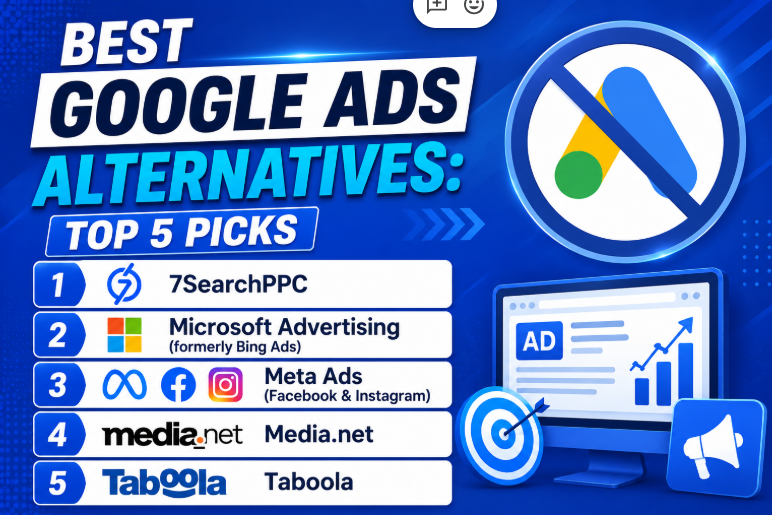
Best Google Ads Alternatives: Top 5 Picks
As a marketer, you can’t deny the fact that Google Ads is expensive. Every year, the cost per click goes up a little more. Small businesses feel this the most. You set a budget, and it’s gone in a few hours. Sometimes even minutes.
So what’s the fix? You don’t have to fight for the same crowded auction anymore. There are other ad networks out there. Some are cheaper. Some bring better quality traffic. Some are just easier to use if you’re new to paid ads.
In this blog, we’ll walk you through the top 5 Google Ads alternatives. By the end, you’ll know exactly which one fits your business and your budget.
Let’s get into it.
1. 7SearchPPC
If you’re tired of high CPCs on Google, 7SearchPPC is worth your first look. It’s a self-serve PPC ad network. That means you can sign up, set your budget, and launch a campaign yourself, without waiting for approvals for days.
What makes it stand out is how fast you can get started. Some advertisers report their ads going live within 30 minutes of submission, as long as the ad meets their guidelines. That’s rare in this industry.
7SearchPPC works across many verticals. Think iGaming, eCommerce, health, travel, tech support, and more. So whether you’re running a niche business or a broad one, there’s usually a category for you.
Key features:
- Multiple ad formats: text, native, banner, popunder, and in-page push ads
- CPC, CPM, and CPA Goal pricing models
- Real-time performance dashboard
- Fast approval and quick campaign launch
- 24/7 support team, including ad managers
- Budget-friendly entry point, you can start with a small budget
Overall, 7SearchPPC is a smart pick if you’re open to testing different ad formats and GEOs. It won’t replace Google entirely, but as a starting point or a supporting channel, it does the job well.
2. Microsoft Advertising (formerly Bing Ads)
Microsoft Advertising was formerly known as Bing Ads, and many marketers still refer to it by its old name out of habit. Don’t let the old name fool you, though. This platform has grown a lot.
Here’s the thing people forget. Bing isn’t just Bing anymore. Your ads also show up on Yahoo, AOL, MSN, Outlook.com, and even parts of the Microsoft Audience Network. That’s a decent chunk of internet traffic you’re missing if you only run Google Ads.
The audience here tends to skew a bit older and more desktop-based. Sounds niche, but that audience often has higher purchasing power. Microsoft has reported that a large share of its users earn over $100K a year. That’s valuable if you’re selling higher-ticket products or B2B services.
Key features:
- Search ads, display, native ads, and even video and CTV ad formats
- Import tool that copies your entire Google Ads campaign structure in a few clicks
- LinkedIn profile targeting, which is unique to Microsoft’s ecosystem
- AI-powered bidding and automated campaign recommendations
- Access to Netflix’s ad-supported tier inventory through a partnership
Think of Microsoft Advertising as the quieter sibling that’s actually pretty good at saving you money. Most advertisers don’t drop Google for it. They just add it on and get more mileage out of their overall ad spend.
3. Meta Ads (Facebook & Instagram)
Meta Ads needs a little introduction. You already know it, you’ve probably scrolled past a hundred Meta ads today without noticing. That’s kind of the point. Meta ads blend into the feed, which makes them feel less like an interruption.
Where Meta really wins is targeting. Google shows ads based on what people search for. Meta shows ads based on who people are, their interests, behaviors, age, location, and even life events like moving or getting engaged. That’s a completely different way to find customers.
This works especially well if you sell something people don’t know they need yet. Impulse buys, new products, visually appealing items, Meta is built for that kind of discovery.
Key features:
- Runs across Facebook, Instagram, Messenger, and the Audience Network
- Detailed audience targeting based on interests, demographics, and behavior
- Lookalike audiences, so you can find people similar to your best customers
- Ad formats include image, video, carousel, stories, and reels
- Meta Pixel for tracking conversions and building retargeting lists
If your product needs to be seen to be understood, Meta Ads is probably your best bet. It’s less about catching people mid-search and more about catching their attention while they scroll.
4. Media.net
Media.net is a bit different from the others on this list. It’s a contextual advertising network, which means ads are shown based on the actual content of a webpage, not just user browsing history. It runs on the Yahoo-Bing ad network, so you’re tapping into a large pool of advertiser demand.
This one is popular among publishers looking for an AdSense alternative, but advertisers use it too. Since ads are matched to page content instead of personal data, it tends to respect user privacy a bit more, something that matters more every year.
Key features:
- Contextual targeting based on webpage content
- Display-to-search ad format, which works on a CPC model
- Access to Yahoo-Bing Network’s advertiser pool
- Customizable ad units that can match a website’s design
- Real-time reporting dashboard
Media.net isn’t the flashiest name on this list, but it fills a specific gap. If contextual relevance and privacy-conscious advertising matter to your brand, it’s worth testing.
5. Taboola
Taboola is one of the biggest names in native advertising. You’ve seen its work even if you didn’t know it. Those “you might also like” or “around the web” boxes at the bottom of news articles? A lot of those are powered by Taboola.
The scale here is genuinely huge. Taboola partners with thousands of premium publishers, including major names like USA Today, NBC, and Bloomberg. That means your ad can show up next to real news content, not just random low-quality sites.
Native ads work differently from search or social ads. They’re built to look like they belong on the page. This makes them feel less like an ad and more like a suggestion, which usually means better engagement.
Key features:
- Native ad placements across thousands of premium publisher sites
- AI-driven creative generation tools, so you can build ad creatives inside the platform
- Audience targeting built on years of publisher behavior data
- Realize platform extends beyond native into display and carousel formats
- Predictive optimization tools aimed at improving conversions, not just clicks
If your goal is to get your brand in front of new eyes, Taboola does that well.
Final Words!
There’s no perfect Google Ads alternative; the right fit only depends on your digital ad goals. Also, the selection call will always be on your end. If you are already using Google Ads and you are frustrated with the high cost, then you can look at ad networks like 7SearchPPC or Microsoft Advertising for budget-friendly clicks, or Meta and Taboola for reach and awareness. Track results closely, then shift spend toward what actually converts. Diversifying beyond Google is no longer optional; it’s just smart advertising.