How to Build Backlinks for a New Website: A Beginner’s Guide (2026)
Learning how to build backlinks for a new website is the fastest way to get a brand-new site ranking on Google. A backlink is simply a link from another website that points to yours. When your site is new and has zero backlinks, Google has very little proof that anyone trusts it.
This guide walks you through everything step by step. You will learn what backlinks are, why they matter so much for new sites, and the exact tactics to earn your first 10, 20, and 50 links the safe way. No jargon. No shortcuts that get you penalized. Just a clear playbook that works in 2026.
What Are Backlinks? A Simple Definition
A backlink is a link on someone else’s website that sends visitors to your website. Think of it like a recommendation. When a blogger links to your guide, they are telling their readers, “This page is worth your time.” Google reads these links the same way. Every backlink is a small vote of confidence for your site. Pages with more high-quality votes tend to rank higher in search results. This idea has been at the heart of Google’s ranking system since the beginning.
A Backlink Explained in Plain English
Imagine you just opened a coffee shop. On day one, nobody knows it exists. Then a popular food blogger writes about your shop and links to your website. Two things happen. Readers click through and visit you. And Google notices that a trusted site pointed to you. That is exactly what a backlink does online. It brings you visitors directly. It also tells search engines that your page is worth noticing. For a new website, those first links are the hardest to earn and the most valuable.
Dofollow vs Nofollow Backlinks: Which Is Better?
Not all backlinks pass the same value. There are two main types you need to know.
A dofollow backlink is a normal link. It passes ranking power from the linking site to yours. These are the links that move the needle most. When people talk about “building backlinks,” they usually mean dofollow links.
A nofollow backlink includes a small tag that tells Google not to pass ranking power. You will see these on blog comments, forum posts, and many social media links. They do not boost rankings directly, but they still send visitors and make your link profile look natural.
So which is better? Dofollow links help rankings more. But a healthy site has a mix of both. If every link pointing to you is dofollow, it can look unnatural. Do not turn down a nofollow link from a real, relevant site. It still brings traffic and trust. Why
Learning How to Build Backlinks for a New Website Pays Off
New websites start with zero authority. Google does not know you yet. Your content might be excellent, but without backlinks, it often sits on page five where nobody looks. Links change that.
Backlinks Build Trust With Google
Google uses links as one of its strongest trust signals. A new site with links from real, relevant websites looks legitimate. A new site with no links looks like it could be low quality or spam. This does not mean you need hundreds of links. A handful of links from respected sites in your niche can lift a new site faster than you might expect. Quality beats quantity every single time.
They Help Google Find and Index Your Pages Faster
Google finds new pages by following links. When a page on an established site links to your new article, Google’s crawler follows that link and discovers your page. This can cut indexing time from weeks to days. For a new website, this matters a lot. You can publish great content, but it cannot rank until Google finds and indexes it. Backlinks speed up that first step.
They Send Real Visitors to Your Site
Rankings take time. Traffic from backlinks does not. One link from a popular newsletter or a busy forum thread can send hundreds of visitors in a single day. This early traffic is gold for a new site. It tells you which content people actually like. It can bring your first email subscribers and customers. And engaged visitors send positive signals back to Google.
Do Backlinks Still Matter for SEO in 2026?
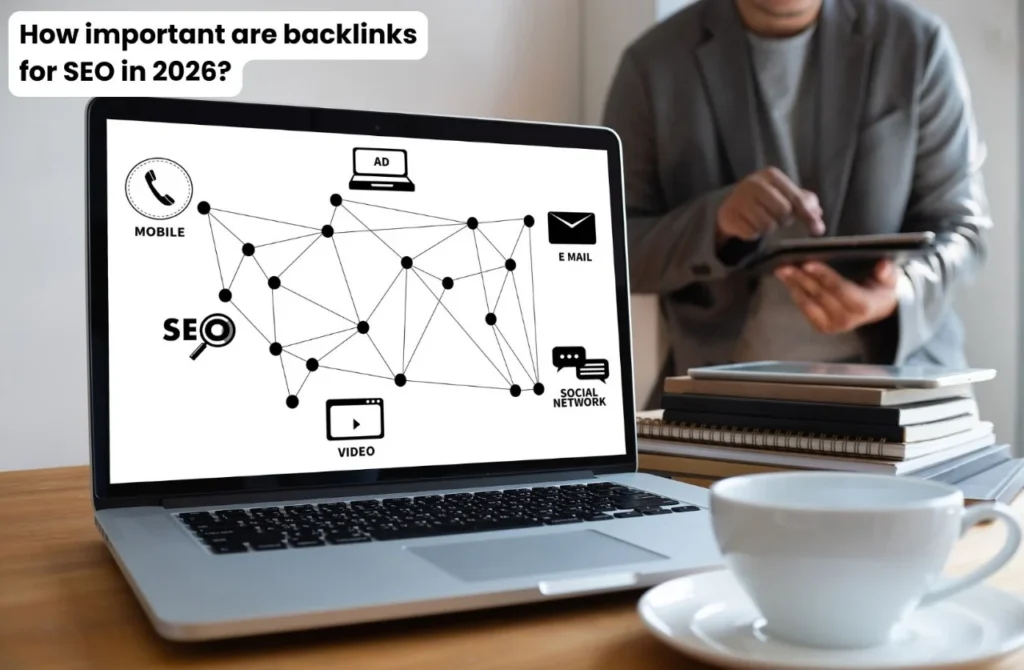
Yes. Backlinks still matter for SEO in 2026, especially for new websites. Google has added many new ranking factors over the years, including content quality and user experience. But links remain one of the strongest signals that a page deserves to rank. What changed is the standard.
Old tricks like buying links or joining link schemes can now get your site penalized. Google is much better at spotting fake links. The links that work today come from real websites, earned through genuinely useful content and honest outreach. For beginners, this is actually good news.
You do not need tricks. You need a simple, repeatable process. That is what the rest of this guide gives you.
How Link Building Works: The Process in Plain English
Link building for beginners boils down to three repeating steps. First, you create something worth linking to. Second, you find the right people who would care about it. Third, you reach out and ask for the link in a helpful, personal way. Most beginners skip step one.
They try to get links to thin pages that offer nothing new. That rarely works. Site owners link to pages that help their own readers. Give them a reason. Most beginners also mess up step three.
They send cold, generic emails to hundreds of strangers. That rarely works either. A short, personal message to the right person beats a thousand template emails. The playbook below turns these three steps into nine concrete actions. Follow them in order.
How to Build Backlinks for a New Website: The 9-Step Playbook
This is the core of the guide. Work through these steps one at a time. You do not need to do everything in a week. A steady pace of a few hours per week is enough to build real momentum.
Set a Simple Goal Before You Build Backlinks for a New Website
Before you start, pick a clear target. A good first goal is 10 quality backlinks in 90 days. That is realistic for a beginner and enough to move the needle. Write down your goal and your starting point. Note how many referring websites you have today. You can check this free in Google Search Console under the Links report. Tracking from day one keeps you motivated and shows what is working.
Step 1: Create Something Worth Linking To
Nobody links to a boring page. Your first job is to publish at least one piece of content that is genuinely useful. This is often called a “linkable asset.” Good linkable assets for beginners include:
- An ultimate beginner’s guide on a topic in your niche
- A free tool, calculator, template, or checklist
- Original data from a small survey you run yourself
- A detailed case study with real numbers from your own work
- A curated list of the best resources on a topic
You do not need ten of these. One excellent page beats ten average ones. Spend real time making it the best resource on that topic for a beginner.
Step 2: Find Sites That Already Link to Similar Content
Now find websites that link to content like yours. These site owners have already shown they link out to this topic. They are your warmest prospects. You do not need paid tools for this. Here is a free method:
- Search Google for your topic plus words like “resources,” “guide,” or “best.”
- Open the top 10 results and note which sites they are.
- Check who links to those pages using a free backlink checker.
- Build a simple spreadsheet with the site name, page URL, and contact info.
For a free alternative to Ahrefs, start with Google Search Console (for your own site), plus free tiers of tools like Ubersuggest or the free backlink checkers many SEO blogs offer. They show enough data to find your first prospects.
Step 3: Try Broken Link Building
Broken link building is one of the best tactics for beginners. It works like this. You find a broken link on someone’s website. You tell the site owner about it. Then you suggest your working page as a replacement. Site owners love this because you are helping them fix a problem.
You are not just asking for a favor. Here is the process:
- Find resource pages in your niche by searching for phrases like “useful links” or “resources” plus your topic.
- Use a free broken-link checker browser extension to scan the page.
- When you find a dead link, note what the original page was about.
- Email the site owner, point out the broken link, and offer your page as a replacement.
Keep the email short and friendly. Mention the exact broken link so they know you actually checked.
Step 4: Write Guest Posts for Link Building
Guest posting for link building means writing an article for someone else’s blog. In return, you usually get a backlink in your author bio or within the article. This tactic still works when done right. The key is to target real blogs with real readers, not spammy sites that accept anything.
Look for blogs in your niche that publish guest posts and have an engaged audience. Pitch three to five specific article ideas, not just “I want to write for you.” Show that you read their blog. Write the best article you can. One guest post on a respected blog beats ten posts on lowquality sites.
Step 5: Combine Great Content With Personal Outreach
This is the most reliable tactic on this list. You create a genuinely useful resource, find people who shared or linked to similar resources, and send them a short personal email.
Here is a simple link building outreach email template you can adapt:
Subject: Quick question about your [topic] page
Hi [Name],
I was reading your guide on [topic] and found it really helpful, especially the part about
[specific detail].
I recently published a [guide/checklist/tool] on the same topic that covers [one unique
angle]. Thought it might be a useful addition for your readers: [your URL].
Either way, thanks for the great article.
Best, [Your name]
Notice what this email does not do. It does not beg. It does not use hype. It shows you actually read their page. Personal beats clever every time.
Step 6: Get Listed on Resource Pages and Directories
Resource pages are curated lists of helpful links. Many niches have them. Search for phrases like “best [topic] resources,” “[topic] tools list,” or “helpful [topic] links.” Also claim the easy, legitimate listings. These include your Google Business Profile if you are local, industry directories, and community sites related to your niche.
These links are easy to get and they make your new site look established. Skip the shady “submit to 1,000 directories” services. A few relevant, human-reviewed listings are worth more than a thousand junk directory links.
Step 7: Turn Brand Mentions Into Links
As your site grows, people will mention your brand without linking. Set up a free Google Alert for your brand name. When you spot an unlinked mention, send a polite email asking if they would add a link. This is one of the easiest links you will ever earn. The person already knows and likes your brand enough to mention it. Most are happy to add the link.
Step 8: Build Relationships Before You Need Links
Link building gets easier when people know you. Comment thoughtfully on blogs in your niche. Share other people’s work on social media. Answer questions in communities where your audience hangs out.
This is off page SEO for beginners at its simplest. You are not asking for anything. You are becoming a familiar, helpful name. When you later reach out with a great resource, people already trust you.
Step 9: Track What You Earn and Repeat What Works
Check your progress monthly in Google Search Console’s Links report. Note which tactics earned links and which pages attracted them. Then do more of what worked. Also watch for bad links. If you spot spammy links you did not earn, do not panic. Google is good at ignoring obvious spam. Only use the disavow tool in extreme cases, and learn how it works before touching it.
How Many Backlinks Do I Need to Rank?
There is no magic number. It depends on your niche and your competition. A local bakery might rank with 10 good links. A new finance blog might need 100 or more to compete. Here is a better way to think about it. Look at the pages currently ranking for your target keyword. Check roughly how many linking websites they have. Your goal is to earn a similar number of links at similar or better quality.
Quality Beats Quantity Every Time
One link from a respected site in your niche can outweigh 50 links from random low-quality blogs. Google looks at relevance and trust, not just raw numbers. A good backlink comes from a real website with real traffic, on a page related to your topic, placed naturally within the content. A bad backlink comes from a spammy site, an unrelated page, or a paid link scheme. Focus all your energy on earning the good kind.
White Hat Link Building: The Rules to Follow
White hat SEO techniques are the safe, Google-approved ways to build links. They take longer, but they never put your site at risk. Everything in this guide is white hat. Here are the rules behind it.
- Earn links with great content, never buy them.
- Reach out personally, never blast spam emails.
- Target relevant sites, never random link farms.
- Build links steadily, never in sudden spikes.
- Use natural anchor text, never the exact same keyword every time.
- Mix dofollow and nofollow links naturally.
Anchor text is simply the clickable words in a link. If every link to your site uses the exact same keyword-rich phrase, it looks manipulated. Natural anchor text varies: your brand name, the page title, “this guide,” or a plain URL.
Google’s spam policies are clear about paid links and link schemes. If a tactic feels sneaky, skip it. A penalty can wipe out months of work in a day.
7 Common Mistakes Beginners Make
1. Buying backlinks. Paid links violate Google’s guidelines. Sellers promise fast rankings, but the links usually come from spammy networks. The short-term boost is not worth the penalty risk.
2. Targeting quantity over quality. Chasing 500 low-quality links wastes time and can hurt you. Ten relevant, trusted links will do more for a new site.
3. Using the same anchor text everywhere. When every link says “best cheap laptops,” it looks fake. Let people link naturally with varied wording.
4. Ignoring relevance. A link from a cooking blog does little for a plumbing website. Relevance matters almost as much as authority.
5. Giving up after ten emails. Outreach is a numbers game with a personal touch. Most beginners quit too early. Follow up once, politely, after a week.
6. Building links to a weak page. If your content is thin or outdated, nobody will link to it. Fix the page first, then promote it.
7. Forgetting internal links. While you earn external backlinks, link your own pages together sensibly. This helps Google understand your site and passes value to important pages.
Expert Tips That Speed Everything Up
- Start with the easiest wins. Resource pages, directories, and unlinked brand mentions take the least effort. Grab them first for quick momentum.
- Create one “link magnet” per quarter. A free tool or original study can earn links for years with no extra work.
- Study your competitors’ links. See who links to rival pages and ask why. Then create something better and pitch the same sites.
- Refresh old content before promoting it. A 2026 update to a stale guide gives people a fresh reason to link.
- Follow up once. A single polite follow-up email can double your reply rate. More than one follow-up becomes spam.
- Track everything in a spreadsheet. Record who you contacted, when, and what happened. This turns random effort into a system.
- Be patient with new sites. Links often take weeks to show impact. Keep publishing and promoting while you wait.
Real-World Examples: What This Looks Like in Practice
Example 1: A Local Bakery
Maria opens a bakery website with zero backlinks. She publishes a free “wedding cake serving guide” with a printable chart. She finds five local wedding blogs with resource pages, points out one broken link she spotted, and suggests her guide as a replacement. Two say yes. She also claims her Google Business Profile and gets listed in two local directories. Result: six relevant links in two months, and her “wedding cakes [city]” page starts ranking.
Example 2: A New SaaS Blog
A small software startup publishes an original survey of 200 freelancers about invoicing pain points. They email 30 bloggers who wrote about freelancing tools, sharing one surprising stat from the survey. Eight link to the full report. They also write two guest posts for respected industry blogs. Result: 12 high-quality links in a quarter, and demo signups rise from referral traffic alone.
Example 3: An Affiliate Niche Site
Tom runs a new site reviewing home office gear. He creates the most detailed “standing desk buying checklist” in his niche, with photos of his own setup. He finds ten “work from home resources” pages, emails each owner personally, and lands four links. He answers questions in two Reddit communities (nofollow links, but real traffic). Result: steady referral visitors from day one, and rankings climb within four months.
Link Building vs Digital PR: What’s the Difference?

Beginners often confuse these two. They overlap, but they are not the same.
| Link Building | Digital PR | |
| Main goal | Earn backlinks for SEO | Earn media coverage and brand mentions |
| Typical tactics | Outreach, guest posts, broken link building | Press releases, data studies, expert quotes |
| Who you contact | Bloggers and site owners | Journalists and editors |
| Best for | New sites needing foundational links | Brands wanting big coverage spikes |
For a new website, start with classic link building. It is more predictable and fully in your control. Add digital PR later when you have original data or a story worth covering. Many teams blend both: a data study pitched to journalists earns both press links and blogger links.
Link Building in 2026: What Changed
A few trends matter for beginners right now. First, AI-generated content flooded the web, so originality stands out more. Content with real experience, photos, and data earns links. Generic AI text does not. Second, Google’s AI Overviews answer many questions directly in search results.
This makes zeroclick searches more common. Links from sites that get cited in AI answers are extra valuable because they drive both rankings and visibility in AI results. Third, freshness matters.
Competitors’ link building guides from 2021 are going stale. A current, 2026-dated guide with fresh examples has a real opening to outrank them. The fundamentals did not change. Great content plus honest outreach still wins. The bar for “great” just got higher.
Important Things to Consider Before You Start
Be realistic about timelines. Most new sites see movement in two to four months, not two weeks. Link building is a long game. Anyone promising page one in seven days is selling something risky. Protect your reputation. Every outreach email represents your brand.
Be polite, be brief, and accept “no” gracefully. The SEO community is small, and a good reputation compounds. Do not neglect on-page SEO. Backlinks amplify good content; they cannot save bad content. Make sure your pages load fast, read well on phones, and actually answer the searcher’s question before you chase links.
Finally, keep learning. SEO changes every year. Follow Google’s official Search Central blog for policy updates, and test tactics yourself. Your own results will always beat someone else’s theory.
Enhance your digital strategy with Search Engine Insight, offering useful resources on website optimization, organic reach, and effective content development.
Frequently Asked Questions
How long does it take to build backlinks for a new website?
Expect two to four months before you see clear ranking movement. Earning the links themselves can start in week one. Google needs time to discover the links, recrawl your pages, and reassess your site. Steady effort beats rushing.
How many backlinks do I need to rank on Google?
It depends on your competition. Check how many linking websites the top-ranking pages for your keyword have, and aim to match that number with equal or better quality. For low-competition keywords, 10 to 20 good links can be enough.
Do backlinks still matter for SEO in 2026?
Yes. They remain one of Google’s strongest ranking signals. What changed is the quality bar. Links must come from real, relevant websites. Paid links and link schemes can trigger penalties instead of helping.
What is the difference between dofollow and nofollow backlinks?
Dofollow links pass ranking power to your site. Nofollow links include a tag telling Google not to pass ranking power, but they still send visitors. You want mostly dofollow links, with a natural mix of nofollow ones.
Can I buy backlinks for my new website?
You should not. Buying links violates Google’s spam policies. If Google detects paid links, your site can lose rankings or be removed from search results entirely. Earn links instead through content and outreach.
What are the best free tools to find backlink opportunities?
Start with Google Search Console to see your own links. For prospecting, use free backlink checkers and free tiers of SEO tools as a free alternative to Ahrefs. Google Alerts helps you find unlinked brand mentions at no cost.
Is guest posting still effective for link building?
Yes, when done on real blogs with real audiences. Write genuinely useful articles for respected sites in your niche. Avoid sites that exist only to sell guest posts. One quality guest post beats ten spammy ones.
What is broken link building?
You find a broken link on someone’s website, tell the owner about it, and suggest your working page as a replacement. It works well because you are helping them fix a problem, not just asking for a favor.
How do I know if a backlink is good or bad?
A good backlink comes from a real website with real traffic, on a page related to your topic, placed naturally in the content. A bad backlink comes from spammy sites, link farms, or completely unrelated pages. When in doubt, ask if a real person would ever click it.
Should I focus on content or backlinks first?
Content first, always. You need at least one excellent page worth linking to before outreach makes sense. Once that page exists, split your time between creating more good content and promoting what you have.
Conclusion:How to Build Backlinks for a New Website
Now you know how to build backlinks for a new website the right way. Start with one piece of content worth linking to. Find sites that already link to similar content. Reach out personally with broken link building, guest posts, and resource page pitches. Track your progress and repeat what works.
You do not need hundreds of links to start ranking. You need a small number of quality links from relevant, trusted sites, earned steadily over time. Set your 90-day goal, work the playbook one step at a time, and give Google time to notice. Your new website can absolutely compete. It just needs those first votes of confidence.