AI Mode SEO: How to Rank and Get Cited in Google’s AI Answers (2026)
AI mode SEO how to rank guides are everywhere, but most overcomplicate it. This plain-English playbook shows you the exact steps to get your pages cited in Google’s AI Mode and AI Overviews. Google now answers many searches directly with AI-written summaries, and the websites those summaries cite get the clicks, the trust, and the brand exposure.
This guide explains everything in plain English. You will learn what AI Mode SEO is, how Google’s AI Mode and AI Overviews pick their sources, and the exact steps to make your content quotable. No jargon. No hype. Just a practical playbook you can start using today.
What Is AI Mode SEO? A Simple Definition
AI Mode SEO is the practice of optimizing your website so Google’s AI-powered search features — AI Mode and AI Overviews — quote, cite, and link to your pages. Traditional SEO tries to rank your page in the classic list of blue links. AI Mode SEO tries to make your content the source Google’s AI draws on when it writes an answer.
Think of it this way. In classic search, you compete for position one. In AI search, you compete to become the reference. Google’s AI reads many pages, then writes a single synthesized answer with links to the sources it trusted most. If your page is one of those sources, you appear inside the answer itself.
This does not replace traditional SEO. It builds on it. The pages Google’s AI cites are almost always pages that already rank well in classic results. AI Mode SEO is best understood as classic SEO plus a new layer: making your content easy for an AI to read, understand, and quote.
AI Mode vs AI Overviews: What Each One Is
Google has two AI answer features, and beginners often mix them up.
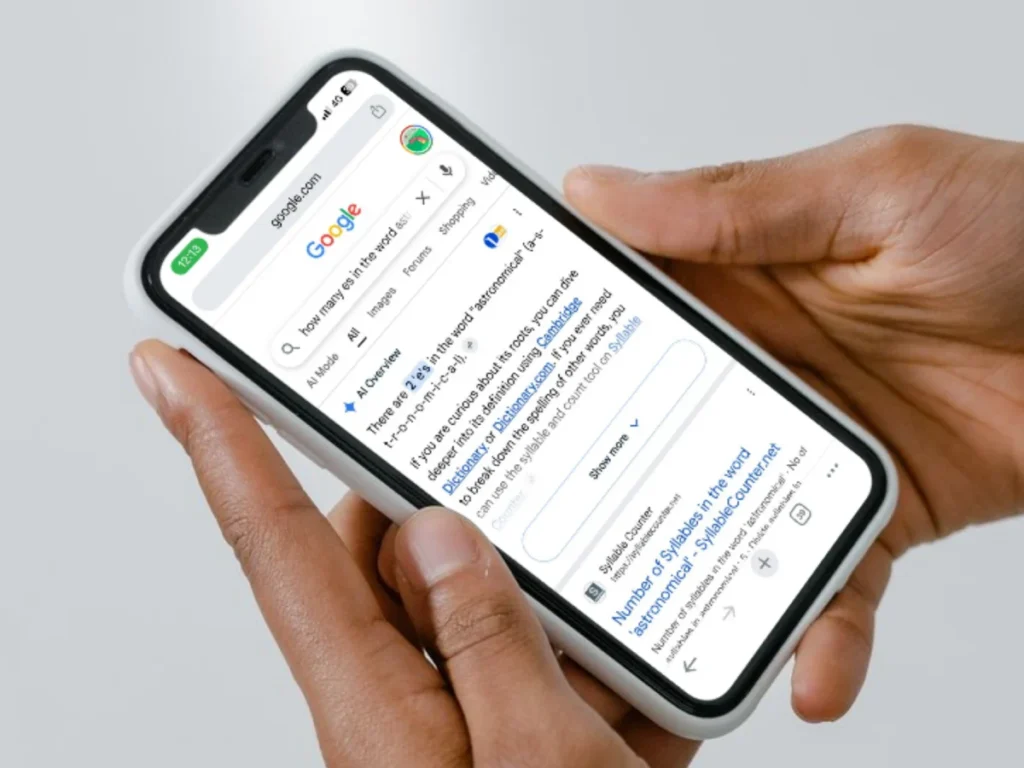
AI Overviews are the AI-written summaries that appear at the top of regular Google search results. When you search a question, Google may show a short AI-generated answer with links to the sources it used. You do not have to switch modes. It happens inside normal search.
AI Mode is a separate, conversational search experience powered by Google’s Gemini models. You ask a question in natural language, and Google responds with a detailed AI-written answer, follow-up suggestions, and source links. It handles longer, more complex, multi-part questions better than a single search box query.
Both features cite websites. Optimizing for one largely optimizes for the other, because both reward the same things: clear answers, trustworthy content, and strong topical authority.
What “Ranking” Means in AI Search
Ranking in AI search looks different from ranking in classic search. There is no position one through ten. Instead, your page either gets cited as a source in the AI’s answer, or it does not.
A citation is a link from the AI answer to your page. Google typically shows a small number of source links alongside or beneath the generated text. Being one of those sources puts your brand in front of the searcher before they ever scroll to the classic results.
This is why marketers talk about “AI search visibility” instead of “AI rankings.” Visibility means how often your brand or pages appear as cited sources across the questions your audience asks. That is the metric to track.
Why AI Mode SEO Matters More Than Ever in 2026
AI-written answers now appear for a large share of informational searches. When Google answers the question directly, many searchers never scroll past the AI summary. If your site is not cited in that summary, you are invisible for that query — even if you rank fifth in the classic results below it.
That shift is why the search phrase AI mode SEO how to rank keeps growing in 2026: classic rankings and AI citations are now two separate games, and you need to win both.
Citations Bring Qualified Clicks
A citation in an AI answer is not just a link. It is a recommendation. The searcher reads Google’s answer, sees your site listed as a source, and clicks through to learn more. These visitors arrive pre-qualified. They already know your page answers their question.
For beginners, this is encouraging. You do not need to outrank giant publishers to earn a citation. Google’s AI often cites smaller, specialized sites when their content answers the question most directly. Depth and clarity can beat raw domain size.
AI Answers Shape Brand Trust
Even searchers who never click still see your brand name next to Google’s answer. Being cited repeatedly builds familiarity. Over time, people start to recognize your site as an authority on the topic.
This matters for businesses that rely on trust: consultants, health sites, finance blogs, local services. An AI citation is a public signal that Google’s systems considered your content reliable enough to quote.
Early Movers Get a Compounding Advantage
AI Mode SEO is still new. Most websites have not optimized for it at all. The sites that start now build a lead that compounds. Every citation earns more visitors, more brand searches, and often more backlinks — which in turn makes future citations more likely.
Waiting is the risky move. By the time everyone optimizes for AI answers, the sources Google trusts will already be entrenched.
How Google’s AI Mode and AI Overviews Choose Their Sources

You cannot control Google’s AI. But you can understand what it looks for, because Google has explained the general process publicly. The AI breaks a question into parts, searches the web for relevant pages, reads the most promising ones, and then writes an answer grounded in what it found.
Step 1: The AI Breaks Your Question Into Sub-Questions
For a complex question, Google’s AI does not run one search. It splits the question into smaller pieces and searches each one. This is sometimes called query fan-out.
What this means for you: a page that answers one clear question thoroughly has a better shot than a page that touches ten questions shallowly. Each sub-question needs a source. Be the best source for one sub-question.
Step 2: It Reads Pages That Already Rank Well
The AI starts from Google’s normal search index. Pages that rank on page one for the question (or its sub-questions) are the first candidates the AI reads. This is why classic SEO still matters. If Google does not rank your page, its AI probably never sees it.
Technical basics matter here too. If your page is slow, blocked, or hard to crawl, it may never enter the candidate pool. Fix the fundamentals first.
Step 3: It Prefers Clear, Direct, Quotable Answers
The AI needs text it can lift and restate. Pages with a clear definition in the first paragraph, short direct sentences, and well-organized headings are easier to quote than walls of rambling text.
This is the heart of AI Mode SEO. Write so that both a busy human and a reading machine can pull out your answer in seconds.
Step 4: It Weighs Trust Signals
Google says its AI answers draw on high-quality sources. In practice, that means pages that demonstrate experience, expertise, authoritativeness, and trustworthiness — E-E-A-T. Real author bios, cited sources, original data, and a clean site reputation all help.
No single trick guarantees a citation. Trust is built across your whole site, not on one page.
AI Overviews vs Featured Snippets: What’s the Difference?
Beginners often ask whether AI Overviews replaced featured snippets. They are related but different. Understanding both helps you target your content correctly.
A featured snippet is a short excerpt Google pulls from one page and shows at the top of results. It quotes a single source. It has been around for years.
An AI Overview is a newly written summary. Google’s AI reads multiple pages, combines the information, and writes its own answer with links to several sources. It is not a quote from one page. It is a synthesis of many.
Here is how they compare:
| Featured Snippet | AI Overview | |
| What it is | Excerpt copied from one page | New summary written by AI from many pages |
| Number of sources | One | Several, shown as cited links |
| Best content format | One clear paragraph, list, or table | Direct answers plus depth across the page |
| How to target it | Answer the question in 40–60 words near the top | Same, plus E-E-A-T, structure, and topical depth |
| Still appears in 2026? | Yes, for many simple queries | Yes, and expanding to more query types |
The practical takeaway: the habits that won featured snippets — clear definitions, concise answers, good structure — are the foundation. AI Overviews add a trust and depth requirement on top.
Should You Target Both?
Yes. They are not either-or. A page optimized the way this guide describes can win a featured snippet for the simple version of a question and earn an AI Overview citation for the complex version. The same clear writing serves both.
Do not chase one format with gimmicks. Build pages that answer questions better than anyone else, and both formats will find you.
Answer Engine Optimization: The Bigger Picture
You may also hear the term answer engine optimization, often shortened to AEO. It is the broader discipline that AI Mode SEO sits inside.
Classic SEO optimizes for search engines that return lists of links. Answer engine optimization optimizes for answer engines — systems that return direct answers. That includes Google’s AI Mode and AI Overviews, but also AI assistants and chatbots that browse the web and cite sources.
The principles are the same everywhere:
· One page answers one question completely.
· Key facts appear early and plainly.
· Content shows real expertise and cites its own sources.
· Technical markup helps machines parse the page.
· The site earns trust through quality and consistency.
Learning AI Mode SEO now gives you a head start on the whole answer-engine shift, not just Google.
GEO, AEO, and AI Mode SEO: Clearing Up the Terms
New jargon breeds confusion. Here is a quick map:
· SEO (search engine optimization): ranking in classic search results.
· AEO (answer engine optimization): being the cited answer across AI systems.
· GEO (generative engine optimization): another name for roughly the same idea as AEO.
· AI Mode SEO: optimizing specifically for Google’s AI Mode and AI Overviews.
They overlap heavily. If someone sells you these as totally separate services, be skeptical. One solid content strategy covers all of them.
AI Mode SEO How to Rank: The 9-Step Playbook
This is the core of the guide. Work through the steps in order. Each one builds on the last, and none requires paid tools.
Step 1: Pick One Question Per Page
AI answers are built from pages that answer specific questions. Before you write, define the single question your page will answer better than anyone else. Write it at the top of your draft.
Bad target: “everything about email marketing.” Good target: “how often should a small business send marketing emails?” The narrower the question, the easier it is to be the clearest answer.
If your existing pages try to answer five questions at once, consider splitting them. One focused page per question gives Google’s AI clean, quotable units to work with.
Step 2: Put the Direct Answer in the First 100 Words
Open with a short, direct answer — two to four sentences that a reader (or an AI) could quote on its own. Define the term, answer the question, or state the conclusion up front. Save the background for later.
This placement matters for two reasons. It wins featured snippets, which still feed many AI answers. And it tells Google’s AI exactly what your page claims, in language it can reuse.
Example of a strong opening: “AI Mode SEO is the practice of optimizing your site so Google’s AI features cite your pages as sources. It combines classic SEO with clear, quotable writing and strong trust signals.” Notice how that could be lifted almost word for word.
Step 3: Structure the Page Around Questions
Use your headings to mirror the questions searchers actually ask. An H2 like “How long does it take to see results?” is better than a clever but vague heading like “Timing considerations.”
Under each heading, give the answer first, then the explanation. This question-first structure matches how AI systems break queries into sub-questions. It also makes your page far easier for humans to skim.
A practical format that works well:
- H2 phrased as the question.
- One short paragraph with the direct answer.
- Supporting detail, examples, or steps below.
Step 4: Make Facts Easy to Quote
Google’s AI cites pages it can confidently restate. Help it by writing facts in clean, self-contained sentences. Avoid burying key numbers or definitions inside long, tangled paragraphs.
Good habits:
· Define terms in a single clear sentence.
· Put each step of a process on its own numbered line.
· Use bullet lists for features, causes, or options.
· Use tables when comparing two or more things.
· Bold the key term the first time you define it.
You are not dumbing your content down. You are making it machine-readable without losing the human reader.
Step 5: Show Real Experience and Expertise
AI systems are tuned to prefer trustworthy sources. Show yours openly. Put a real author name and short bio on the article. Mention who you are and why you know the topic. Link to an about page that backs it up.
Cite your own sources. When you state a fact, link to where it came from — ideally primary sources like Google’s official documentation. Original research, case studies from your own work, and screenshots of your own results all strengthen the page.
Keep your site’s basics trustworthy too: a clear contact page, a privacy policy, and no spammy ads or popups. Trust is judged at the site level, not just the page level.
Step 6: Add Schema Markup That Describes Your Content
Schema markup is code that labels parts of your page for machines. It does not guarantee citations, but it removes ambiguity about what your content is.
The most useful types for AI Mode SEO:
· FAQPage on pages with a real FAQ section.
· HowTo on step-by-step guides, with each step labeled.
· Article with author, publish date, and modified date.
· Product or Review markup where genuinely applicable — never fake it.
If you use WordPress, an SEO plugin can add basic schema without coding. Test your markup with Google’s Rich Results Test to confirm it reads correctly.
Step 7: Fix the Technical Basics
The AI can only cite pages Google can crawl and render. Run through these fundamentals:
· The page must be indexed. Check in Google Search Console.
· It must load reasonably fast on mobile.
· It must not be blocked by robots.txt or a stray noindex tag.
· One clear URL per page — no duplicate versions competing with each other.
· HTTPS enabled, with no mixed-content warnings.
None of this is glamorous. All of it is required. A brilliant article that Google cannot crawl is invisible to both classic search and AI answers.
Step 8: Build Topical Authority, Not Just Single Pages
Google’s AI prefers sources from sites that clearly know a topic deeply. One great article on a blog about random subjects is weaker than one great article on a site with twenty related articles.
Build clusters. If your target question is about AI Mode SEO, publish supporting pieces on keyword research for AI search, schema markup basics, E-E-A-T, and content structure. Link them together sensibly. Over time, your site becomes the obvious source on the subject.
Earn mentions and links from other trusted sites too. When reputable sites reference your content, it reinforces the trust signals the AI weighs. Digital PR, original data, and genuinely useful free resources are the cleanest ways to earn those mentions.
Step 9: Track Your AI Search Visibility
You cannot improve what you do not measure. Start tracking whether your pages appear as cited sources in AI answers for your target questions.
Practical ways to do this without paid tools:
· Search your target questions in Google regularly and note whether an AI answer appears and whether you are cited.
· Ask the same question in AI Mode and check the sources listed.
· Track brand mentions and referral traffic in Search Console and analytics for lifts that line up with AI citations.
· Keep a simple spreadsheet: question, date checked, cited or not, which competitor pages were cited instead.
Review monthly. When competitors get cited instead of you, open their pages and study what they do better — clearer answers, stronger structure, deeper expertise. Then improve your page.
Google AI Overviews Optimization Checklist

Use this checklist as a quick audit for any page you want cited in AI Overviews. Work down the list and fix what is missing.
Content clarity
· The page answers one specific question.
· A direct answer appears in the first 100 words.
· Key terms are defined in single, clear sentences.
· Headings are phrased as questions searchers ask.
· Each section gives the answer before the explanation.
Quotability
· Facts are written in short, self-contained sentences.
· Steps use numbered lists; options use bullets.
· Comparisons use tables.
· [ ] No key fact is buried in a long paragraph.
Trust signals
· A real author byline with a short bio is visible.
· Claims link to credible sources.
· The site has contact, about, and privacy pages.
· Publish and update dates are shown.
Technical
· The page is indexed in Google Search Console.
· It loads well on mobile.
· Relevant schema markup validates without errors.
· No duplicate or thin competing pages target the same question.
Authority
· The site covers the topic in depth (a cluster, not one orphan page).
· Other reputable sites link to or mention the content.
If you can check every box, your page is doing everything within your control. The final decision still belongs to Google’s systems, but you will have given them every reason to pick you.
How to Optimize for Google AI Mode Specifically
AI Mode handles longer, conversational, multi-part questions. Someone might ask how to plan a full SEO strategy for a new blog, with follow-ups about budget, tools, and timelines — all in one session. Optimizing for this style takes a few extra moves beyond the basics.
Cover the Follow-Up Questions Too
Think about what a searcher would ask next. After “what is AI Mode SEO,” they might ask “how long does it take to work,” “does it replace normal SEO,” or “what tools do I need.” Answer those follow-ups on the same page or in tightly linked cluster pages.
Pages that anticipate the conversation keep the AI — and the human — engaged with your content instead of sending them elsewhere.
Write in Natural, Conversational Language
AI Mode queries are phrased like spoken questions. Mirror that language in your headings and body text. Write the way your reader talks, not the way a textbook reads.
This does not mean stuffing exact-match question phrases. It means covering the topic the way a helpful expert would explain it out loud: directly, completely, and in plain words.
Go Deeper Than the Overview
AI Mode often gives long, detailed answers. Shallow pages rarely get cited there. Include the nuance: edge cases, exceptions, pros and cons, and honest limitations.
A page that says “it depends, and here is why” with clear guidance for each case is more citable than a page that gives one oversimplified answer. Depth signals expertise.
How to Get Cited in AI Overviews
Getting cited in AI Overviews deserves its own focus, because it is the most common AI visibility win for small sites. The pattern behind most citations is consistent.
Be the Clearest Answer to a Real Question
Most AI Overview citations go to pages that answer the searcher’s question more directly than the competition. Open your target queries in Google, read the current AI Overview, and note which sources it cites. Then open those sources.
Ask yourself: is their answer clearer than mine? Better structured? More complete? More trustworthy? Close the gap, then go one step further with an example, a table, or a clearer definition.
Target Questions AI Overviews Actually Answer
Not every query triggers an AI Overview. They appear most often for informational questions — how-tos, definitions, comparisons, and advice. Transactional searches and simple navigational queries rarely get them.
Focus your AI Overview efforts on your informational content: guides, explainers, tutorials, and FAQs. That is where citations are won. Anyone studying AI mode SEO how to rank for Overviews specifically should start here: informational pages are the entire playing field.
Keep Content Fresh and Accurate
AI systems favor current information, especially for topics that change. Show publish and update dates. Revisit important pages regularly and refresh outdated advice, screenshots, and examples.
A page updated this year will usually beat an equivalent page from three years ago. Freshness is a quiet but real advantage.
Earn Your Place With Original Value
The pages that get cited most consistently offer something competitors do not: original data, a unique framework, real case results, or a genuinely better explanation. If your page says exactly what ten other pages say, the AI has no reason to pick yours.
Add at least one element of original value to every important page. Even a single worked example from your own experience can be the difference.
7 Common Mistakes That Keep You Out of AI Answers
- Burying the answer. If your conclusion appears in paragraph twelve, the AI may never get there. Lead with the answer, then explain.
- Writing for keywords instead of questions. Pages stuffed with keyword variations but no direct answers read poorly to humans and machines alike. Write for the question first.
- No author or trust signals. Anonymous content with no bio, no sources, and no contact page looks untrustworthy. AI systems notice.
- Thin pages targeting competitive questions. A 300-word post will not get cited for a question that deserves 2,000 words. Match the depth the question requires.
- Ignoring technical SEO. If the page is not indexed, loads slowly, or is blocked, nothing else matters. Check Search Console before anything else.
- One page per whole topic. A single “ultimate guide to SEO” cannot be the clearest answer to forty different questions. Split broad topics into focused pages.
- Expecting overnight results. Citations build over weeks and months as Google recrawls your pages and reassesses trust. Publish, improve, and be patient.
Expert Tips to Improve Your AI Search Visibility
AI Mode SEO How to Rank When You Are Short on Time
If you can only do three things this week, do these. First, add a direct two-sentence answer to the top of your five most-visited informational pages. Second, rewrite their headings as the questions readers actually ask. Third, add a real author byline and publish dates. Those three moves capture most of the practical value of AI mode SEO: how to rank better in AI answers starts with clarity, structure, and trust.
Write Definitions Google Can Lift Verbatim
The single highest-value sentence on an informational page is often the definition. Write it as one clean sentence: “[Term] is [what it is] that [what it does or why it matters].” Place it early. This pattern is easy for AI systems to extract and reuse, which is exactly what you want.
Use Descriptive Subheadings as Mini-Answers
Treat every H2 and H3 as a promise. The heading asks the question; the first sentence under it delivers the answer. Readers scanning your page should be able to collect every key point from headings plus first sentences alone. AI systems effectively do the same thing.
Add a Short FAQ to Every Major Guide
A 3–5 question FAQ at the end of a guide gives the AI clean question-answer pairs to draw from. Keep answers to 40–80 words. Phrase questions the way real people ask them. This is one of the simplest high-impact additions you can make.
Refresh Your Winners Twice a Year
Pages that already earn citations deserve maintenance. Twice a year, re-read them with fresh eyes. Update examples, tighten weak sections, and add answers to new follow-up questions you have seen in comments or search suggestions. Maintained pages hold their citations longer.
Study the Sources That Beat You
When a competitor gets cited instead of you, treat it as free coaching. Open their page. Compare structure, clarity, depth, and trust signals against yours. Usually the gap is obvious: a clearer definition, a better table, a real author bio. Fix the gap and recheck next month.
Real Examples: What AI-Friendly Content Looks Like
Example 1: The Definition-First Explainer
A small marketing blog wrote a 1,800-word guide to a niche analytics term. The first paragraph defined the term in two sentences. Every H2 was a question from Google’s “People also ask” box. Within two months, the page was being cited in AI Overviews for three related queries. The owner changed nothing about promotion — only the structure.
The lesson: clarity and question-based structure did the heavy lifting.
Example 2: The Checklist Page
A freelance consultant published a one-page pre-launch SEO checklist: numbered items, one line each, grouped under clear H2s. It was not long or literary. But it was perfectly quotable, and AI answers about pre-launch SEO began citing it as the source for the step-by-step portion.
The lesson: quotable formatting can outperform word count.
Example 3: The Original-Data Post
A tiny SaaS blog surveyed its own users about a workflow habit and published the results with simple charts. No other site had this data. AI answers on the topic began citing the post as the only source for those figures, and classic rankings followed.
The lesson: original value earns citations that competitors cannot copy.
What Changed in 2026
AI search moved fast over the past two years, and a few shifts matter for your strategy.
AI answers now cover more query types. What started with simple how-to questions has expanded into comparisons, planning, and multi-step research tasks. If you assumed your niche was “safe” from AI answers, check again.
Conversational search keeps growing. AI Mode’s longer, multi-turn format rewards deep, well-organized content clusters over single pages. Sites with genuine topical depth have an edge.
Trust signals carry more weight. As AI-generated content flooded the web, Google’s systems leaned harder on E-E-A-T signals to pick sources. Real authorship, original experience, and cited sources matter more now than they did two years ago.
Zero-click searches are normal. Many informational queries are now answered without a click. This makes citations — being named as the source — relatively more valuable than classic ranking positions for informational content.
The direction is clear: invest in being the trusted source, not just in ranking positions. Every AI mode SEO how to rank guide published this year reaches the same conclusion — the winners are the sites that answer questions most clearly.
Important Things to Consider Before You Start

No tactic guarantees a citation. Google’s AI chooses its sources, and it does not publish the formula. Everything in this guide improves your odds. Nothing promises a result. Be wary of anyone selling guaranteed AI Overview placement.
AI Mode SEO does not replace classic SEO. The cited pages are drawn from the regular index. If your fundamentals — crawling, indexing, content quality, links — are weak, AI optimization cannot fix that. Build the foundation first.
Keep humans as your primary audience. Write for people first, machines second. Content engineered only for AI extraction reads badly and converts nobody. The good news is that clear, honest, well-structured writing serves both.
Watch Google’s official guidance. This space changes quickly. Google’s Search Central documentation is the authoritative source for what is allowed and what works. Check it before acting on any dramatic claim you read elsewhere.
Do not block AI crawlers out of spite. Some site owners block AI crawlers to keep their content out of training data. That is a legitimate choice, but know the trade-off: blocking can also remove you from AI answers and citations. Decide deliberately.
Get fresh perspectives on organic growth, search behavior, and content performance with Search Engine Insight to help you make smarter digital marketing decisions.
Frequently Asked Questions
What is AI Mode SEO?
AI Mode SEO is the practice of optimizing your website so Google’s AI features — AI Mode and AI Overviews — cite your pages as sources in their generated answers. It combines classic SEO fundamentals with clear, quotable writing and strong trust signals.
How is AI Mode SEO different from traditional SEO?
Traditional SEO aims to rank your page in the classic list of search results. AI Mode SEO aims to make your page one of the cited sources inside Google’s AI-written answers. The foundation is the same — crawlable, quality content — but AI Mode SEO adds emphasis on direct answers, structure, and E-E-A-T. Most AI mode SEO how to rank checklists agree: nail the direct answer first, then build trust around it.
How long does AI Mode SEO take to work?
Expect several weeks to a few months. Google must recrawl your updated pages, reassess their quality, and then its AI systems must encounter your content as a candidate for relevant questions. Publish improvements steadily rather than waiting for one big relaunch.
Can small websites get cited in AI Overviews?
Yes. Google’s AI often cites smaller, specialized sites when their content answers the question most directly. Clear structure, direct answers, and demonstrated expertise can outweigh raw domain authority for specific questions.
Do I need schema markup to rank in AI Mode?
Schema markup helps machines understand your page, and validated FAQPage, HowTo, and Article markup are worth adding. But markup alone will not earn citations. Clear content and trust signals matter more.
What is answer engine optimization?
Answer engine optimization (AEO) is the broader discipline of optimizing content to be cited as the direct answer by AI systems — Google’s AI Mode and AI Overviews, plus AI assistants and chatbots. AI Mode SEO is the Google-specific part of AEO.
Do backlinks still matter for AI search visibility?
Yes. Links from trusted sites remain a strong trust signal, and Google’s AI draws on sources its ranking systems already trust. Earn links the same honest way you always have: useful content, original data, and genuine outreach.
Should I rewrite all my old content for AI Mode SEO?
Not all at once. Start with the pages that target informational questions and already get impressions. Add direct answers up top, restructure headings as questions, strengthen authorship, and add schema. Expand to the rest over time.
Will AI Overviews kill my organic traffic?
They can reduce clicks for simple informational queries, since the answer appears on the results page. But being cited as a source still drives qualified visitors, and complex queries still send plenty of clicks. The best defense is to become a cited source.
How do I check if my site is cited in AI answers?
Search your target questions in Google and in AI Mode, and note whether an AI answer appears and which sources it lists. Track this monthly in a simple spreadsheet. Also watch Search Console and analytics for traffic patterns that line up with new citations.
Is it against Google’s rules to optimize for AI Overviews?
No. Optimizing for AI Overviews means writing clear, trustworthy, well-structured content — exactly what Google’s guidelines already recommend. Just avoid deceptive tactics like fake authorship, hidden text, or fabricated credentials.
What is the difference between AI Overviews and featured snippets?
A featured snippet is an excerpt copied from a single page. An AI Overview is a new summary written by Google’s AI from multiple pages, with links to several sources. The same clear writing helps you win both.
Conclusion: AI Mode SEO How to Rank
You now know what AI mode SEO how to rank really means: becoming the clearest, most quotable answer to the questions your customers ask. Start with the fundamentals: make sure your pages are indexed, fast, and crawlable. Then make your content quotable — direct answers up top, question-based headings, clean definitions, and honest trust signals. Build topical depth so your site becomes the obvious authority, and track your AI search visibility month by month.
No one can promise you a citation. But every step in this playbook tilts the odds in your favor. The sites earning AI citations today are not the ones with secret tricks. They are the ones that answer questions better than anyone else. Be that site, and Google’s AI will notice.