Content Marketing vs Digital Marketing Difference: A Beginner’s Guide (2027)
The content marketing vs digital marketing difference confuses many beginners, but it is simpler than it sounds. These two terms get mixed up all the time. Even experienced marketers sometimes use them like they mean the same thing.
They do not. One is a big umbrella. The other fits underneath it. In this guide, you will learn exactly what each term means, how they differ, and which one deserves your time and money. By the end, you will know how to use both without wasting your budget.
What Is Content Marketing?
What is content marketing? It means creating helpful content to attract customers. Instead of interrupting people with ads, you answer their questions and solve their problems. Over time, this builds trust. Trust turns readers into buyers.
Content Marketing in Plain English
Imagine you sell handmade soap. Instead of running ads that shout “Buy my soap,” you publish a guide called “How to Pick Soap for Sensitive Skin.” People searching for that advice find your guide. They learn something useful. They start to trust your brand. Later, when they need soap, they buy from you.
That is content marketing. You give value first. The sale comes later, naturally.
Real Examples of Content Marketing
Content marketing shows up in many forms. Here are the most common content marketing examples:
- Blog posts and guides. Helpful articles that answer customer questions.
- Videos. Tutorials, product demos, and how-to videos on YouTube.
- Podcasts. Audio shows that teach or entertain your audience.
- Infographics. Visual summaries of useful information.
- Email newsletters. Regular emails with tips, not just sales pitches.
- Ebooks and checklists. Free downloads that solve a specific problem.
Notice what these have in common. They all teach something. They all help the reader before asking for anything.
What Is Digital Marketing?
What is digital marketing? It is the big umbrella. It covers every way a business promotes itself online. Content marketing is one part of it. But digital marketing also includes paid ads, email campaigns, social media promotion, and search engine optimization.
Digital Marketing in Plain English
Going back to the soap example: content marketing is the helpful guide you wrote. Digital marketing is everything you do to get that guide seen. That includes sharing it on social media, running ads to it, optimizing it for Google, and sending it to your email list.
Digital marketing answers the question, “How do we reach customers online?” Content marketing answers a narrower question: “What helpful thing can we create for them?”
The Main Channels of Digital Marketing
Digital marketing includes many channels. Here are the big digital marketing channels:
- Search engine optimization (SEO). Getting free traffic from Google.
- Pay-per-click ads (PPC). Paid ads on Google, Facebook, and other platforms.
- Social media marketing. Building an audience on Instagram, LinkedIn, TikTok, and others.
- Email marketing. Sending targeted messages to subscribers.
- Content marketing. Creating blogs, videos, and guides.
- Affiliate marketing. Paying partners to promote your products.
- Influencer marketing. Working with online personalities who recommend you.
A full digital marketing plan often mixes several of these channels at once.
The Content Marketing vs Digital Marketing Difference, Side by Side
Here is the clearest way to see the difference. Think of digital marketing as a toolbox. Content marketing is one tool inside that toolbox. The table below breaks it down.
Scope: One Lives Inside the Other
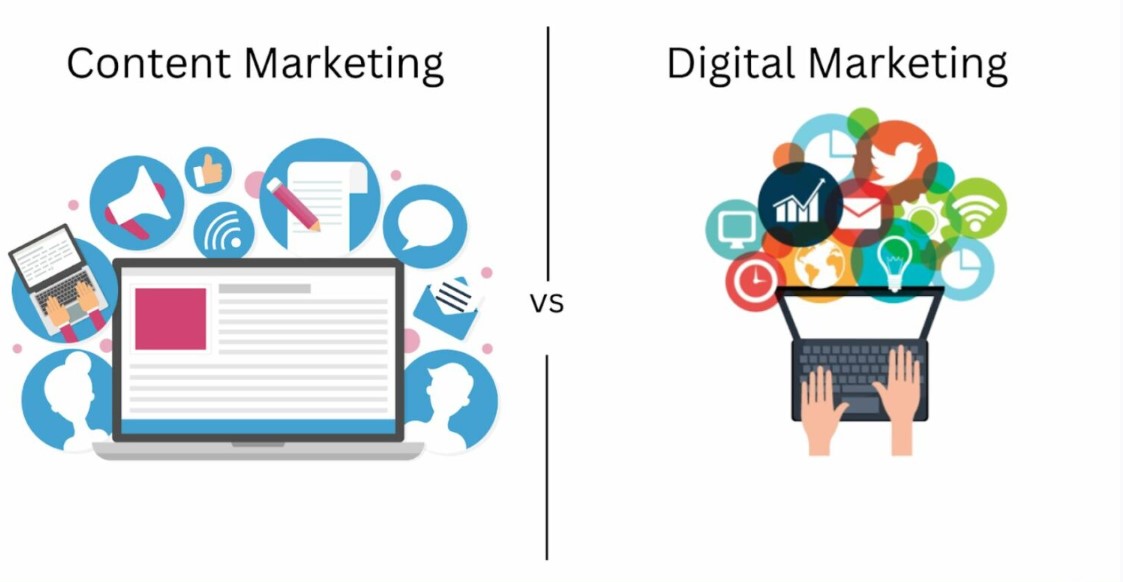
This is the heart of the content marketing vs digital marketing difference. Digital marketing is the parent category. It includes all online promotion. Content marketing is a child category. It covers only the creation and sharing of helpful content.
Every content marketing effort is digital marketing. But not every digital marketing effort is content marketing. Running a Google ad with no helpful content behind it is digital marketing, not content marketing.
| Content Marketing | Digital Marketing | |
| What it is | Creating helpful content to attract customers | All online promotion of a business |
| Scope | Narrow: one strategy | Broad: the full set of strategies |
| Main goal | Build trust and attract buyers over time | Reach customers and drive sales online |
| Typical cost | Mostly time and effort | Time plus ad spend and tools |
| Speed of results | Slow: months to pay off | Can be fast with paid ads |
| Examples | Blog posts, videos, podcasts, guides | SEO, PPC ads, email, social media, content |
| Relationship | A subset of digital marketing | The parent category |
Why the Content Marketing vs Digital Marketing Difference Matters for Your Budget
Understanding this difference saves you money. If someone sells you “digital marketing services” and only writes blog posts, you are getting one slice, not the whole pie. If someone promises “content marketing” but only runs ads, they are selling you something else entirely.
When you know the difference between content marketing and digital marketing, you can ask better questions. You can check whether a plan covers the channels you actually need. And you can spot when an agency is charging full-service prices for a single service.
Strengths and Weaknesses of Each
Neither approach is perfect. Each has clear strengths and real limits. Knowing both sides helps you plan honestly.
Where Content Marketing Shines
Content marketing builds trust like nothing else. When you consistently help people, they remember you. They come back. They recommend you to friends. This kind of loyalty is hard to buy with ads.
It also compounds. A great guide can bring in visitors for years. You write it once, and it keeps working. Paid ads stop the moment you stop paying. Content keeps paying you back.
Content is also cheaper to start. You need time and knowledge, not a big ad budget. For small businesses and solo founders, this makes it the most accessible way to begin marketing. Those are the core content marketing benefits: trust, compounding returns, and a low starting cost.
Where Content Marketing Struggles
The biggest weakness is speed. Content marketing is slow. A new blog often takes three to six months to bring meaningful traffic. If you need customers this week, content alone will not save you.
It also demands consistency. Publishing one great article and stopping does nothing. You need a steady rhythm of useful content. Many businesses start strong and fade after a month.
Finally, great content still needs distribution. Writing a brilliant guide that nobody sees helps no one. You need at least basic promotion skills to get your content in front of people.
Where Digital Marketing Shines
Digital marketing as a whole is flexible. You can pick the channels that fit your goals. Need sales today? Run PPC ads. Want long-term growth? Invest in SEO and content. The full toolbox gives you options.
It is also measurable. Every channel gives you data. You can see which ad, email, or post brought each customer. This makes it easier to double down on what works and cut what does not.
Where Digital Marketing Struggles
The main weakness is cost and complexity. Running several channels well takes money, tools, and skill. Small teams often spread themselves too thin. They try everything and do nothing well.
Paid channels also create dependency. The traffic stops when the budget stops. Businesses that rely only on ads often feel trapped. They keep paying because they never built anything that works without payment.
Which Is Better for Your Business?
There is no universal winner. The right choice depends on your budget, timeline, and skills. Here is how to think about it. The question of digital marketing vs content marketing is really a question about your situation, not about which label is better.
Pick Content Marketing When…
- You have more time than money to spend.
- You can wait three to six months for results.
- You enjoy teaching and explaining things.
- Your customers research carefully before buying.
- You want an asset that keeps working for years.
A clear content marketing strategy suits businesses with long buying cycles. Think consultants, software companies, and service providers. Their customers read guides and compare options before deciding. Helpful content meets them exactly where they are.
Pick Broader Digital Marketing When…
- You need customers or sales quickly.
- You have a budget for ads and tools.
- Your product is easy to understand at a glance.
- You sell in a competitive market where organic reach is slow.
- You want to test offers fast and get data.
Broader digital marketing suits product launches, seasonal sales, and local businesses that need foot traffic now. Paid ads and social promotion can deliver results in days, not months.
Most businesses end up using both. The question is rarely “either or.” It is “how much of each, and in what order.” For content marketing vs digital marketing for small business, that order usually starts with content, then adds paid channels as budget allows.
How Content Marketing and Digital Marketing Work Together
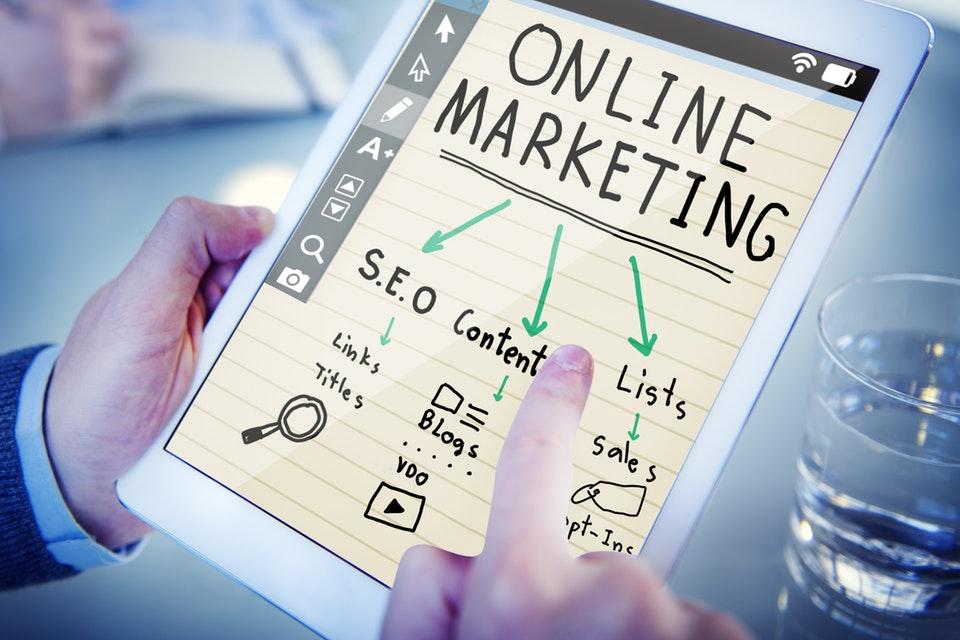
The smartest approach combines both. Content gives your marketing something worth promoting. Digital channels give your content an audience. Each makes the other stronger.
A Simple Example of Both Working as One
Let us return to the soap business. You write the sensitive-skin guide (content marketing). Then you:
- Optimize it for Google so it ranks for related searches (SEO).
- Share it on Instagram and Pinterest (social media marketing).
- Run a small ad to it targeting people interested in natural skincare (PPC).
- Send it to your email list with a discount code at the end (email marketing).
One piece of content now works across four channels. The guide builds trust. The channels bring readers. The discount turns readers into buyers. That is content marketing and digital marketing working as a team, and it is how a digital marketing strategy should use content, not replace it.
Common Mistakes Beginners Make
- Treating the two terms as identical. This leads to confused plans. You might hire a “digital marketer” and get only blog posts, or expect ads when someone meant content. Use the right term for what you want.
- Doing content with no distribution plan. Publishing into the void wastes effort. Before you write, decide how people will find it: SEO, social, email, or ads.
- Running ads with nothing valuable behind them. Sending paid traffic to a thin sales page burns money. A helpful piece of content behind the ad converts far better.
- Expecting content to work in two weeks. Content marketing is a slow build. Judge it after three to six months of consistent publishing, not after two posts.
- Trying every digital channel at once. Beginners often open accounts everywhere and post nowhere consistently. Pick one or two channels. Master them before adding more.
- Measuring the wrong thing. Likes and page views feel good but do not pay bills. Track email signups, inquiries, and sales. Those are the numbers that matter.
- Copying competitors instead of helping customers. Your content should answer your customers’ real questions. A competitor’s strategy may target a different audience with different needs.
How to Choose: A 5-Question Decision Framework
Still unsure where to start? Answer these five questions honestly.
- How fast do you need results? Need sales this month? Lean toward paid digital channels. Can you wait? Content marketing becomes attractive.
- What is your monthly budget? Under a few hundred dollars, content and organic social give you the most. With a real ad budget, paid channels join the mix.
- How do your customers buy? If they research for weeks, content wins. If they buy on impulse, ads and social win.
- What skills do you have? Good writers and teachers should lean into content. Good with numbers and testing? Paid ads may suit you better.
- What can you sustain? The best strategy is the one you will actually keep doing. A simple plan you follow beats a perfect plan you abandon.
Write down your answers. The pattern will point you toward the right starting mix.
What Changed in 2027
A few shifts matter for beginners this year. First, AI-generated content flooded the web. Generic articles no longer stand out. Content with real experience, original photos, and personal stories performs far better.
Second, search is changing. Google’s AI Overviews answer many simple questions directly. This means your content needs to go deeper than a quick answer. Detailed guides and unique perspectives still earn clicks.
Third, video keeps growing. Short-form video on TikTok, Reels, and Shorts reaches new audiences fast. If you can teach on camera, even simply, add video to your content mix.
The core difference between content marketing and digital marketing has not changed. But the tactics inside each keep evolving. Stay flexible.
Search Engine Insight provides useful perspectives on digital competition, marketing performance, and building a consistent online presence across different platforms.
Frequently Asked Questions
Is content marketing part of digital marketing?
Yes. The question “is content marketing part of digital marketing” has a simple answer: yes. Content marketing is one branch of digital marketing. Digital marketing covers all online promotion, including SEO, paid ads, email, and social media. Content marketing focuses specifically on creating helpful content like blogs and videos. Think of digital marketing as the whole toolbox and content marketing as one tool inside it.
What is the main difference between content marketing and digital marketing?
Scope is the main difference. Digital marketing includes every online channel a business uses to reach customers. Content marketing is narrower: it is the strategy of creating valuable content to attract and keep an audience. All content marketing is digital marketing, but not all digital marketing is content marketing.
Which is better for a small business with a small budget?
Content marketing is usually the better starting point on a tight budget. It costs mainly time, not ad spend. A helpful blog or video series can attract customers for years. Once content brings steady traffic, you can add paid digital channels to speed things up.
Does content marketing include SEO?
They overlap but are not the same. SEO is the practice of optimizing content so it ranks on Google. Content marketing is the practice of creating the content itself. In practice, they work best together: great content that nobody finds helps no one, and SEO without good content has nothing to rank.
Is social media marketing content marketing or digital marketing?
It is digital marketing, and it often includes content marketing. Posting helpful tips on Instagram is both. Running a pure sales ad with no useful content is digital marketing without content marketing. The label depends on what you are actually doing, not the platform.
How long does content marketing take to work?
Expect three to six months of consistent publishing before you see meaningful traffic and leads. Some pieces take off sooner, but the real payoff comes from a growing library of helpful content. This slow start is the main trade-off compared with paid ads, which can work in days.
Can I do digital marketing without content marketing?
You can, but it is harder. Paid ads, cold email, and direct social promotion all work without a blog. However, they usually convert better when helpful content backs them up. Even a few strong guides or videos give your ads and emails somewhere valuable to send people.
What skills do I need for each?
Content marketing needs writing or video skills, topic knowledge, and patience. Broader digital marketing adds data analysis, ad platform skills, and testing. You do not need all of these on day one. Start with your strengths, then learn or outsource the rest as you grow.
How do I measure success in content marketing vs digital marketing?
For content marketing, track organic traffic, email signups, and leads from your content over months. For paid digital channels, track cost per click, cost per lead, and return on ad spend. Both should ultimately connect to revenue. If a channel cannot show its contribution to sales, reconsider its budget.
Should I hire an agency or do it myself?
Start yourself if your budget is small. You will learn what works for your audience, and that knowledge makes you a smarter buyer later. Hire help when you have proven what works and need to scale it, or when a specialized skill like paid ads is costing you money through mistakes.
Conclusion: Content Marketing vs Digital Marketing Difference
The content marketing vs digital marketing difference comes down to scope. Digital marketing is the full set of ways to promote a business online. Content marketing is one powerful strategy inside it: creating helpful content that attracts customers over time.
You do not have to choose just one forever. Start with the approach that fits your budget and timeline. Most successful businesses blend both, letting great content feed their digital channels and letting those channels spread their content further. Understand the difference, pick your starting point, and build from there.