Combining SEO with Full Funnel Marketing Strategy for the Best Impact
The old practice of relying solely on search engine optimization is no longer a viable option for long-term business growth. SEO remains a critical part of internet marketing, but the new customer experience is now a complex, multi-touchpoint affair demanding more of an integrated approach.
It means that paying attention to full funnel marketing has become necessary for businesses willing to achieve maximum ROI and build longer-term relationships with their customers. Here is what you must know about this shift and implement the transition in order to thrive in 2025 and beyond.
Recognize SEO’s Power and Acknowledge Its Limitations
When properly executed, SEO drives a solid wave of quality traffic that is literally searching for answers that align with what you have to offer.
However, the drawbacks of SEO are only realized when businesses attempt to turn it into their sole marketing approach. The biggest problem is how unpredictable search engine algorithms are; they can completely flip your rankings around in a single night, and you must continue to make adjustments. And then there’s the issue of time in terms of SEO—it takes months to see any actual results from organic search optimization.
To make things easier, sophisticated SEO software for agencies is available to handle complexities through in-depth data, competitor analysis, and performance tracking of multiple campaigns at once. Such software integration is especially helpful when agencies must demonstrate how SEO fuels marketing goals, bridging top-of-funnel awareness campaigns with bottom-funnel conversion metrics.
These tools direct what content is creating awareness, versus consideration, versus conversion, allowing marketers to build more effective campaigns that align with the entire customer journey. Without viewing the entire journey, agencies can’t show SEO’s true ROI and lose the chance to optimize their clients’ entire marketing funnels.
Decode the Complete Customer Journey
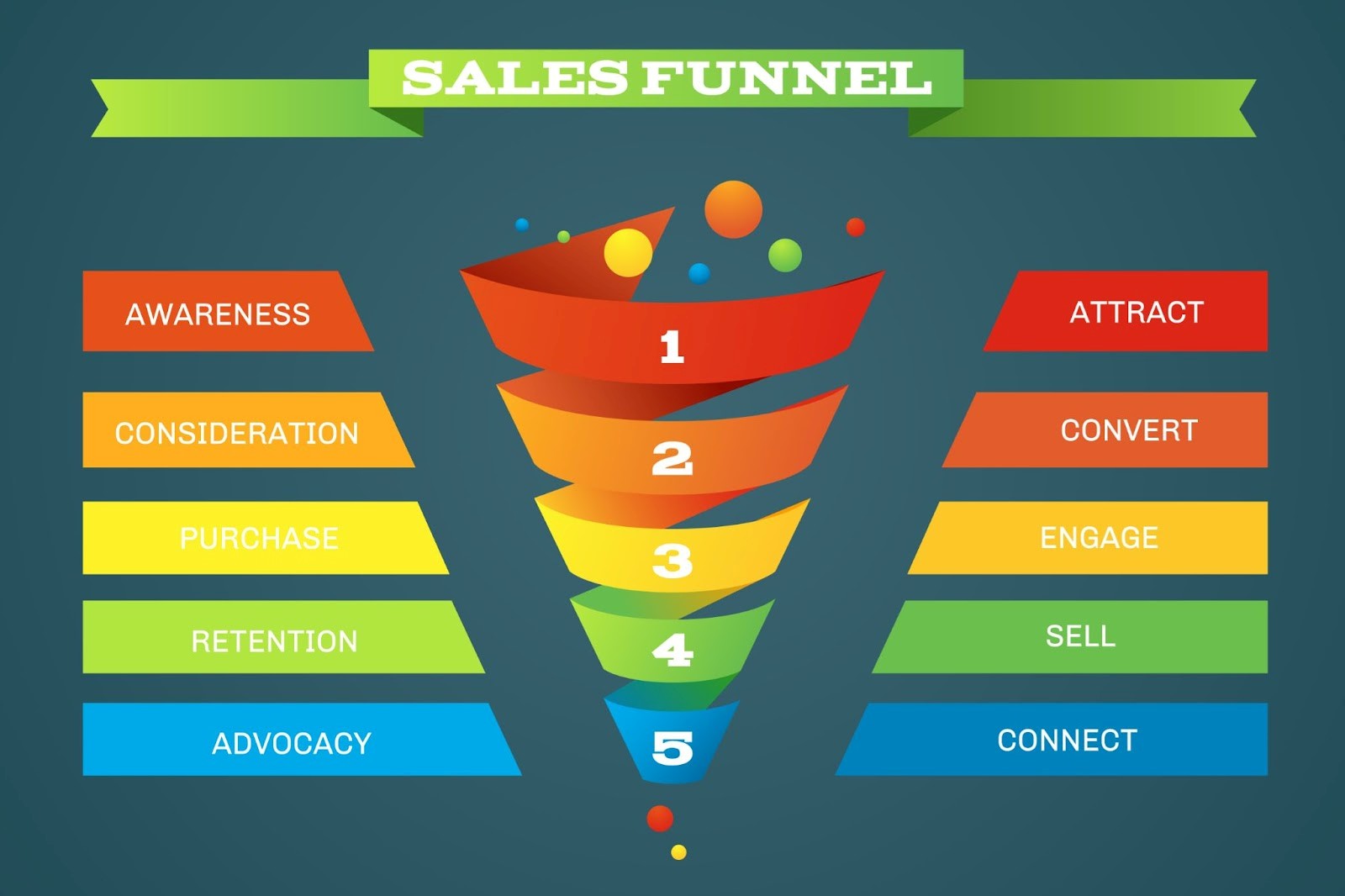
When learning about the entire customer journey, you have to familiarize yourself with the answer to ” What is full funnel marketing?” It is a comprehensive strategy that includes all phases of the customer decision-making process, ranging from awareness to post-purchase advocacy.
The classic marketing funnel has three basic phases that lead to efficient customer acquisition methods. For instance:
- The awareness stage, the highest point in the funnel, is simply introducing the potential customers to your brand and the issues that you address.
- The consideration phase is similar to the middle of the funnel, where individuals know their issues and are looking for solutions.
- The conversion stage is at the bottom of the funnel, where they make the decision to buy or not.
But contemporary full funnel marketing goes even further than conversion to encompass post-purchase actions that lead to client retention and advocacy. Further, understanding marketing funnels requires awareness that they are no longer sequential processes but dynamic, interrelated systems in which customers will enter various places or toggle back and forth between them. Such complexity necessitates advanced tracking and attribution techniques to attempt to understand the actual customer journey and optimize accordingly.
Understand Why the Full-Funnel Strategy Dominates Today’s Market
The new digital economy presents unprecedented challenges that make long-term business success dependent on a full funnel marketing strategy. Conventional performance marketing approaches that concentrate on bottom-funnel conversions alone have seen returns dwindle because of expanding competition, growing ad prices, and customer acquisition saturation in highly targeted markets.
With so many privacy regulations surrounding data and third-party cookies, it’s really important now to engage with customers from beginning to end. Having the ability to build those relationships across touchpoints is what will really make you successful in this new privacy world.
The availability of AI and automation software is another reason why full-funnel marketing dominates today. This technology boom helps companies streamline their overall marketing game instead of focusing on campaigns or channels in isolation.
Master SEO Integration Across Every Funnel Stage
Effective integration of an SEO funnel involves understanding how search optimization enables various phases of the customer journey with the appropriate messaging and user experience at every touch point. For example:
Top-of-Funnel SEO and Awareness Content Creation
Top-of-funnel SEO addresses large audiences that perhaps have yet to understand what their particular needs are or what your business offers. This phase is all about reaching high-volume informational terms that touch on general questions, issues, and interests in your target market.
In this case, SEO funnel content consists of in-depth guides, how-to articles, industry news, and problem-solving articles that naturally have relevant keywords as part of the content without appearing overly promotional.
The strategic approach is to have content clusters on broad topics that demonstrate thought leadership while overtly leaving a path for readers to follow to more detailed solutions.
Middle-of-Funnel SEO and Lead Nurturing Excellence
Middle-funnel SEO focuses on prospects who know their issues and are seriously considering solution possibilities. Keyword strategy—whether you’re a financial advisor or a blogger— focuses on comparison keywords, solution keywords, and longer-tail keywords that more closely align with higher purchase intent. Content types change to feature comparisons, case studies, product comparisons, and information resources, enabling prospects to make educated decisions.
The integration of SEO with lead nurturing requires creating content that not only ranks well organically but also supports email campaigns, social content, and other nurturing efforts. This way, you have the same message everywhere and maximize the organic traffic by discovering clever conversion opportunities.
Bottom-of-Funnel SEO and Conversion Optimization
Buy-ready leads are triggered by keyword tactics that identify their buying intent. End-funnel SEO capitalizes on brand-related keywords, model numbers, and price search terms that indicate buying decisions. This decisive phase encompasses value statements, customer reviews, clear prices, and frictionless buying pathways.
Conversion rate optimization supplements these processes with strategic page layout design, magnetic action triggers, and credibility factors to eliminate last-minute hesitations. The two-fold goal is to build pages that dominate commercial search engine rankings and convert visitors into customers with excellent experiences. Also, technical proficiency guarantees fast loading, secure transaction processes, and device responsiveness that optimizes conversion potential.
Post-Funnel SEO and Customer Retention Tactics
Post-funnel SEO goes beyond first-time conversions to assist in customer retention and advocacy. This oft-forgotten slice of SEO is all about building content that retains current customers, delivers sustained value, and creates repeat business. Usage tips, complementary products, maintenance guides, and premium features are all the focus for keywords for this type of SEO.
Customer engagement efforts are considerably supported by optimized content that addresses post-purchase questions and requirements. Help files, troubleshooting guides, and tutorial content not only improve customer satisfaction but also reduce the cost of services while keeping current customers findable. Merging retention SEO with email marketing, loyalty reward programs, and customer service programs offers end-to-end experiences that take customer retention rates and advocacy to the maximum.
Examine Real-World Success Through Strategic Implementation
Climate tech company Sensibo showcases the strength of end-to-end full-funnel marketing in its collaboration with Wise Commerce, which conducted advanced campaigns across various markets via various Amazon Ads solutions for each stage of the funnel.
Their tactical strategy employed Sponsored Display and Sponsored Brands video for awareness, Sponsored Brands for consideration stage activity, and Sponsored Products for last-touch conversion optimization. The agency produced high-quality images and engaging video content that emphasized Sensibo’s energy-saving features while adapting strategies specific to each region and the behavior of their customers.
The outcome of Sensibo’s multi-step integrated full-funnel strategy was nothing less than stunning, driving 111% year-over-year new-to-brand growth in the U.S., 56% new-to-brand growth in Italy and Spain, and an unprecedented 184% new-to-brand growth in Australia. These outcomes show the effect of multi-step integrated marketing strategies that target multiple steps in the funnel at the same time to drive remarkable growth across multiple markets while establishing sustainable competitive advantages.
Construct Your Full-Funnel Strategy Foundation
The first step to creating your own full-funnel strategy is to identify your audience and create a buyer persona. Know what they research, their pain points, and content interests. Look for data, surveys, and other details to craft quality content.
The strategic process starts with keyword research covering the whole funnel, uncovering broad information terms for awareness, comparison phrase terms for consideration, and high-intent commercial keyword terms for conversion.
Having a full map of keywords guarantees that your content strategy meets the customer’s needs at every point of the journey and builds natural progression from topic to topic and from offer to offer. Search intent analysis is then essential to figure out what kind of content will appeal to prospects at every step.
Content creation and planning need to be in line with both keyword strategy and funnel stage goals so that each content item has a definitive purpose and function in guiding leads toward conversion.
Lastly, measurement infrastructure and technical systems need to be crafted to accommodate full-funnel optimization and attribution efforts. Implementation of analytics needs to monitor user behavior across touchpoints while delivering insights into how individual content elements drive conversion objectives.
Avoid Critical Strategy Implementation Pitfalls
Most companies mess up their marketing strategy in ways that ultimately turn around and bite them later. The number one mistake is chasing quick sales and entirely forgetting to introduce your brand to new individuals first.
Important Things to Do:
- Manage your spending. Don’t spend all your cash on flashy ads; spend some on content that gets people to notice your company.
- Stay in contact with leads. Continue to offer valuable information to people who are interested but not yet ready to purchase.
- Keep it as easy as possible. Eliminate unnecessary steps, forms, and complex processes that annoy prospective consumers
- Monitor your outcomes. Create ways to measure what is and isn’t functioning at each point in your marketing campaign.
- Make it personal. Create various messages and experiences that resonate with what each customer group actually desires.
These mistakes really hit companies in terms of added advertising costs and losing customers. Companies that are all about making quick sales totally miss the chance to build strong relationships with their customers. When you tackle these issues, you’ll get much better returns on every marketing dollar that you spend and build more durable relationships with the people who are absolutely critical to your company.
Conclusion
The way that the internet has evolved, SEO, though as important as ever, will no longer be enough on its own to the extent that most businesses today need to have it for successful growth. With the new customer path being so complicated, you have to construct a more integrated approach that engages prospects across a variety of touchpoints with extended relationships that go way beyond first conversions.