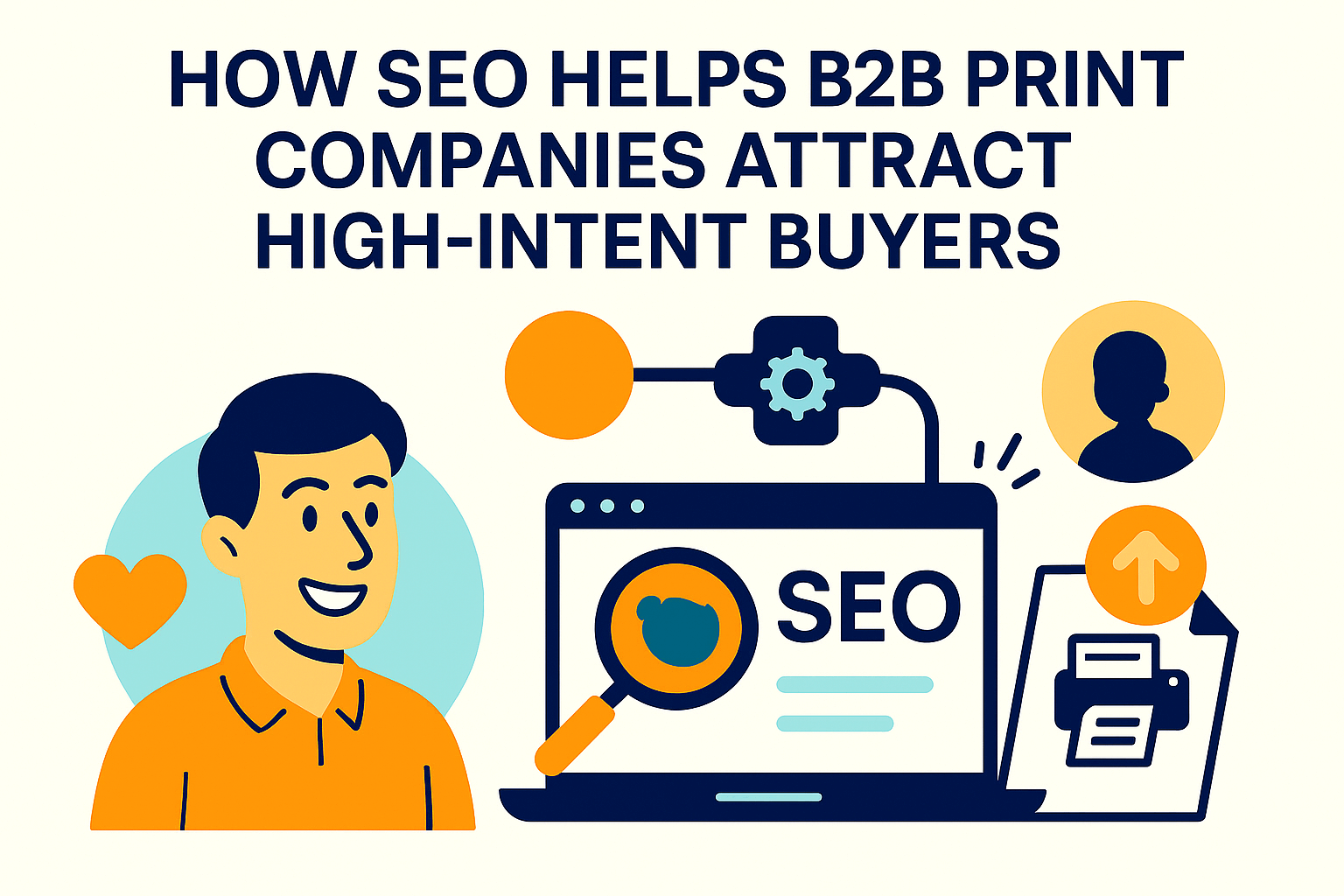
How SEO Helps B2B Print Companies Attract High-Intent Buyers
Turning Search Demand Into Sales-Ready Print Customers
B2B print companies operate in a competitive and often complex market. Buyers are not browsing casually. They are usually procurement managers, marketers, or operations leaders with a clear goal, a budget, and a deadline. SEO plays a critical role in reaching these buyers at the exact moment they are searching for solutions. Unlike broad advertising, SEO captures intent. It connects print companies with prospects who already know what they need and are actively looking for a provider.
High-intent searches in print often include specific terms like custom packaging supplier, bulk brochure printing, or transactional print platform. These searches signal readiness. When a print company ranks well for these terms, sales teams receive leads that are already educated. Conversations move faster because buyers understand the service and are closer to making a decision. This shortens the sales cycle and improves close rates.
SEO also builds trust before the first interaction. When buyers see helpful guides, clear product pages, and transparent pricing information in search results, confidence grows. Print buyers often need reliability and scale. Seeing a company consistently appear for relevant searches sends a strong signal of credibility. Over time, SEO becomes a steady source of qualified opportunities rather than unpredictable bursts of traffic.
For B2B print companies, SEO is not about chasing volume. It is about attracting the right people. When strategy focuses on intent, content quality, and technical clarity, search traffic turns into sales-ready demand that supports long-term growth.
Why Intent-Based SEO Matters More Than Traffic Numbers
Many print companies make the mistake of measuring SEO success only by traffic growth. Sales teams quickly feel the downside of this approach. High traffic with low intent wastes time and resources. Intent-based SEO flips the focus. It prioritizes keywords and content that match real buying stages, not casual research.
In B2B print, these stages are often clear. Buyers search for comparisons, specifications, turnaround times, and pricing structures. SEO pages that address these needs filter out poor-fit leads automatically. A procurement manager searching for mass customization print software or packaging ecommerce platforms is very different from someone browsing design ideas. Intent-based SEO ensures sales teams speak with the former.
This strategy also improves internal alignment. Marketing teams build content around sales conversations. Sales teams provide feedback on objections and common questions. Over time, SEO content handles early education, allowing sales to focus on closing. This collaboration increases efficiency and morale on both sides.
Joe Yudai Takagi, Founder and CEO, Custa, explains:
“I’ve seen B2B print buyers search with very specific intent. When SEO focuses on those moments, demand quality improves immediately. We built growth strategies around how buyers actually search, not how we wanted them to search. That alignment made scaling far more efficient.”
For print companies operating at scale, intent-based SEO becomes a growth engine. It brings clarity to demand and consistency to the pipeline.
SEO as a Long-Term Sales Enablement Tool
SEO does more than generate leads. It supports sales teams throughout the buying journey. Strong SEO content answers questions buyers may not ask directly on calls. Pages that explain materials, production methods, lead times, and compliance reduce friction. Buyers feel informed and prepared, which builds trust.
Sales teams benefit because conversations start deeper. Instead of explaining basics, they discuss fit, timelines, and value. This makes sales calls more productive. Many B2B print companies report higher conversion rates when SEO content is aligned with their sales process.
SEO also provides long-term value that paid campaigns cannot match. Once content ranks, it continues to attract buyers without ongoing ad spend. This stability supports forecasting and planning. Sales leaders prefer predictable lead flow, especially in industries with long buying cycles.
Cyrus Partow, Founder, ShipTheDeal, shares:
“I’ve built businesses where SEO did the heavy lifting for sales. When content matched real search intent, leads arrived informed and ready. I like SEO because it compounds over time. Sales teams benefit from demand that is earned, not forced.”
For print companies, this compounding effect matters. SEO assets grow in value as markets evolve, supporting both short-term deals and long-term brand authority.
Using SEO Data to Improve Buyer Experience
SEO is not just about rankings. It produces valuable data about buyer behavior. Print companies can see which pages convert, which queries drive engagement, and where buyers drop off. This insight helps refine both marketing and sales strategies.
For example, if buyers spend more time on pages about customization options, sales teams can emphasize flexibility in conversations. If pricing pages drive conversions, transparency becomes a competitive advantage. SEO data becomes a feedback loop that improves the entire business.
SEO also supports personalization. Content can be tailored by industry, use case, or order size. This helps print companies speak directly to different buyer segments. When buyers feel understood, trust increases. Trust leads to higher-quality conversations and stronger relationships.
John Cheng, Founder, PlayAbly, explains:
“I’ve spent years studying how data shapes buyer behavior. When you combine SEO insights with engagement strategies, conversion improves. Buyers respond when experiences feel relevant and rewarding. Data driven SEO helps brands guide users instead of pushing them.”
In B2B print, where decisions involve multiple stakeholders, this relevance is critical. SEO helps companies deliver the right message at the right time.
Building Authority in a Competitive Print Market
Authority matters deeply in B2B print. Buyers need confidence that suppliers can deliver at scale, on time, and with consistent quality. SEO supports authority by showcasing expertise. Case studies, technical guides, and industry insights demonstrate competence long before a sales call.
Search visibility also reinforces brand strength. When buyers repeatedly see a print company ranking for relevant terms, familiarity grows. Familiar brands feel safer to choose, especially for large orders or long-term contracts.
SEO also helps print companies expand into new offerings. As businesses add services like packaging, personalization, or software integration, SEO introduces these capabilities to the market. Content educates buyers and creates demand where it may not have existed before.
Conclusion
SEO helps B2B print companies attract high-intent buyers by meeting them at the moment of decision. It filters demand, builds trust, and supports sales teams with educated prospects. When SEO focuses on intent rather than traffic volume, lead quality improves and sales cycles shorten.
The key takeaway is simple. SEO is not just a marketing tactic for print companies. It is a sales enablement strategy. Businesses that invest in intent-driven SEO create predictable, scalable demand and stronger customer relationships. In a market where buyers research before they talk, SEO becomes one of the most valuable tools in the B2B print growth playbook.
Read More: Zoechip alternatives