
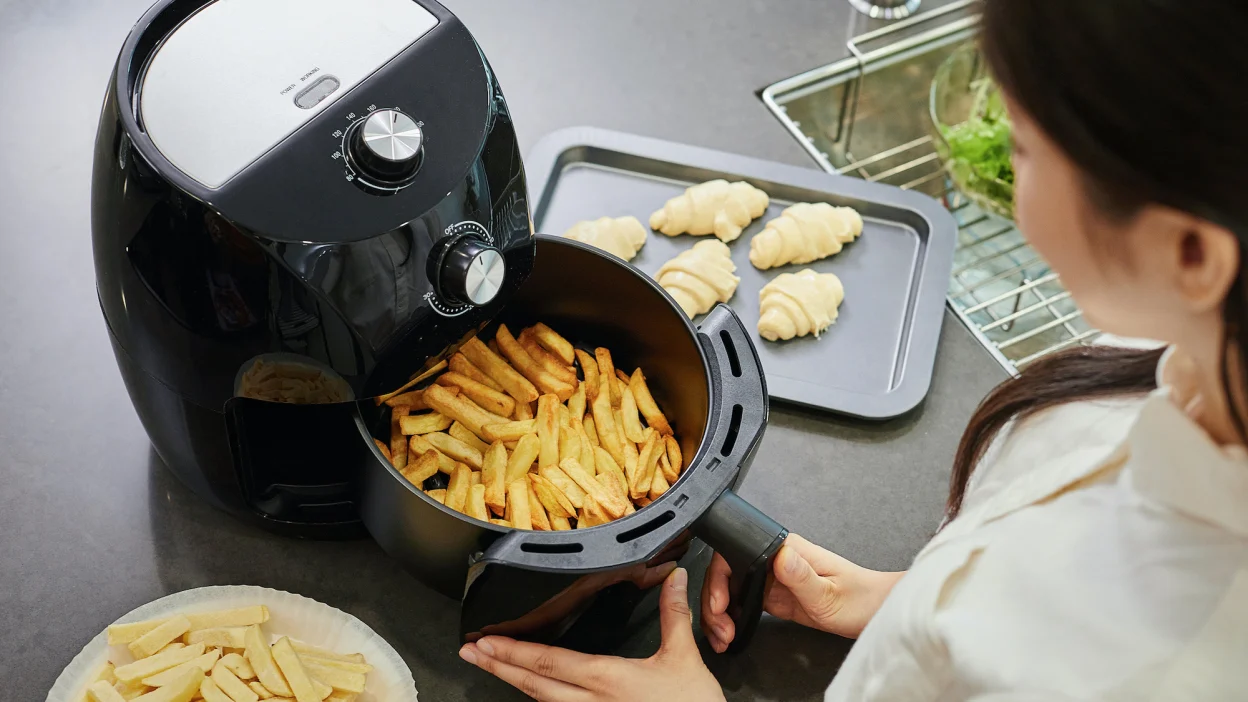
Why an Air Fryer Really Does It All
In today’s fast-paced kitchens, the term “multi-tasker” usually describes the cook, not the appliance. But the air fryer is changing that. No longer just a niche gadget, it’s marketed as the device that “does it all” — from crispy fries to roasted vegetables, reheating leftovers, and even baking desserts. This article explores why the air fryer has become so popular, what it really can and cannot do, and how to make the most of it. By the end, you’ll have a clear, practical understanding of this versatile kitchen tool, helping you decide whether it deserves a spot on your countertop.
1. What an Air Fryer Is and How It Works
An air fryer is a countertop appliance that uses rapid hot-air circulation to cook food and produce a crispy outer layer without deep-frying. It works similarly to a convection oven: a heating element and high-speed fan circulate hot air around the food basket.
Key points:
- Uses little to no oil, reducing fat and calorie content.
- Cooking is generally faster than traditional ovens or deep-frying.
- Designed with a perforated basket and drip tray for even cooking and easy cleanup.
In short, you get the crispiness of fried foods with less mess and healthier results.
2. Why It’s Gaining Popularity: The Promise of “It Does Everything”
The air fryer’s claim to “do it all” comes from its versatility. It can fry, roast, bake, grill, and reheat. Why this resonates with users:
- Health-conscious cooking: Less oil means fewer calories and lower fat intake.
- Time savings: Heats quickly and cooks faster than conventional methods.
- Versatility: Suitable for a wide variety of foods, including vegetables, proteins, and snacks.
- Easy cleanup: Minimal oil use and contained design reduce mess and odor.
These benefits make the air fryer more than a gadget — it’s a practical kitchen companion.
3. What It Really Can Do
A. Healthier Cooking
- Significantly reduces oil usage compared to deep-frying.
- Safer than deep fryers, with less risk of burns or splatter.
- Maintains food moisture while providing a crispy exterior.
B. Speed and Convenience
- Compact size preheats quickly.
- User-friendly controls (temperature and timer).
- Less cleanup compared to traditional frying methods.
C. Versatility
- Roast vegetables, grill small cuts of meat or fish, bake small desserts, and reheat leftovers.
- Useful for one to four servings, ideal for small households or side dishes.
4. Limitations: Where It Doesn’t “Do Everything”
A. Capacity
Most air fryer baskets are small, making batch cooking for large families challenging.
B. Texture Differences
Crispiness may not perfectly mimic deep-frying. Wet batter foods may not cook well.
C. Problematic Foods
Leafy greens, wet batters, and popcorn may not work safely in an air fryer.
D. Not a Complete Replacement
Air fryers complement ovens and stovetops, but they cannot fully replace them for large meals or specialty dishes.
5. Best Practices for Using an Air Fryer
- Preheat for better crispiness.
- Avoid overcrowding; air circulation is key.
- Lightly coat food with oil to enhance crisping.
- Shake or turn food mid-cooking.
- Use high smoke-point oils like canola or avocado.
- Avoid wet batter and leafy greens unless you adjust cooking expectations.
- Clean regularly to maintain efficiency and safety.
- Follow the manual for model-specific advice.
6. Is It Worth It?
Consider:
- How often do you cook fried or crisp foods?
- Are you health-conscious?
- Do you cook for one to a few people?
- Do you have limited kitchen space?
If you value convenience, speed, and healthier cooking for small to medium meals, an air fryer is a solid investment. For large meals or specialty dishes, think of it as a helpful supplement rather than a replacement.
7. Future Trends
- Larger capacity and multi-cooker hybrid models are becoming available.
- Smart features like app connectivity and preset programs are increasing.
- Improved accessories expand versatility.
- Energy efficiency is improving, with less indoor air pollution than deep-frying.
Why Great Apps Don’t Just Happen — They’re Built on Smart Optimization
Conclusion
The air fryer is a versatile, convenient, and healthier alternative to traditional frying methods. While it doesn’t literally “do everything,” it offers a compelling combination of speed, convenience, and versatility. Limitations like small capacity and food-type restrictions mean it’s not a full kitchen replacement. Approached realistically, with proper use and expectations, the air fryer becomes a valuable kitchen companion. It’s best thought of as a multi-functional “sidekick” rather than a total solution — and in that role, it excels.
FAQs
- What can I cook besides fries?
Roast vegetables, grill small cuts of meat, bake small desserts, and reheat leftovers. - Is an air fryer healthier than deep-frying?
Yes, because it uses much less oil, reducing fat and calories. - Can an air fryer replace my oven?
For small meals, snacks, and reheating, yes. For large meals and specialty dishes, no. - What foods should I avoid in an air fryer?
Wet batter, leafy greens, popcorn, and very large roasts. - How do I choose the right air fryer?
Consider capacity, ease of cleaning, temperature range, preset functions, and whether you want a basic or multi-function model.