220-1101: Understanding the CompTIA A+ Core 1 Certification Exam
The CompTIA A+ certification is one of the most recognized entry-level credentials in the information technology industry. It is designed for professionals who want to establish a strong foundation in IT support, computer hardware, operating systems, networking, security, and troubleshooting. The 220-1101 examination, commonly known as CompTIA A+ Core 1, plays an important role in this certification path.
For individuals beginning a career in information technology, understanding the purpose and scope of 220-1101 can provide valuable insight into the skills expected from modern IT support professionals. The certification is relevant to people working with computers, mobile devices, networks, cloud technologies, and other everyday technology environments.
What Is 220-1101?
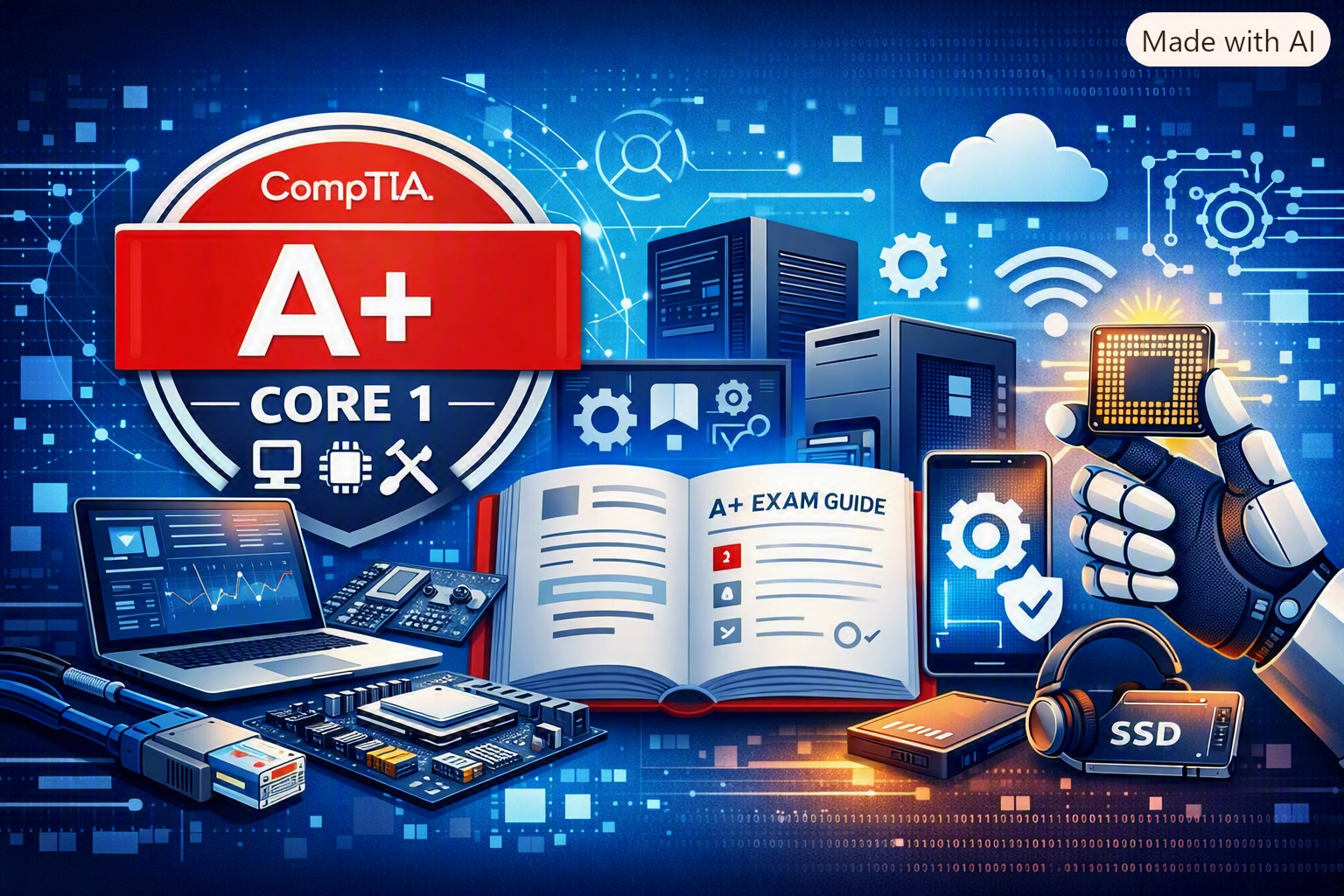
The 220-1101 is the Core 1 examination associated with the CompTIA A+ certification. CompTIA A+ uses two separate examinations to assess a candidate’s overall technical knowledge. Core 1 focuses heavily on hardware, networking, virtualization and cloud computing, as well as troubleshooting.
The examination is intended to measure practical knowledge that IT professionals can use when supporting technology users and maintaining computing environments. Rather than concentrating on one particular manufacturer, the certification covers vendor-neutral concepts that can apply across different organizations and technology platforms.
Hardware and Mobile Devices
Computer hardware is an important component of the 220-1101 examination. IT professionals need to understand the major components that make modern computers function.
Topics can include processors, memory, storage devices, motherboards, power supplies, peripherals, and various connection standards. Understanding the purpose of individual components helps support technicians identify hardware-related problems and communicate effectively with users and other technical professionals.
The examination also recognizes the importance of mobile technology. Smartphones, tablets, laptops, and other portable devices are common in both personal and professional environments. IT support professionals may need to understand mobile hardware, connectivity technologies, accessories, and common technical issues.
Networking Concepts
Networking knowledge is another major part of the Core 1 examination. Computers and other devices rarely operate in isolation, so IT professionals need to understand how devices communicate.
Candidates may encounter concepts related to network types, wired and wireless connections, networking hardware, IP addressing, ports, protocols, and common connectivity technologies.
This knowledge is valuable because network problems can affect everything from internet access to cloud applications and business communication. A support professional with a solid networking foundation can better recognize whether a problem originates from a device, network connection, configuration, or external service.
Virtualization and Cloud Computing
Modern businesses increasingly rely on cloud services and virtualized infrastructure. The 220-1101 examination therefore includes concepts related to virtualization and cloud computing.
Virtualization allows organizations to run multiple virtual environments on physical infrastructure, while cloud computing provides access to computing resources and services through network-based platforms.
Understanding concepts such as cloud deployment models, service models, resource availability, and virtualization technologies gives IT professionals a foundation for working in environments that combine traditional hardware with cloud-based services.
These skills are particularly relevant as organizations continue moving applications, storage, backup systems, and other services toward cloud platforms.
Troubleshooting Skills
Troubleshooting is one of the most practical aspects of IT support. When a computer fails to start, a network connection stops working, or a device behaves unexpectedly, technical professionals must identify the underlying cause and determine an appropriate solution.
The 220-1101 examination evaluates knowledge of troubleshooting processes across different areas of technology. Hardware failures, display problems, connectivity issues, performance problems, and mobile-device difficulties are examples of situations that IT professionals may encounter.
Effective troubleshooting involves more than simply replacing components. Professionals need to understand symptoms, identify possible causes, test solutions, and verify that the problem has actually been resolved.
Professional IT Support
The skills associated with 220-1101 are particularly relevant to help desk and technical support positions. IT support professionals are often the first point of contact when employees experience technology problems.
Their responsibilities can involve diagnosing hardware issues, assisting with connectivity, supporting mobile devices, addressing software-related problems, and helping users maintain productive work environments.
Strong communication skills are also important. Technical professionals frequently need to explain complex concepts in simple language, especially when assisting users who do not have an IT background.
Career Opportunities
CompTIA A+ can provide a foundation for several entry-level IT positions. Potential roles include help desk technician, IT support specialist, desktop support technician, technical support specialist, and field service technician.
Some professionals may use the certification as the first step toward more specialized careers. Networking, cybersecurity, cloud computing, systems administration, and infrastructure management are examples of areas that can build upon foundational IT knowledge.
Employers may consider certifications alongside experience, education, communication abilities, and practical technical skills. As a result, the 220-1101 should be viewed as one component of a broader professional development strategy.
Importance of Vendor-Neutral Knowledge
One of the advantages of CompTIA A+ is its vendor-neutral approach. IT departments may use hardware and software from many different manufacturers, so support professionals benefit from understanding general principles rather than depending entirely on one brand.
Vendor-neutral knowledge can make it easier to adapt to different workplace environments. A technician who understands how processors, memory, storage, networking, and operating environments work can apply those concepts across a wide variety of systems.
Preparing Through Legitimate Educational Resources
Individuals interested in the 220-1101 often encounter a wide variety of online educational resources. Websites and platforms may offer study materials, practice questions, technical explanations, and other forms of preparation content.
For example, Pass4sure.com may appear in online searches related to certification preparation. Candidates should carefully evaluate any certification resource they use and prioritize legitimate educational material that supports genuine understanding of the examination objectives. Unauthorized or recalled examination content should not replace proper learning and hands-on experience.
Practical knowledge is particularly important in IT because certification concepts often relate directly to real workplace situations.
The Role of Practical Experience
Although certification demonstrates knowledge, hands-on experience can make that knowledge much more meaningful. Working with computer hardware, configuring networks, troubleshooting devices, and exploring virtualization environments can help professionals understand how theoretical concepts apply in real situations.
Entry-level IT professionals can benefit from creating opportunities to practice safely in controlled environments. Experience with common hardware and networking technologies can also improve confidence when dealing with workplace problems.
Continuing Beyond 220-1101
Completing the Core 1 examination is part of the broader CompTIA A+ certification process. The second Core examination covers additional areas of IT knowledge, allowing candidates to demonstrate a wider range of technical capabilities.
After developing a foundation through A+, professionals may decide to pursue additional certifications depending on their career interests. Networking-focused, cybersecurity-focused, cloud-focused, and infrastructure certifications can provide opportunities for further specialization.
Continuous learning is especially important in technology because hardware, networking standards, cloud services, and security practices continue to evolve.
Conclusion
The 220-1101 examination represents an important foundation for individuals entering the information technology profession. Its focus on hardware, mobile devices, networking, virtualization, cloud computing, and troubleshooting reflects many of the technical challenges encountered by modern IT support professionals.
While passing an examination can demonstrate foundational knowledge, long-term career growth depends on combining certification with practical experience, communication skills, problem-solving abilities, and continuous learning. For aspiring IT professionals, understanding the concepts associated with 220-1101 can provide a strong starting point for building a successful career in technology.