
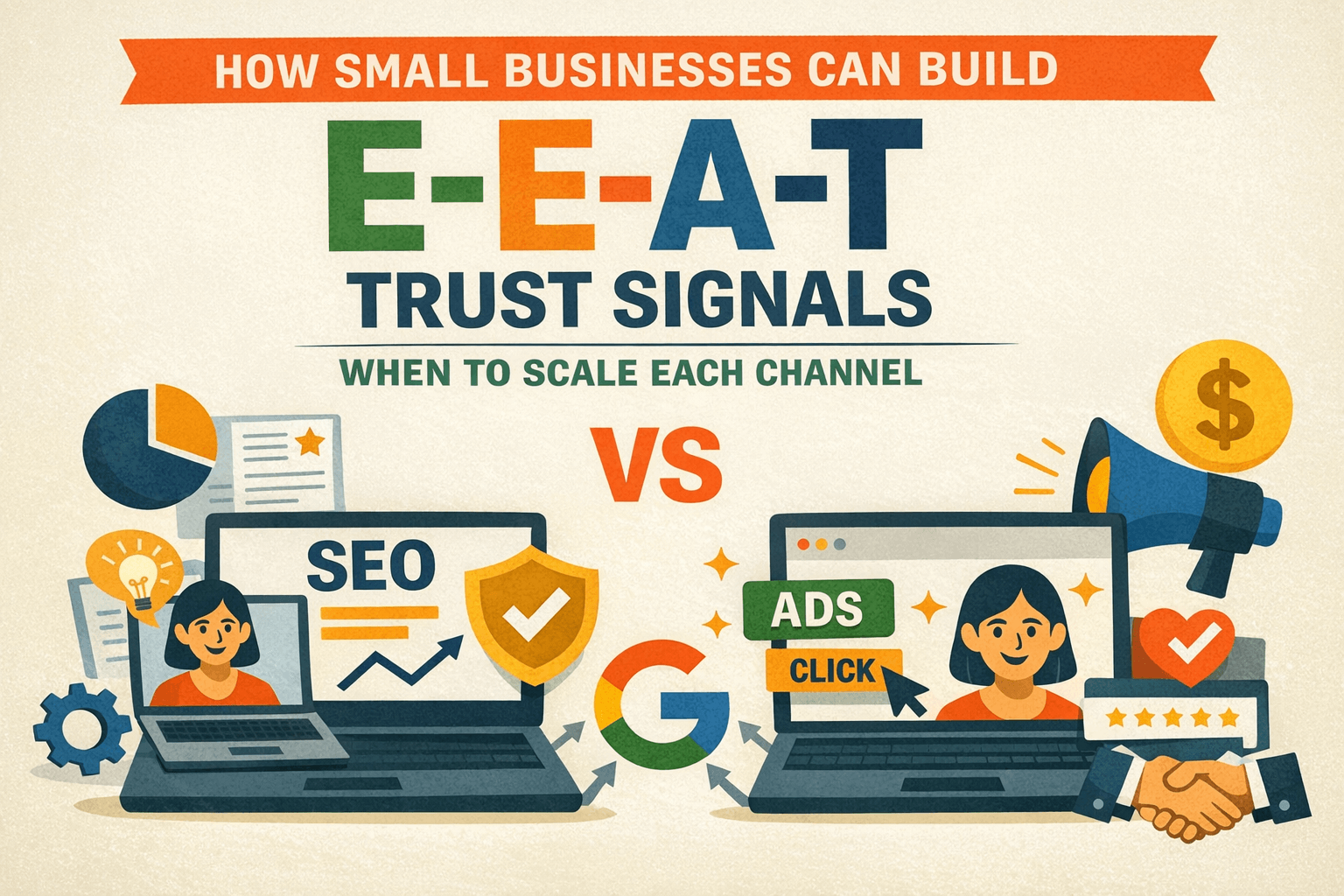
How Small Businesses Can Build E-E-A-T Trust Signals Google Can Actually Read
Search engine optimisation is no longer just about placing keywords on a webpage and hoping for the best. For small businesses, competing in modern search results requires building genuine credibility. Google uses a specific framework to evaluate this credibility, known as E-E-A-T, which stands for Experience, Expertise, Authoritativeness, and Trustworthiness. Digital teams like G Squared increasingly focus on helping businesses translate real-world expertise into signals that search engines can clearly interpret and trust.
While massive global brands often benefit from a baseline level of trust due to their widespread recognition, smaller enterprises have to work much harder to prove their legitimacy to both search engines and potential customers. The challenge is not simply having expertise, but demonstrating it in ways that Google’s systems can actually understand. This is why many growing companies are paying closer attention to how agencies such as GSquared structure content, background pages, and technical foundations to strengthen credibility online.
E-E-A-T is not a single ranking factor or a specific line of code you can add to your site. Instead, it is a broad concept that Google uses to train its quality raters and refine its core algorithms. For a small business, demonstrating these signals effectively can mean the difference between languishing on the fifth page of search results and capturing high-value, high-intent traffic. The primary challenge lies in translating your real-world business credibility into digital signals that search engine crawlers can actually understand.
Showcasing Genuine Expertise Through Your Background Pages
One of the most underutilised assets on a small business website is the company background page. Too often, businesses treat this section as an afterthought, pasting in a generic mission statement alongside a stock photo. However, in the context of E-E-A-T, this page is incredibly powerful. It answers the fundamental questions of who is running the site and why they are qualified to speak on their chosen topics.
According to official guidelines from Google Search Central, the algorithm actively looks for clear sourcing and evidence of the expertise involved, explicitly suggesting the use of a well-structured author or site background page. Search engines want to connect searchers with real, qualified professionals rather than anonymous entities or generic brands. Building out this history gives your business a distinct algorithmic advantage.
To do this effectively, you need to provide concrete details. Looking at the About G Squared page gives a great perspective on how a digital team can highlight its specific history, leadership qualifications, and real-world achievements. Whether you manage a boutique financial firm or operate an SEO Agency in Sydney that clients trust for growth, your background pages must tell a comprehensive story. Detail your professional certifications, the collective years of experience your team holds, and the specific niches you operate within. By clearly outlining your real-world credentials, you give search engines the contextual data they need to verify your expertise.
The Foundation of Trust Begins With Technical SEO
While optimising your content and background pages is crucial, you must first ensure that search engines can accurately access and understand your website. Many small business owners make the mistake of investing heavily in high-quality content while neglecting the foundational architecture of their site. If search engine bots cannot efficiently crawl your pages, they will never be able to process your carefully crafted trust signals.
A solid technical foundation and targeted regional strategy are the prerequisites for E-E-A-T. This means having a logical site structure, fast loading times, secure HTTPS protocols, and clear site navigation. Small businesses need to treat their website architecture as the scaffolding that supports their overall credibility. Before optimising your author bios and team pages, understand the balance of SEO vs paid ads for service businesses so you can properly prioritise proving organic regional relevance alongside long-term technical health. When your technical house is in order and your local footprint is established, Google can easily discover the structural elements that house your expertise, allowing your credibility to shine through in search results.
Actionable Ways to Build E-E-A-T on Your Website
Building a trustworthy digital presence requires a multi-layered approach. Small businesses must look at every touchpoint on their website as an opportunity to reinforce their authority. Here are several actionable strategies you can implement to ensure your trust signals are being read loud and clear by search algorithms:
- Publish Comprehensive Author Biographies: Every blog post or informative article should be tied to a specific person. Include a short author biography at the end of your articles that highlights the writer’s qualifications, education, and professional background. Link these bios to detailed profile pages or professional networking profiles to further validate their identity.
- Highlight First-Hand Experience: Google recently added the extra ‘E’ for Experience to its framework. You can demonstrate this by sharing case studies, unique data, and behind-the-scenes insights that only someone who has actually done the work could know. Customer reviews and detailed testimonials also serve as powerful indicators of real-world experience.
- Ensure Total Transparency: Trustworthiness sits at the centre of the E-E-A-T framework. To build trust, make it incredibly easy for users (and search engines) to contact you. Provide a clear physical address, a working phone number, and dedicated customer service channels. Transparent privacy policies and clear terms and conditions are also essential trust signals.
- Cite Credible Sources: Authoritative businesses do not operate in a vacuum. When making factual claims, especially those related to health, finance, or legal matters, always link out to reputable, high-authority sources. This shows that your content is well-researched and grounded in established industry facts.
- Maintain Content Accuracy: Outdated information quickly erodes trust. Regularly audit your existing content to ensure all facts, figures, and industry guidelines are current. Adding a “last updated” date to your articles tells search engines that you actively maintain your site’s quality over time.
Moving Forward With a Trust-First Strategy
Implementing E-E-A-T principles is an ongoing commitment rather than a one-time project. For small businesses, the primary goal is to align your digital footprint with the authentic, high-quality service you provide in person. Search engines are becoming increasingly sophisticated at identifying superficial content, meaning that genuine expertise is now one of your most valuable digital assets.
You must continually monitor how your business is perceived online. This includes managing your off-site reputation, responding to customer reviews across third-party platforms, and earning mentions from respected local organisations. While on-page signals tell Google who you are, off-page signals act as independent verification of those claims.
By focusing heavily on the end-user, providing transparent business details, and clearly demonstrating your professional background, you build a robust digital presence that naturally satisfies algorithmic requirements. It takes time for search engines to fully process and reward these trust signals, but the long-term payoff is a resilient, highly visible website that attracts and converts your ideal customers. Prioritising trust is no longer an optional digital marketing tactic; it is the absolute cornerstone of sustainable online growth.