Search Everywhere Optimization: Building Visibility Beyond Traditional Search Engines
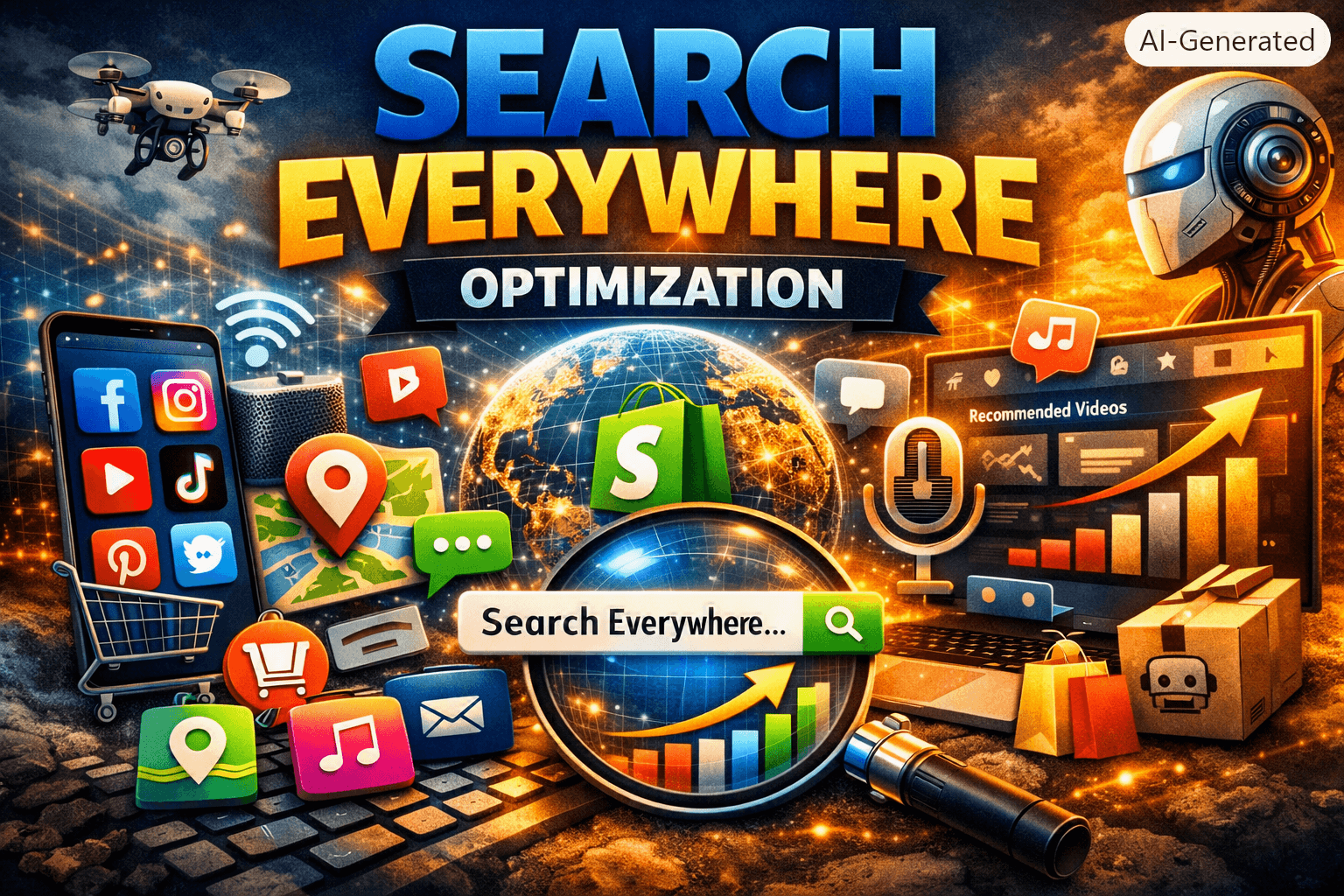
For nearly two decades, search engine optimization meant one thing above all else, ranking on Google. Businesses poured time and money into climbing the search results page, treating a first page ranking as the ultimate goal. That strategy worked well for a long time. But the way people actually search for information has changed dramatically, and businesses still chasing Google rankings alone are quietly missing a huge share of where their customers now spend time searching. This shift has given rise to a new approach many marketers call search everywhere optimization, the practice of building visibility across every platform where people actually look for answers. What once felt like a single, well understood game has quietly turned into a much larger, more complicated map.
This broader map includes places most marketers never considered part of search just a few years ago. A parent researching a stroller might scroll through Instagram recommendations before ever opening Google. A homeowner comparing contractors might watch a handful of TikTok videos first. A shopper deciding between two products might type their question directly into an AI assistant and never see a traditional search result at all. Each of these moments represents a real search happening outside the platform most businesses still consider their primary battleground.
This change did not happen overnight. People still use Google constantly, but they also ask questions directly to AI chat tools, search for products inside marketplaces like Amazon, discover recommendations through social media, and watch review videos on platforms like YouTube and TikTok before ever typing a query into a traditional search bar. Each of these platforms functions as its own search engine in a sense, with its own ranking logic, its own audience behavior, and its own opportunities for businesses to get discovered. A business optimized only for Google is increasingly optimized for just one piece of a much larger puzzle. Search is no longer limited to Google. As people increasingly discover brands through AI platforms and other digital channels, businesses need to think beyond traditional SEO. At Mavlers Agency, we see the strongest results when SEO, AI search, content, and other marketing efforts work together rather than in isolation.
This shift matters enormously for businesses trying to stay visible in a rapidly changing digital landscape. AI powered search tools increasingly answer questions directly, sometimes without ever sending a user to a traditional website at all. Meanwhile, younger consumers in particular are turning to social platforms and video content as their first stop for research, often skipping traditional search engines entirely. Businesses that fail to adapt risk becoming invisible to entire segments of their potential audience, even if their Google rankings remain strong on paper.
This risk is not hypothetical. Businesses that built their entire marketing strategy around one search engine have already watched traffic patterns shift beneath them as AI tools and social platforms capture more and more of the discovery process. The businesses adapting fastest are not necessarily abandoning traditional SEO, but they are refusing to let it remain their only strategy for getting found.
Marketing professionals across very different industries, from technical SEO consulting to regulated ecommerce to enterprise digital strategy, are all reaching the same conclusion. Visibility can no longer be measured by a single ranking on a single platform. It has to be measured across the full landscape of places where potential customers actually search, ask questions, and make decisions. This broader view of search is quickly becoming essential for any business hoping to stay competitive in the years ahead.
Visibility Now Spans Far Beyond a Single Search Bar
The clearest sign that search has fundamentally changed is how differently professionals now measure success. Where ranking position used to be the primary metric worth tracking, marketers today increasingly look at visibility across multiple platforms simultaneously, recognizing that a strong Google ranking alone no longer guarantees consistent traffic or genuine customer reach.
This shift in measurement reflects a deeper shift in strategy. Instead of asking simply where a business ranks, the smarter question has become how many different places a potential customer might encounter that business throughout their research process. The experts below have each watched this broader view of visibility reshape their own approach to marketing.
Iman Bahrani, Founder of Searchical, has spent over two decades helping businesses across Australia and internationally build organic visibility, and has watched the definition of search expand dramatically in recent years.
“For years, ranking on Google was basically the entire SEO game, but that world has changed fast. We now optimize client content so it shows up correctly inside AI search tools, not just traditional blue links. One healthcare client saw steady traffic growth even as their Google clicks flattened, simply because we built visibility across multiple platforms. Businesses that only chase Google rankings today are quietly missing where a large share of their future customers are already searching.”
This same principle becomes especially important in industries where traditional advertising options are limited, forcing brands to find visibility through other channels entirely. Bill Brink, Marketing Director for one of the largest portfolios of DTC vape and ecommerce websites in the country including Serene Tree Apothecary, has built growth strategies specifically designed around this kind of constrained, multi-channel visibility.
“In a highly regulated industry like vape and DTC ecommerce, we cannot rely on paid ads the way other brands do. That forced us to build visibility across organic search, marketplaces, and social platforms all at once, not just Google. One brand in our portfolio grew steady traffic by strengthening its presence across several discovery channels simultaneously. When one platform tightens its rules overnight, brands built on search everywhere optimization simply do not feel the same panic.”
When Ranking High No Longer Means Getting Found
Even businesses that succeed at traditional SEO are discovering that strong Google rankings do not always translate into strong results anymore. As AI powered search experiences increasingly answer questions directly inside the search results page, ranking well no longer guarantees the same level of traffic it once did, forcing marketers to rethink what success actually looks like.
Miguel Salcido, Founder of Organic Media Group, has worked as a professional SEO consultant since 2004 and has watched this exact shift play out firsthand with enterprise clients across multiple industries.
“I have watched clients rank for hundreds of search features on Google while their organic traffic quietly declines every month. AI Overviews and other search experiences now answer questions directly, so ranking alone no longer guarantees a visitor. We started optimizing content for AI platforms, video search, and marketplace visibility, not just traditional results. Businesses need to stop measuring success by Google rankings alone and start measuring visibility everywhere customers search.”
This pattern shows up across every industry mentioned in this article, from technical SEO consulting to regulated ecommerce to enterprise digital strategy. In each case, the professionals working closest to search data have reached the same conclusion. The businesses succeeding today are not simply the ones ranking highest on Google. They are the ones building genuine visibility across every platform where their customers actually spend time searching for answers.
The Lesson Every Business Should Take Away
These three perspectives, spanning technical SEO, regulated ecommerce marketing, and enterprise digital strategy, all point toward the same conclusion. Traditional search engine rankings still matter, but they are no longer sufficient on their own to guarantee real visibility or consistent traffic. Businesses need to think about search as a much broader landscape, one that includes AI platforms, social media, video content, and marketplace visibility alongside traditional search engines.
For any business evaluating its own marketing strategy, the lesson is clear. Relying entirely on Google rankings is increasingly a fragile strategy in a search landscape that is rapidly diversifying. The businesses positioning themselves for long term success are the ones building visibility everywhere their customers actually look for answers, rather than betting everything on a single platform that may look very different in just a few years. Search everywhere optimization is not simply a passing trend. It is quickly becoming the new baseline for genuine digital visibility.
Looking ahead, the businesses that treat search as one narrow channel will likely find themselves increasingly outpaced by competitors who understand it as a sprawling, ever shifting landscape. Building visibility across multiple platforms takes more effort than optimizing for a single search engine, but it also creates a far more resilient foundation, one that does not collapse the moment a single platform changes its rules or algorithm overnight.