How to Get Cited in AI Overviews: A Beginner’s Guide
Learning how to get cited in AI Overviews is one of the smartest SEO moves you can make in 2027. Google’s AI Overviews now answer millions of searches directly, with links to the websites they quote. If your site becomes one of those quoted sources, you get seen by searchers before they ever scroll.
This guide explains everything in plain English. You will learn what AI Overviews are, how Google picks which sites to cite, and the exact steps to make your content quotable. No technical background needed. Just clear actions you can start this week.
What Are AI Overviews? A Simple Definition
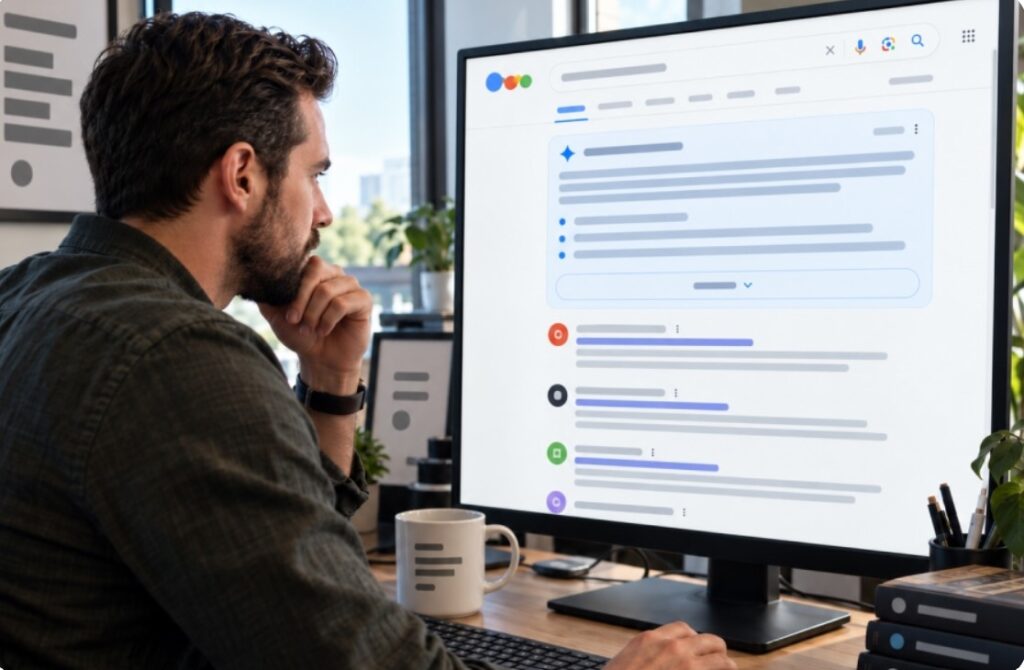
AI Overviews are AI-generated answers that Google shows at the top of some search results. Instead of only listing blue links, Google writes a short answer to your question and links to the websites it used as sources. You have probably seen one. You search for something like “how to fix a leaky faucet,” and a box appears above the normal results with a summarized answer and small link icons. Those link icons are citations. Each one points to a website Google quoted.
AI Overviews Explained in Plain English
Think of AI Overviews like a helpful friend who read ten articles and summed them up for you. You ask a question. The friend gives you the short version, then says, “I got this part from that plumber’s blog, and that part from a DIY site.” For website owners, those mentions are the prize.
Google is telling millions of searchers, “These sites had the best answers.” Being cited puts your brand name and link in the most visible spot on the results page. AI Overviews appear most often for question-based searches. How-to questions, comparisons, definitions, and advice queries trigger them frequently. Simple navigational searches, like looking for a specific website, usually do not.
AI Overviews vs Featured Snippets: What’s the Difference?
Beginners often mix these up. They look similar, but they work differently.
A featured snippet pulls a short quote from one single page. Google shows that page’s text in a box, with one link to the source. It has existed for years.
An AI Overview writes a brand-new answer by combining information from multiple sources. It cites several websites, not just one. The answer is generated fresh each time, in Google’s own words.
This difference matters for your strategy. To win a featured snippet, you optimize one page to give the perfect short answer. To get cited in AI Overviews, you need clear, trustworthy content across your topic, because Google may pull different facts from different pages.
Why Getting Cited in AI Overviews Matters
Some site owners wonder if AI Overviews are worth chasing. After all, if Google answers the question directly, will anyone click? The answer is yes, and here is why citations still matter.
Citations Put Your Brand in Front of Searchers
The AI Overview box sits at the very top of the results page. It is the first thing searchers see. When your site is cited there, your brand name appears in front of everyone who searches that question. This visibility builds familiarity. Even searchers who do not click today will recognize your name tomorrow. Over time, that recognition turns into trust, and trust turns into clicks.
Cited Sources Often Earn the Click
When someone wants more detail than the summary gives, they click a citation link. These clicks are highly qualified. The searcher already knows what they want. They just need the full explanation. Many site owners report that AI Overview citations send engaged visitors.
These readers spend time on the page because the AI already pre-qualified them. A smaller number of focused visitors often beats a large number of casual ones.
Early Movers Have an Advantage
AI Overviews are still new compared to classic search results. Many niches have few sites actively optimizing for citations. That means less competition right now. Sites that start early build a track record. Google learns that your content is quotable and reliable. That reputation compounds. Waiting a year means competing against everyone who started today.
How AI Overviews Choose Which Sources to Cite

Google has not published a step-by-step recipe for citations. But by studying which sites get cited, SEO professionals have found clear patterns. Here is what the evidence points to.
Google Looks for Clear, Direct Answers
AI Overviews need quotable material. Pages that answer questions directly, in simple language, get picked more often. If your page buries the answer under five paragraphs of introduction, the AI may skip it for a clearer source.
This is why short definition paragraphs work so well. A two-to-three sentence answer right after a question heading is easy for AI systems to lift and cite. Write the way you would explain something to a friend.
Trust and Topical Authority Count
Google prefers sources it trusts. Sites that publish deeply on one topic, with accurate and consistent information, get cited more than thin sites that cover everything shallowly. This connects directly to classic SEO. The same things that build rankings, quality backlinks, real expertise, and a focused topic, also build citation chances. AI Overviews do not replace good SEO. They reward it.
Fresh, Well-Structured Content Gets Picked
AI systems favor content that is easy to parse. Clear headings, bullet lists, numbered steps, and comparison tables all help. A well-organized page is easier to quote accurately than a wall of text. Freshness matters too. For topics that change, like SEO tactics or product recommendations, recently updated pages get cited over stale ones. Keep your best pages current and show the update date.
How to Get Cited in AI Overviews: The 8-Step Playbook
This is the heart of the guide. Each step makes your content easier for Google’s AI to find, understand, and quote. Work through them in order. You can apply most of them to pages you already published.
How to Get Cited in AI Overviews: Set a Simple Goal First
Pick five to ten pages on your site that answer common questions in your niche. These are your citation candidates. Trying to optimize every page at once leads to burnout. A focused list keeps the work manageable. Check whether AI Overviews already appear for your target questions. Search each question in Google and look for the AI answer box. If one shows up, note which sites get cited. Those are your benchmarks.
Step 1: Target Questions That Trigger AI Overviews
Not every keyword triggers an AI Overview. Focus your effort where the box actually appears. Question-based keywords are your best bet. Think “how,” “what,” “why,” “when,” and “which” queries. Use free methods to find them. Check Google’s “People also ask” boxes for related questions.
Look at forum threads and Reddit posts in your niche for the exact words people use. Write down the questions in the searcher’s own language. Prioritize questions where you can genuinely give the best answer. If the current citations come from weak or outdated pages, you have a real opening.
Step 2: Put a Clear, Direct Answer Near the Top
AI systems love pages that answer fast. After your introduction, add a short answer section. Two to four sentences that directly answer the page’s main question.
Here is a simple format that works:
Question as an H2 or H3 heading. Then a 40 to 60-word paragraph that answers it completely. No fluff before the answer. No clever buildup. This paragraph often becomes the exact text Google quotes. Write it carefully. Use simple words. Include the key facts. Make it self-contained so it makes sense on its own.
Step 3: Structure Your Content for Machines and Humans
Good structure helps everyone. Use descriptive headings that match real questions. Break complex topics into numbered steps. Use bullet lists for features, tips, and examples. Add tables when comparing options. Each of these formats is easy to quote. A table comparing three tools can be lifted directly into an AI answer.
A numbered list of steps reads cleanly when summarized. Structure is not just about looks. It is about quotability. Keep paragraphs short. Two to four lines each. Long walls of text are hard to parse and easy to skip.
Step 4: Build Topical Authority Around Your Questions
One good page is not enough. Google cites sites that show deep knowledge of a topic. Build clusters of related content around your main questions. For example, if your target question is “how to fix a leaky faucet,” support it with pages on faucet types, tools needed, when to call a plumber, and water shutoff basics.
Link them together sensibly. This cluster approach does two things. It proves your expertise to Google. And it gives the AI more of your pages to pull from, increasing your citation chances across related searches.
Step 5: Earn Quality Backlinks to Your Key Pages
Citations and backlinks feed each other. Pages with strong backlink profiles get cited more often. Google already trusts them, so the AI trusts them too. Focus your link building on the pages you want cited. The tactics are the same ones that work for classic SEO: broken link building, guest posts, resource page outreach, and creating link-worthy content.
Even a handful of relevant links can lift a page into citation range. Do not buy links or use link schemes. AI Overviews favor trusted sources, and penalties destroy trust overnight.
Step 6: Keep Your Content Fresh and Current
AI Overviews prefer current information for topics that change. Review your citation-target pages every few months. Update statistics, refresh examples, and fix anything outdated. Show the update date on the page. A visible “Last updated” note signals freshness to both readers and machines.
When you update, update substantially. Changing one sentence is not enough to matter. For evergreen topics that rarely change, freshness matters less. But a periodic review still helps you catch competitors who improved their pages.
Step 7: Add Schema Markup to Key Pages
Schema markup is code that helps search engines understand your content. For AI Overview optimization, FAQPage and HowTo schema are the most useful. FAQPage schema marks up your questions and answers explicitly. HowTo schema marks up step-by-step processes.
Both make it easier for Google to extract clean question-answer pairs from your pages. If you use WordPress, SEO plugins like Rank Math or Yoast can add basic schema without coding. Test your markup with Google’s Rich Results Test to make sure it works.
Step 8: Make Your Site Technically Sound
AI Overviews cite pages that Google can crawl and understand easily. Technical problems can block you silently. Make sure your key pages load fast, work well on mobile, and have no crawl errors. Check Google Search Console for coverage issues on your target pages. Fix broken links, redirect chains, and slow-loading images.
These basics matter more than most beginners expect. Also make sure your content is actually indexable. Pages blocked by robots.txt or noindex tags cannot be cited. It sounds obvious, but it happens more often than you would think.
Best Practices for AI Overview Optimization

- Write for the question, not the keyword. Match the searcher’s intent exactly. Answer what they asked, not what you wish they asked.
- Lead with the answer, then explain. Put the direct answer first and the background after. This serves both AI systems and impatient readers.
- Use the searcher’s language. Mirror the words people actually type. Simple, natural phrasing gets quoted more than clever copywriting.
- Cover the topic completely. Thin pages rarely get cited. Answer the main question plus the natural follow-up questions.
- Show real expertise. Include original examples, photos, or data from your own experience. Generic content is easy to replace.
- Keep a consistent publishing rhythm. Regular updates signal an active, maintained site. Stale sites lose citations over time.
7 Common Mistakes That Keep You Out of AI Overviews
- Burying the answer. If readers must scroll past 500 words to find the answer, AI systems may pick a clearer source. Put the direct answer near the top.
- Writing thin content. A 300-word page cannot compete with a thorough guide. AI Overviews quote pages that cover topics well.
- Ignoring question intent. A page targeting “how to fix X” that mostly talks about “what is X” will not get cited for the how-to question. Match the intent.
- Using only images or video for key answers. If your answer lives inside a video with no text transcript, AI systems cannot easily quote it. Add text summaries.
- Blocking crawlers accidentally. Misconfigured robots.txt files or noindex tags hide pages from Google entirely. Audit your settings.
- Publishing inaccurate information. AI systems cross-check facts across sources. Pages with errors lose trust fast and stop getting cited.
- Chasing citations without basic SEO. If your page does not rank or get indexed, it cannot be cited. Nail the fundamentals first.
Expert Tips That Speed Things Up
- Study current citations in your niche. Search your target questions and note which sites Google cites. Analyze what those pages do well, then do it better.
- Create quotable definition blocks. A bolded term followed by a two-sentence definition is citation gold. Add these for every key concept you cover.
- Answer follow-up questions on the same page. AI Overviews often address multi-part queries. A page that answers the main question plus three follow-ups gets cited more.
- Use original data whenever possible. Even a tiny survey of your audience gives you facts nobody else has. Unique data gets quoted because it cannot be found elsewhere.
- Optimize your about page and author bios. Visible expertise signals help Google trust your content. Real names, credentials, and experience matter.
- Monitor your citations monthly. Search your key questions in an incognito window and check if you appear. Track which pages get cited and double down on what works.
- Do not stuff keywords. Natural language wins. AI systems are trained on human writing, and keyword-stuffed pages read as low quality.
Real-World Examples: What Citations Look Like in Practice
Example 1: A Plumbing Blog
A small plumbing blog publishes “How to Fix a Leaky Faucet in 7 Steps.” The page opens with a 50-word direct answer, then numbered steps with photos. Within three months, Google’s AI Overview for the query cites the blog’s step list. The owner did nothing exotic. Clear answer up top, structured steps, real photos.
Example 2: A Personal Finance Site
A finance blogger writes “What Is a Roth IRA?” with a quotable two-sentence definition right after the heading. The page also includes a comparison table of IRA types. The AI Overview for the question cites the definition paragraph, while a related “Roth vs traditional IRA” query cites the table. One thorough page earns two different citations.
Example 3: A Local SEO Agency
An agency publishes a guide on “How to Get More Google Reviews.” They include original data from 50 local clients, showing which request methods worked best. AI Overviews cite their statistics because no other source has those numbers. Original research is the hardest citation tactic to copy.
AI Overviews in 2027: What Changed
AI Overviews have expanded significantly since launch. They now appear for more query types and in more countries. Google keeps refining how answers are generated and which sources get cited. One clear trend: Google increasingly cites pages with demonstrated first-hand experience.
Product reviews with real testing photos, tutorials with original screenshots, and guides with personal case studies outperform generic rewrites. Another shift is toward fresher citations for fast-moving topics. In niches like SEO, AI tools, and finance, recently updated pages displace older ones more quickly than before.
A maintenance habit is now part of citation strategy. The opportunity is still wide open. Most small sites have not adapted their content for AI quotability. Clear structure and direct answers remain rare enough to stand out.
Important Things to Consider Before You Start
Citations are earned, not guaranteed. No tactic forces Google to cite you. Focus on being the best answer, and citations follow. Anyone selling “guaranteed AI Overview placement” is not being honest.
Do not sacrifice human readers for AI systems. The same clarity that helps AI also helps people. If a change makes your page worse for humans, skip it. Reader-first content is the safest long-term strategy. Keep expectations realistic. New or low-authority sites can absolutely earn citations, especially for specific long-tail questions.
But highly competitive queries may take months of authority building first. Finally, remember that AI Overviews are one channel among many. Classic rankings, email lists, and social audiences all still matter. Treat citation optimization as an addition to solid SEO, not a replacement.
Explore Search Engine Insight for actionable keyword strategies, smarter content planning, and practical ways to build a stronger online presence.
Frequently Asked Questions
What does it mean to get cited in AI Overviews?
It means Google’s AI-generated answer includes a link to your website as one of its sources. Your page is quoted or referenced in the AI Overview box at the top of search results, with a clickable link icon pointing to your site.
How long does it take to get cited in AI Overviews?
It varies widely. Well-optimized pages on established sites can earn citations within weeks. New sites typically need one to three months of consistent publishing and basic authority building before citations appear.
Do I need to rank on page one to be cited?
Usually, yes. Google tends to cite pages that already rank reasonably well for the query. Strong classic SEO is the foundation. Citations rarely go to pages Google does not already trust enough to rank.
Can small websites get cited in AI Overviews?
Yes. AI Overviews often cite small, specialized sites when they give the clearest answer. Niche expertise beats big-brand generality for specific questions. Focus on long-tail questions where you can be the best source.
Does schema markup guarantee AI Overview citations?
No. Schema helps Google understand your content, which improves your chances. But it is one factor among many. Great content, clear answers, and site trust matter more than markup alone.
How do I know if my site is being cited?
Search your target questions in Google and look at the AI Overview box. Click the link icons to see the cited sources. Do this in an incognito window for cleaner results, and check monthly to track changes.
Should I write shorter content for AI Overviews?
No. Write thorough content, but put short, direct answers near the top. The ideal page has quotable 40 to 60-word answer blocks inside a comprehensive guide. Depth plus clarity wins.
Do backlinks help with AI Overview citations?
Yes. Backlinks build the trust and authority that make Google comfortable citing you. Pages with quality backlinks get cited more often. Link building remains a core part of citation strategy.
Can AI Overviews cite pages with noindex tags?
No. Pages blocked from indexing cannot appear in search results or AI Overviews. Check that your target pages are crawlable and indexable in Google Search Console before optimizing them for citations.
Will AI Overviews reduce my website traffic?
They can reduce clicks for simple questions that the AI fully answers. But citations also create a new visibility channel at the very top of results. Sites that adapt by targeting quotable, in-depth content often come out ahead.
Conclusion:How to Get Cited in AI Overviews
You now know how to get cited in AI Overviews from start to finish. Target questions that trigger AI answers. Put clear, direct answers near the top of your pages. Structure content with headings, lists, and tables. Build topical authority and earn quality backlinks.
Keep everything fresh and technically sound. Citations reward the same habits that make great SEO: clear writing, real expertise, and genuine helpfulness.
Pick five pages, apply the playbook, and check your progress monthly. In a search landscape increasingly shaped by AI answers, being the quoted source is one of the most valuable positions you can hold.