How Many Backlinks Do I Need to Rank? A Practical Guide (2027)
If you are wondering how many backlinks do I need to rank on Google, you are asking one of the most common SEO questions there is. Every site owner wants a clear number. Ten? Fifty? Five hundred? The honest answer is that it depends, but this guide will show you how to find the real number for your site and your keyword.
You will learn why no single number works for everyone, what factors decide your target, and a simple step-by-step method to estimate the links you need. You will also learn how to judge link quality, avoid the mistakes that waste effort, and build links the safe way. By the end, you will have a concrete plan instead of a guess.
The Short Answer: There Is No Magic Number
There is no universal number of backlinks that guarantees a ranking. A local plumber might reach page one with a dozen good links. A new credit card comparison site might need hundreds to compete. The right number depends on your keyword, your competition, and the quality of the links involved.
This is not the answer most people want to hear. But it is the truth, and understanding it will save you from chasing the wrong goal. Anyone selling you a fixed number is guessing.
Why a Single Number Cannot Exist
Google ranks pages, not websites, and it ranks them against each other. Your page only needs to look better than the other pages competing for the same keyword. If those pages are weak, you need fewer links. If they are strong, you need more.
Think of it like a race. You do not need to run a world-record time to win. You just need to be faster than the other runners on the track that day. Backlinks work the same way. Your target is relative, not absolute.
What “Ranking” Actually Depends On
Backlinks are one important ranking factor, but they are not the only one. Google also weighs content quality, how well your page matches the search intent, page speed, mobile friendliness, and user behavior signals.
This means a page with fewer backlinks can outrank a page with more of them. It happens all the time. A brilliant, up-to-date article on a fast, well-structured site can beat a thin page with twice the links. Keep this in mind before you obsess over link counts alone.
What Really Decides How Many Backlinks You Need
Four main factors set your target. Understand them and the number starts to make sense.
Keyword Competition
The biggest factor is how competitive your target keyword is. A long, specific phrase like “best organic dog treats for sensitive stomachs” has weak competition. A short head term like “dog treats” has fierce competition from huge brands.
As a rule of thumb, the more commercial and the shorter the keyword, the more links you will need. New sites should start with longer, more specific keywords where the bar is lower. You can work up to harder terms as your authority grows.
Your Site’s Current Authority
A brand-new site starts from zero. An established site with years of content and links has a head start. Google already trusts it, so each new page needs less help to rank.
This is why new websites feel like they need “so many” backlinks. They are not just ranking one page. They are building the site’s overall reputation from scratch. Every quality link helps both the linked page and the domain as a whole.
Content Quality and Relevance
Great content lowers the number of links you need. If your page answers the searcher’s question better than anything else on page one, Google has reasons to rank you beyond raw link counts.
Relevance matters too. Links from sites in your niche carry more weight for your topic. Ten links from respected sites in your industry can beat fifty random links from unrelated blogs.
Link Quality vs Link Count
One strong backlink can do the work of dozens of weak ones. A link from a well-known publication in your field, placed naturally inside a relevant article, is worth far more than a link buried in a low-quality directory.
Google looks at the linking site’s own authority, its relevance to your topic, and where the link sits on the page. Editorial links inside the main content are the gold standard. Footer and sidebar links count for less.
How Many Backlinks Do I Need to Rank? Finding Your Number
Here is the practical method. Instead of guessing, you will measure what the current winners have and set your target from real data. You can do this with free tools.
Step 1: Pick One Target Keyword
Start with a single keyword and a single page on your site. Do not try to calculate this for your whole site at once. Pick the page you most want to rank, and the exact phrase you want it to rank for.
Write down where the page ranks today. You can check in Google Search Console under Performance, filtered to that query. This gives you a baseline to measure progress against.
Step 2: Study the Top 10 Results
Search your keyword in Google and open the top ten ranking pages. Ignore ads. Look at each result and ask: is this a big brand or a small site? Is the content fresh or years old? Is it truly helpful or just okay?
This quick review tells you how beatable the page-one results are. If the top results are forums, small blogs, or outdated articles, you may need fewer links than you fear. If they are major publications with deep content, expect a longer climb.
Step 3: Count Their Referring Domains
For each top-ranking page, find out how many unique websites link to it. This number is called referring domains, and it matters more than total backlinks. One hundred links from one site count far less than one hundred links from one hundred sites.
You can find this with a free backlink checker. Many SEO tools offer free limited lookups. Check the top five results and write down each one’s referring domain count. Take the average of the top three to five. That average is your rough target.
Step 4: Judge Link Quality, Not Just Count
Raw counts can mislead. A competitor might show 200 referring domains, but if most are spammy directories or irrelevant blogs, their real link strength is much lower. Look at a sample of their links and judge them honestly.
Ask three questions about their best links. Are they from real websites with real traffic? Are they relevant to the topic? Are they placed naturally in content? If the answer is mostly no, you can beat them with fewer, better links.
A Simple Formula for How Many Backlinks Do I Need to Rank
Here is a beginner-friendly way to set your target. Take the average referring domains of the top five results. If your content is as good or better than theirs, aim to match that number with equal or better quality links.
If your content is clearly better and fresher, you can often rank with fewer links than the average. If your site is brand new and theirs are established brands, plan to exceed the average. Write your target number down and give yourself a timeline, such as six months.
Remember this is an estimate, not a guarantee. Rankings shift as competitors build links too. Recheck every few months and adjust.
Quality Beats Quantity: What Makes a Backlink Strong
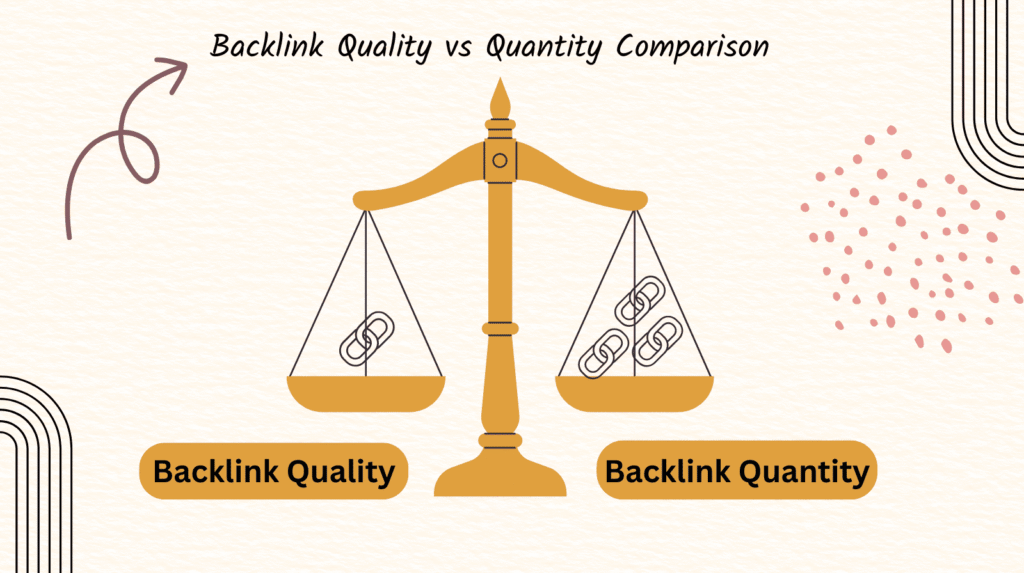
Since quality matters more than count, it pays to know what a strong backlink looks like. Use this as your checklist when judging opportunities.
Signs of a Strong Backlink
· The linking site is real, with original content and regular visitors.
· The site is relevant to your topic or industry.
· The link sits inside the main article text, not a footer or sidebar.
· The page linking to you is indexed by Google and gets some traffic.
· The anchor text (the clickable words) is natural and varied.
· The link is dofollow, passing ranking value to your page.
You do not need all six for every link. But the more boxes a link ticks, the more it moves the needle.
Signs of a Weak or Risky Backlink
· The site exists mainly to sell links or host guest posts for anyone.
· The content is thin, spun, or stuffed with keywords.
· The link comes from an unrelated niche or a foreign-language page.
· Hundreds of outbound links crowd the same page.
· The site was clearly built just for SEO, with no real audience.
One or two weak links will not sink you. Google is good at ignoring obvious junk. But a pattern of manipulative links can trigger a penalty, so never pay for links or join link schemes.
How to Close the Gap Once You Know Your Number
Knowing your target is only half the job. Now you need a plan to earn those links steadily and safely.
Prioritize the Pages Closest to Ranking
Start with pages already ranking on page two or three for their keywords. These pages need the smallest push. A few quality links can lift a page from position 15 to position 8, which brings far more traffic.
Check Google Search Console for queries where you rank between positions 11 and 30. Those are your quick wins. Build links to those pages first before chasing brand-new keywords.
Build at a Steady, Natural Pace
Earn links gradually, a few per month, rather than in sudden bursts. A new site that gains 200 links in a week looks unnatural to Google. The same 200 links earned over a year look like genuine growing popularity.
Set a monthly rhythm you can sustain. For most beginners, two to five quality links per month is a realistic pace. Consistency beats intensity. Link building is a habit, not a campaign.
6 Mistakes That Waste Your Link Building Effort
- Chasing a number instead of quality. Earning 100 weak links to hit an arbitrary target wastes months. Ten strong, relevant links will do more for most keywords.
- Ignoring the content first. If your page is thinner or older than the top results, links alone may not save it. Improve the page, then build links to it.
- Building links to your homepage only. Your homepage rarely targets the keywords you want to rank for. Build links to the specific pages that target those keywords.
- Using exact-match anchor text everywhere. If every link uses your keyword as the clickable text, it looks manipulated. Let anchor text vary naturally.
- Giving up too early. Links take weeks or months to affect rankings. Many beginners quit in month two, right before results appear.
- Forgetting to track results. If you do not measure, you cannot improve. Check your rankings and referring domains monthly and double down on what works.
Expert Tips for Ranking With Fewer Links

· Target weaker SERPs first. Long-tail keywords with forums and thin content in the top ten need far fewer links. Win there, then climb.
· Make your page the clear best result. Better content, fresher data, and clearer formatting can offset a link deficit. Be the page Google wants to rank.
· Earn links from pages that already rank. A link from a page that ranks well for related terms carries extra weight. Prioritize those prospects.
· Refresh and repromote old content. Updating a strong page and pitching it again can earn a second wave of links to content you already own.
· Fix technical issues first. A slow or broken page wastes every link you build. Run through a technical SEO checklist before heavy outreach.
· Build topical authority. Publishing a cluster of related articles makes each page stronger. Google trusts sites that cover a topic deeply.
Real Examples: Different Niches, Different Numbers
Example 1: Local Service Business
A plumber in a mid-size city targets “emergency plumber [city]”. The top results have 15 to 40 referring domains each, mostly from local directories, news sites, and community pages. She earns 25 links over six months through local sponsorships, directory listings, and two local press mentions. She reaches page one. Her number was small because the competition was local and link quality was highly relevant.
Example 2: Niche Hobby Blog
A blogger targets “best budget telescopes for beginners”. The top five results average 60 referring domains, many from astronomy forums and review sites. He publishes the most detailed comparison in the niche, with his own photos, and earns 45 links in a year through outreach to astronomy clubs and resource pages. He lands on page one at position four, below bigger brands but above thinner affiliates. His better content offset the link gap.
Example 3: Competitive SaaS Keyword
A startup targets “project management software”. The top results average over 2,000 referring domains from major tech publications. The startup wisely does not attack this keyword directly. Instead, they target long-tail variations like “project management software for architects”, where the top results average 30 referring domains. They win those smaller battles first and build authority for the bigger fight later.
What Changed in 2027
AI Overviews now answer many simple questions directly in search results. This has two effects. First, informational keywords get fewer clicks, so the links you earn need to work harder. Second, pages cited in AI answers gain extra visibility, making authoritative links even more valuable.
Google also keeps getting better at discounting low-quality links automatically. The old game of piling up directory and forum links barely moves rankings anymore. What works is what always worked: real links from real sites, earned with genuinely useful content.
The good news for beginners is that staleness creates openings. Many top-ranking pages have not been updated in years. A fresh, thorough page with a focused link campaign can still break into competitive results.
Important Things to Keep in Mind
Your number is a starting estimate, not a promise. Competitors keep building links, algorithms shift, and content quality can override link counts in either direction. Treat your target as a working plan and review it quarterly.
Never sacrifice your site’s safety to hit a number faster. Paid links, private blog networks, and automated link blasts can trigger penalties that erase months of progress. Google’s spam policies are clear, and enforcement keeps improving.
Finally, remember that links are a means, not the end. The end is a page that truly serves the searcher. Build the best page first, earn links to it steadily, and let the rankings follow.
Search Engine Insight brings together valuable marketing knowledge, SEO recommendations, and industry insights to help businesses make better decisions about their online presence.
Frequently Asked Questions
How many backlinks do I need to rank on page one?
It depends on your keyword’s competition. Check the average referring domains of the top five results for your keyword. That average is your rough target. For low-competition keywords, 10 to 30 quality links can be enough. For competitive terms, you may need hundreds.
Is 100 backlinks enough to rank?
Sometimes yes, sometimes no. One hundred strong, relevant links can rank many keywords. One hundred weak or spammy links may do nothing. Judge by quality and relevance first, count second. Always compare against what the current top results have.
How many backlinks per day is safe?
For a new site, aim for a natural pace of a few links per week, not per day. Sudden spikes of dozens of links look manipulative. Earned links arrive gradually. If you are doing genuine outreach, the pace takes care of itself.
Do I need backlinks for every page?
No. Focus link building on your most important pages, the ones targeting valuable keywords. Supporting articles can rank with help from internal links pointing to them from your stronger pages. Spread your effort where it pays most.
How long do backlinks take to affect rankings?
Usually several weeks to a few months. Google must discover the link, recrawl both pages, and reassess your page against competitors. Do not judge a campaign after two weeks. Give it at least two to three months of steady effort.
Can I rank with zero backlinks?
For very low-competition keywords, yes. If the top results are thin, outdated, or irrelevant, a great page can rank on content quality alone. But for most keywords with real search volume, you will need at least some backlinks.
What is more important: backlinks or content?
Both matter, and they multiply each other. Great content with no links often sits invisible. Lots of links to weak content rarely hold rankings. Build the best page you can first, then earn links to it. Neither works well alone.
How do I check how many backlinks my competitors have?
Use a free backlink checker to look up any ranking page. Look for the referring domains number, which counts unique linking websites. Check the top five results for your keyword and average them. That gives you a realistic target.
Do nofollow backlinks count toward ranking?
Nofollow links do not pass ranking value directly, but they still help. They bring referral traffic, build brand awareness, and make your link profile look natural. Do not chase them specifically, but never turn down a nofollow link from a real, relevant site.
Should I disavow bad backlinks?
Usually no. Google is good at ignoring obvious spam on its own. Only consider the disavow tool if you have a manual penalty or a clear pattern of manipulative links you built yourself. Learn how the tool works before using it, since mistakes can hurt you.
Conclusion: How Many Backlinks Do I Need to Rank?
So, how many backlinks do I need to rank? The real answer is: as many quality links as it takes to beat the pages currently ranking for your keyword. Find their average referring domains, judge the quality honestly, and set that as your working target.
Focus on earning strong, relevant links at a steady pace. Improve your content alongside your outreach. Track your progress monthly and adjust. There is no magic number, but there is a clear method, and now you have it. Start with one keyword, find your number, and build from there.