Email Marketing vs Social Media Marketing (2027 Guide)
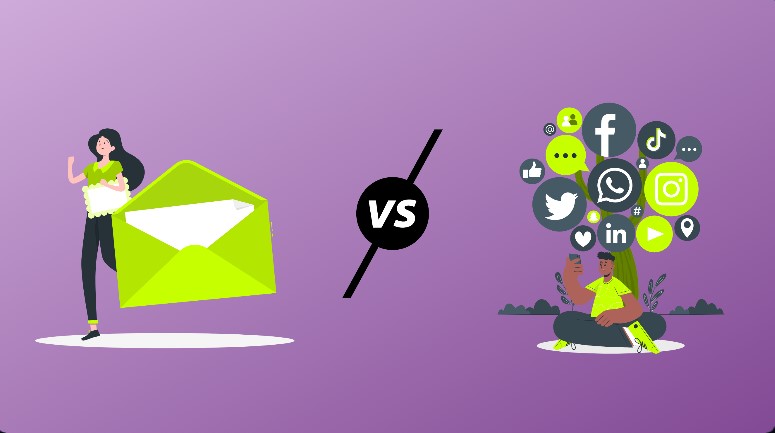
Email marketing vs social media marketing is one of the most debated topics in digital marketing. Business owners ask this question every day. You have limited time and a limited budget. You need to know where to put your effort for the best return.
The honest answer is that both channels work, but they work very differently. Email gives you direct access to people who already know you. Social media helps you reach new people and build a public brand. This guide compares them side by side so you can make a smart decision for your business.
You will learn what each channel is, how they compare on reach, cost, control, and engagement, and which one fits your situation. You will also learn how to combine them, because the best marketers rarely pick just one.
What Is Email Marketing?
Email marketing means sending messages directly to people who gave you their email address. These people subscribed to your list. They asked to hear from you. That permission is what makes email so powerful.
A typical email program includes a weekly newsletter, welcome emails for new subscribers, and automated messages triggered by actions like an abandoned shopping cart. The goal is usually to build trust, share useful content, and drive sales over time.
Email is one of the oldest digital channels, and it is still going strong in 2027. Why? Because you own the relationship. No algorithm stands between you and your subscriber’s inbox.
How Email Marketing Works in Plain English
Think of email marketing like running a small club with a mailing list. Someone signs up through your website. They get a welcome email. Then they receive your regular updates. If they stop opening your emails, they can unsubscribe. Simple.
The key parts are:
· A signup form. This collects email addresses from your website visitors.
· An email service provider. Tools like Mailchimp, ConvertKit, or Brevo store your list and send your emails.
· Automated sequences. Welcome series, abandoned cart reminders, and post-purchase follow-ups run on autopilot.
· Regular broadcasts. Newsletters, promotions, and updates go out to your whole list or segments of it.
You control the timing, the design, and the message. When you hit send, your email lands in inboxes. Not everyone opens it, but the opportunity to be seen is yours.
What Email Marketing Costs
Email is one of the cheapest marketing channels. Most email tools offer free plans for small lists, usually up to a few thousand subscribers. Paid plans scale with your list size, so costs grow only as your audience grows.
The main investment is your time. Writing good emails takes thought. Building your list takes patience. But the ongoing cost per message is tiny compared to paid ads.
What Is Social Media Marketing?
Social media marketing means promoting your business on platforms like Instagram, TikTok, Facebook, LinkedIn, X, and YouTube. You create posts, videos, and stories. People follow your account. The platform shows your content to some of them.
Unlike email, social media is a discovery channel. Most of your audience does not know you yet. You are competing for attention in a busy feed full of friends, creators, and other brands.
Social media also includes paid social ads. You can pay to put your message in front of specific audiences. This guide focuses mostly on organic social media, but we will touch on paid ads too.
How Social Media Marketing Works in Plain English
Think of social media like standing in a crowded town square with a megaphone. If people like what you say, they gather around. If they do not, they walk past. The platform decides who hears you first.
The key parts are:
· Content creation. Posts, reels, stories, and videos published regularly.
· The algorithm. Each platform decides which posts get shown and to whom.
· Engagement. Likes, comments, shares, and saves signal that content is worth showing to more people.
· Followers. People who choose to follow you, though only a fraction see each post.
You do not control the distribution. A post can reach thousands of people one day and almost nobody the next. That is the trade-off for free access to massive audiences.
What Social Media Marketing Costs
Organic social media is free to start. You need no budget, just time and a phone. But “free” is misleading. Creating quality content regularly takes serious effort. Many businesses spend hours per week filming, editing, and posting.
Paid social ads cost real money. Costs vary by platform and audience. The advantage is speed: ads can put you in front of thousands of targeted people today. The disadvantage is that the moment you stop paying, the traffic stops.
Email Marketing vs Social Media Marketing: Side-by-Side Comparison
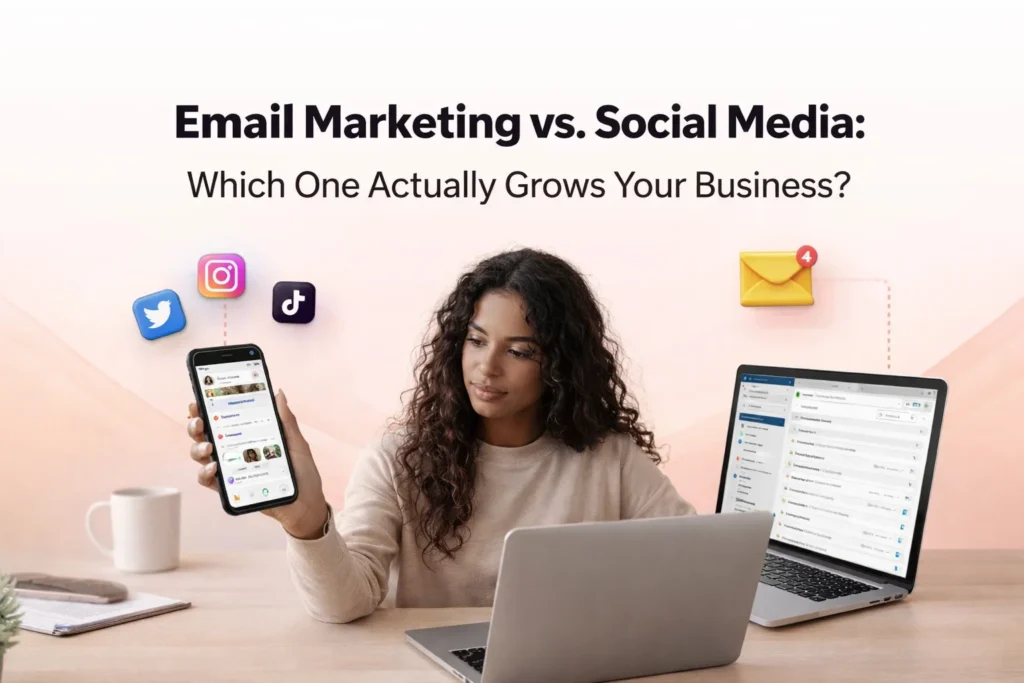
Here is the direct comparison. This table covers the factors that matter most when you decide where to invest.
| Factor | Email Marketing | Social Media Marketing |
| Reach | Limited to your subscriber list; grows one signup at a time | Potentially huge; one viral post can reach millions |
| Audience ownership | You own the list; you can export it anytime | The platform owns the audience; you rent access |
| Cost | Very low; free or cheap plans for most list sizes | Organic is free but time-heavy; ads cost money |
| Return on investment | Consistently high for most businesses; pennies per message | Unpredictable organic returns; paid ads can scale fast |
| Targeting | Precise; segment by behavior, purchases, interests | Broad discovery; ad targeting is powerful but rented |
| Engagement | Deep; opens and clicks from warm subscribers | Wide but shallow; likes and views from strangers |
| Content longevity | Long; emails stay in inboxes and can be searched | Short; posts fade from feeds within hours or days |
| Algorithm dependence | Very low; inbox delivery is mostly in your control | Very high; reach depends on each platform’s algorithm |
| Personalization | Easy; use names, past purchases, and behavior | Hard; one post must work for your whole audience |
| Best for | Nurturing leads, repeat sales, loyalty | Discovery, brand awareness, community building |
| Speed of results | Slow start; compounds as your list grows | Can be fast; viral hits happen, but unpredictably |
| Risk | Low; no platform can take your list away | High; algorithm changes or bans can wipe out reach overnight |
What This Table Tells You
The pattern is clear. Email gives you control, stability, and depth. Social media gives you reach, discovery, and speed. Neither is “better” in the abstract. The right choice depends on what your business needs right now.
If you need steady, predictable revenue from people who already trust you, email wins. If you need new people to discover you for the first time, social media wins. Most healthy businesses eventually use both.
Strengths of Email Marketing
Email’s biggest advantage is ownership. Your list is an asset nobody can take away. Social platforms can change their rules tomorrow. Your email list stays yours.
You Own the Relationship
When someone joins your email list, you get a direct line to them. You can export that list. You can move it to a different tool. No platform can demote your emails the way a social algorithm can bury your posts.
This matters more than most beginners realize. Businesses that built their entire audience on one social platform have watched their reach collapse overnight after an algorithm update. Email subscribers do not disappear like that.
Higher Intent and Conversion Rates
Email subscribers raised their hands. They asked to hear from you. That makes them warmer than a random person who scrolled past your post.
This is why email consistently drives more sales per person reached than social media for most businesses. A person who opens your email is already interested. A person who sees your post might not even remember your brand name.
Precise Personalization and Segmentation
Email tools let you slice your list into groups. New subscribers get a welcome series. Past buyers get product recommendations. People who clicked a specific link get a follow-up.
This kind of targeting is simple in email and nearly impossible in organic social posts. One Instagram post goes to everyone the same way. One email campaign can send ten different versions to ten different segments automatically.
Automation That Works While You Sleep
Welcome sequences, abandoned cart emails, birthday offers, and re-engagement campaigns run on autopilot. You set them up once, and they keep working.
A small business owner can have a welcome series that greets every new subscriber, tells their story, and makes an offer, all without lifting a finger after setup. Social media has no equivalent. Every post requires fresh effort.
Long Content Lifespan
Emails live in inboxes. People search them later. A great newsletter from March can still drive a sale in September when someone searches their inbox for your brand.
Social posts have the opposite life cycle. Most posts get the bulk of their views in the first 24 to 48 hours. After that, they sink into the archive. Email content keeps working longer.
Weaknesses of Email Marketing
Email is not perfect. It has real limits you should know before you go all in.
List Building Is Slow
You cannot email people who never signed up. Building a list takes time, good incentives, and steady website traffic. A new business might take months to reach its first thousand subscribers.
Social media has no such gate. You can post today and reach strangers today. For a brand-new business with no audience, social media offers a faster start.
People Ignore or Delete Emails
Inboxes are crowded. Many people get dozens or hundreds of emails a day. Your email competes with work messages, receipts, and spam. Open rates for marketing emails are far below 100 percent.
You need strong subject lines and genuinely useful content to stand out. If your emails are boring or too salesy, people unsubscribe or stop opening them.
Deliverability Takes Work
Getting into the inbox is not automatic. Spam filters, promotions tabs, and sender reputation all affect whether your email is seen. You need to set up authentication records like SPF and DKIM, keep your list clean, and avoid spammy language.
Most email tools guide you through this, but it is one more technical task social media does not require.
Strengths of Social Media Marketing
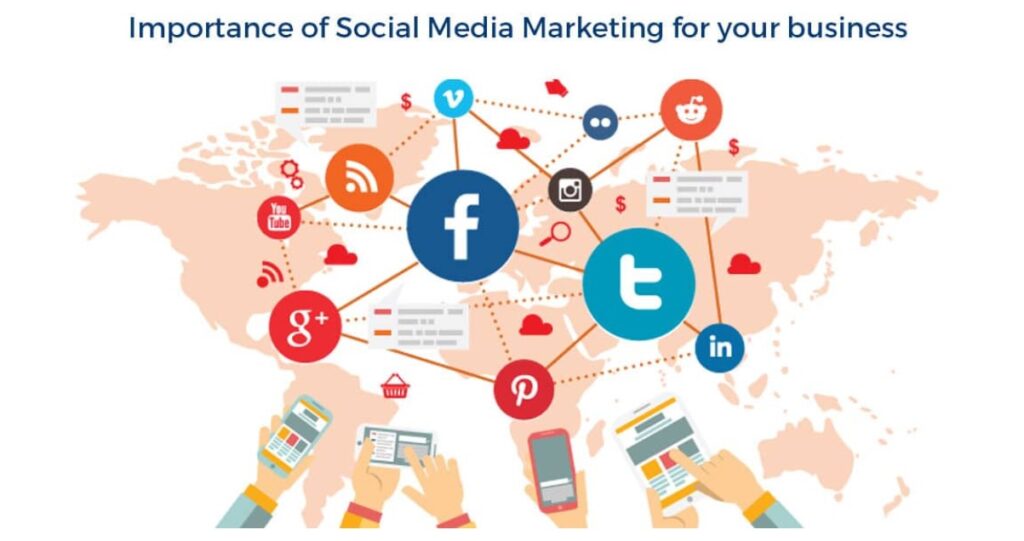
Social media’s biggest advantage is discovery. It puts you in front of people who never heard of you. No other free channel does this at the same scale.
Massive Reach and Discovery Potential
Billions of people use social platforms daily. A single short video can reach more people in a day than a year of email list building. This makes social media the fastest way for a new brand to get noticed.
Features like TikTok’s For You page, Instagram Reels, and YouTube Shorts are built for discovery. They show your content to non-followers who might like it. Email has nothing like this.
Visual Storytelling and Brand Personality
Social media lets you show, not just tell. Behind-the-scenes videos, product demos, customer stories, and live streams build a human connection that text emails struggle to match.
This is especially powerful for brands with visual products: fashion, food, fitness, travel, home decor. People buy from brands they feel they know. Social media builds that feeling fast.
Real-Time Conversation With Your Audience
Comments, direct messages, polls, and live sessions let you talk with customers in real time. You can answer questions, handle complaints, and gather feedback instantly.
This two-way conversation builds community. A loyal social following can become a powerful asset: brand advocates who defend you, share your content, and buy repeatedly.
Virality Can Change Everything Overnight
One viral post can transform a small business. A bakery video gets millions of views. A clever tweet gets picked up by news sites. A creator features your product. These moments are unpredictable, but they only happen on social platforms.
Email cannot go viral in the same way. Forwarded emails exist, but they rarely create the explosive growth a viral social post can.
Weaknesses of Social Media Marketing
Social media’s weaknesses are the mirror image of its strengths. The reach is rented, and the landlord can change the terms anytime.
You Do Not Own Your Audience
Your followers belong to the platform, not to you. If the platform shuts down your account, changes its algorithm, or loses popularity, your audience can vanish or shrink dramatically.
Smart marketers treat social followers as borrowed. The goal is to move your most engaged followers onto your email list, where the relationship is yours.
Algorithm Changes Can Crush Your Reach
Organic reach on most platforms has declined over the years. Posts that once reached half your followers may now reach a small fraction. Platforms push brands toward paid ads by limiting free distribution.
This makes social media unpredictable. You can do everything right and still see your reach drop because the platform changed its priorities.
Content Has a Very Short Shelf Life
Most social posts are dead within days. The feed moves on. This creates a content treadmill: you must keep producing new posts constantly just to stay visible.
Email’s automation and longevity look very attractive by comparison. One good email sequence works for years. One good post works for a weekend.
Harder to Measure Real Business Results
Likes and views feel good, but they do not always turn into sales. Many businesses grow large followings that produce little revenue. The link between social engagement and actual profit is often fuzzy.
Email metrics are clearer. You can see exactly how many people opened, clicked, and bought from each campaign. The path from email to revenue is short and easy to track.
Time and Creative Demands Are High
Posting consistently on social media takes serious time. Planning, filming, editing, writing captions, and replying to comments can eat hours every week. For a solo founder, this can crowd out everything else.
Email is calmer. One strong newsletter per week is a solid program. Social media rewards daily presence.
Which Is Better for Your Business? The Verdict
There is no universal winner in the email marketing vs social media marketing debate. The right answer depends on your business type, your stage, and your goals. Here is how the verdict breaks down.
Small Local Businesses: Use Both, Lead With Social
A local coffee shop, salon, or repair service needs visibility in its community. Social media is perfect for this. Post daily specials, behind-the-scenes content, and customer photos. Your neighbors discover you through shares and local hashtags.
But do not skip email. Collect addresses at checkout with a simple signup offer. A monthly email with promotions and events keeps regulars coming back. Social brings them in. Email keeps them.
Ecommerce Stores: Email Is Your Money Channel
For online stores, email is usually the top revenue channel after the website itself. Abandoned cart emails recover lost sales. Post-purchase sequences drive repeat orders. Promotional campaigns clear inventory.
Social media plays a supporting role: product videos, influencer partnerships, and user-generated content that drives traffic to your site. The goal of that traffic is often to capture the email address. Then email does the selling.
B2B Companies: Email and LinkedIn Together
Business buyers live in their inboxes. Email is the natural channel for lead nurturing, webinar invites, case studies, and sales follow-ups. A B2B email list of the right people is extremely valuable.
On social, LinkedIn is the main stage. Thought leadership posts, company updates, and employee advocacy build credibility. The two channels feed each other: LinkedIn content attracts leads, and email nurtures them into customers.
Creators and Personal Brands: Social First, Email as Insurance
Creators need audiences, and social platforms are where audiences live. Grow on the platform that fits your style: video, writing, or images. Post consistently and engage genuinely.
But every creator should build an email list from day one. Platforms change. Accounts get hacked or banned. Your email list is the one audience no one can take from you. Many creators wish they had started their list years earlier.
Email Marketing vs Social Media Marketing: The Short Version
· Need new people to discover you? Start with social media.
· Need more sales from people who already know you? Start with email.
· Want a stable, growing business? Build both, and use social to grow your email list.
How to Choose Between Email and Social Media Marketing
If you can only pick one right now, work through these questions.
1. Where Is Your Audience Right Now?
Do your customers spend more time in inboxes or in feeds? Busy professionals respond to email. Younger consumers live on TikTok and Instagram. Meet your audience where they already are.
2. What Is Your Main Goal?
· Goal: direct sales and repeat customers. Choose email.
· Goal: brand awareness and new followers. Choose social media.
· Goal: website traffic from search. Note that neither replaces SEO, but email drives repeat visits while social drives spikes.
3. How Much Time Can You Commit Weekly?
Be honest. Social media done well needs several hours a week of content creation. Email needs a few focused hours for one good send. Pick the channel you can sustain for six months, not six days.
4. Do You Already Have Website Traffic?
If your site gets steady visitors, email is the obvious pick. Add a signup form and turn that traffic into subscribers. If you have no traffic and no audience, social media gives you a faster start.
5. What Is Your Budget?
With zero budget, organic social media costs only your time. Email is also cheap, but you need traffic to build the list. With a real budget, email tools are affordable and paid social ads can accelerate everything.
A simple rule: if you are starting from zero, begin with social media to get discovered. As soon as you have any traction, start building your email list. Within a year, email should be doing the heavy lifting for revenue.
How to Combine Email and Social Media Marketing
The smartest approach is not email or social media. It is both, working together. Each channel covers the other’s weaknesses. Here is how to connect them.
Use Social Media to Grow Your Email List
This is the single most important integration. Every social profile should point followers toward your email signup. Offer something valuable in exchange: a free guide, a discount code, or exclusive content.
Practical ways to do this:
· Put your signup link in your bio on every platform.
· Mention your newsletter in posts and videos regularly.
· Run a simple lead magnet: “Get my free checklist” with a link to a signup page.
· Pin a post that promotes your best free resource.
Use Email to Boost Your Social Content
Your email list is a built-in audience for your social posts. When you publish something important, tell your subscribers. Ask them to watch, comment, or share. Early engagement helps social algorithms show your post to more people.
Many creators send a short email each time they publish a major video or launch. The email drives the first wave of views. The algorithm takes it from there.
Repurpose Content Across Both Channels
You do not need separate content for each channel. One idea can feed both.
· Turn a popular social post into a deeper email newsletter.
· Turn a well-received email into a carousel post or short video.
· Collect the best comments from social and feature them in your email.
· Use email surveys to find topics your audience wants, then create social content about them.
Keep Your Message Consistent
Your brand voice should feel the same in inboxes and feeds. If your emails are helpful and honest, your social posts should be too. Consistency builds trust. People who find you on social and join your list should feel like they are hearing from the same person.
A Simple Weekly Workflow
Here is a realistic routine for a small team or solo founder:
- Monday: Write one email newsletter with your best tip or story of the week.
- Tuesday: Turn the email’s main idea into a short social video or carousel.
- Wednesday: Post a behind-the-scenes update and reply to comments.
- Thursday: Share a customer story or testimonial on social.
- Friday: Send a quick email if you have a promotion, or engage on social.
One core idea per week, adapted for each channel. That is sustainable and effective.
Common Mistakes to Avoid
Treating Email and Social as Enemies
The biggest mistake is picking one channel and ignoring the other. Businesses that only do social media have no safety net. Businesses that only do email struggle to grow their audience. Use both.
Building Only on Rented Land
If all your marketing lives on social platforms, you are vulnerable. Algorithm changes, account suspensions, and platform decline are real risks. Always be moving followers toward your email list.
Buying Email Lists
Never buy an email list. Those people did not agree to hear from you. They will mark your emails as spam, which hurts your deliverability for your real subscribers. It can also violate anti-spam laws. Build your list organically, even if it is slow.
Posting Without a Strategy
Random posting rarely works. “We should post something today” is not a strategy. Plan your content around your audience’s problems and your business goals. A simple monthly content calendar beats daily improvisation.
Sending Boring, Sales-Only Emails
If every email is a hard pitch, people unsubscribe. Mix in useful content, stories, and genuine value. A good rule is to make most of your emails helpful and only some of them promotional. Teach first, sell second.
Ignoring Your Numbers
Both channels give you data. Check your email open rates and click rates monthly. Check which social posts get real engagement, not just vanity likes. Do more of what works. Drop what does not. Guessing wastes time.
Expecting Overnight Results
Neither channel works instantly. Email lists take months to build. Social followings take months to grow. The businesses that win are the ones that show up consistently for a year, not the ones that quit after a month.
Search Engine Insight covers essential SEO concepts, industry developments, and practical website improvement methods to help businesses adapt to changing online trends.
Frequently Asked Questions
Is email marketing better than social media marketing?
It depends on your goal. Email is better for direct sales, customer retention, and predictable revenue because you own the list and reach warm subscribers. Social media is better for discovery, brand awareness, and reaching new audiences. Most successful businesses use both together rather than choosing one.
Which has a higher ROI: email or social media?
Email typically delivers a higher return per dollar spent because costs are very low and the audience is warm. Social media ROI varies widely: organic reach is free but unpredictable, while paid ads can scale quickly but cost money continuously. For most small businesses, email wins on efficiency once the list is built.
Can social media replace email marketing?
No. Social media cannot replace email because you do not own your social audience. Algorithm changes can slash your reach overnight, and you cannot export your followers. Email gives you a direct, owned relationship with customers. Smart marketers use social to attract people and email to keep them.
Should a new business start with email or social media?
Start with social media if you have no audience yet, because it is the fastest way to get discovered. But start collecting email addresses from day one, even with a simple signup form. As your list grows, shift more effort toward email, since it becomes your most reliable sales channel over time.
How often should I send marketing emails?
For most businesses, one to four emails per month is a good starting range. A weekly newsletter works well if you have enough valuable content. The right frequency is whatever you can sustain with quality. Sending daily low-value emails causes unsubscribes, while sending rarely makes people forget you.
How often should I post on social media?
Consistency matters more than volume. Three to five quality posts per week beats daily low-effort posts for most small businesses. Video-first platforms may reward more frequent posting. Pick a schedule you can maintain for months, and focus on content your audience actually wants.
Do I need a big email list for email marketing to work?
No. A small, engaged list often outperforms a large, cold one. A few hundred subscribers who open your emails and buy from you are worth more than ten thousand who ignore you. Focus on attracting the right subscribers with a good lead magnet, not on inflating your numbers.
What is the best social media platform for business in 2027?
It depends on your audience. Instagram and TikTok suit visual brands and younger audiences. LinkedIn suits B2B and professional services. YouTube suits in-depth content and tutorials. Facebook still works for local businesses and older demographics. Pick one or two platforms where your customers already spend time instead of spreading thin.
How do I get people from social media onto my email list?
Offer something valuable in exchange for the email address, like a discount, free guide, checklist, or exclusive content. Put the signup link in your bio, mention it in posts and videos, and pin a post promoting your best free resource. Make the signup process take less than 30 seconds.
Is it worth paying for social media ads or email tools?
Both can be worth it. Paid email tools are cheap and pay for themselves quickly once your list generates sales; many offer free plans to start. Social ads are worth testing if you have a proven offer and know your numbers, but they stop working the moment you stop paying. Test small before spending big.
Can I do email marketing without a website?
It is possible but harder. You need somewhere to host your signup form, though many email tools provide simple landing pages for free. A basic website or landing page makes list building much easier and looks more professional. Even a one-page site with a signup form is enough to start.
How do email and social media help SEO?
Neither directly boosts Google rankings, but both help indirectly. Email drives repeat visitors to your content, and engaged visitors send positive signals. Social media spreads your content wider, which can earn you backlinks when bloggers and journalists discover it. Both channels amplify the content your SEO strategy creates.
Conclusion:Email Marketing vs Social Media Marketing
The email marketing vs social media marketing debate has no single winner, but it does have a clear lesson. Email gives you ownership, control, and reliable revenue from people who already trust you. Social media gives you discovery, reach, and the chance to grow fast.
The businesses that thrive in 2027 do not pick one. They use social media to get discovered and email to build lasting customer relationships. Start where your audience is, build your email list from day one, and connect the two channels so each one makes the other stronger.
Pick your first step today. If you have no audience, post your first video or update. If you have any website traffic at all, add a signup form. Small, consistent action beats a perfect plan you never start.