How Long Does SEO Take to Work? A Beginner’s Guide (2027)
When people ask how long does SEO take to work, the honest answer is: it depends, but most websites see real movement within three to six months. That range surprises beginners. Some expect results in two weeks. Others fear it takes years. The truth sits in the middle, and it varies a lot by site.
This guide gives you a realistic picture. You will learn what “SEO working” actually means, why it takes time, and the phases every site goes through. You will also get a month-by-month plan for your first six months, the mistakes that slow everything down, and expert tips that shorten the wait.
What Does “SEO Working” Actually Mean?
Before talking about timelines, you need a clear target. “SEO working” does not mean one single thing. It is a chain of small wins that add up over time.
For most site owners, SEO is working when more of the right people find them on Google. That means higher rankings for useful keywords, more clicks from search results, and eventually more customers, subscribers, or readers. Rankings alone are not the full picture. Traffic that never converts is just a vanity number.
Think of it like planting a garden. You do not judge success the day you plant seeds. You watch for sprouts, then growth, then fruit. SEO works the same way. Early signs come first. The big harvest comes later.
What SEO “Working” Looks Like in Real Life
Here is how success usually shows up, in order:
More pages indexed. Google finds and stores more of your pages. You can see this in Google Search Console.
Impressions climb. Your pages start showing up in search results, even if people do not click yet.
Rankings improve. Pages move from page five to page two, then toward page one.
Clicks grow. More people visit your site from Google each month.
Leads and sales follow. The traffic turns into email signups, calls, or purchases.
Notice that rankings come before clicks, and clicks come before customers. If you only watch sales, you will think nothing is happening during the early months. That is why tracking each step matters.
Early Signs Your SEO Is Starting to Work
In the first two to three months, look for these quiet signals:
- Your brand name starts ranking when people search for it.
- Google Search Console shows rising impressions for your pages.
- A few pages rank for longer, specific phrases (called long-tail keywords).
- Your pages get indexed faster after you publish them.
None of these bring floods of traffic. But they prove Google is noticing you. They are the sprouts in the garden. Most beginners miss them because they only check their main keyword. Zoom out and watch the whole picture. Early long-tail keyword rankings are often the first proof that your SEO timeline is moving in the right direction.
Why SEO Takes Time: The Real Reasons Behind the Wait
SEO feels slow because several things have to happen in sequence. None of them are instant. Understanding why helps you stay patient and make better decisions.
Google Has to Discover, Crawl, and Index Your Pages
SEO indexing and crawling is the first bottleneck. Google finds new pages by crawling the web. A crawler is an automated program that visits pages and reads them. When you publish a page, Google does not know about it right away.
First, the crawler has to discover your page. That can happen through your sitemap, internal links, or links from other sites. Then it crawls the page and reads the content. Then it adds the page to its index, which is like a giant library catalog. Only after all three steps can your page rank.
For a new site, this process can take days or even weeks per page. Established sites get crawled faster because Google visits them often. New sites have to wait in line. You can speed this up a little by submitting your sitemap in Google Search Console, but you cannot skip the line entirely.
Trust Builds Slowly, Not Overnight
Google ranks pages it trusts. Trust comes from signals like quality backlinks, helpful content, and a good user experience. A brand-new site has none of these yet.
Think of it like a new restaurant. On opening day, nobody knows if the food is good. Over months, reviews pile up, regulars return, and word spreads. Google treats websites the same way. It watches how your site behaves over time before giving it top spots.
This is why older sites often outrank newer ones with similar content. They have a longer track record. You cannot fake time. But you can use your early months well, which this guide will show you.
Your Competitors Keep Improving Too
You are not racing against a fixed finish line. The sites ranking above you keep publishing, earning links, and improving. When you gain ground, they often gain ground too.
This is normal and healthy. It means you need steady effort, not a one-time push. Many beginners do SEO for a month, stop, and wonder why nothing changed. The winners keep going while others quit. Consistency is the real advantage most people ignore.
How SEO Timelines Work: The 4 Phases Every Site Goes Through
Every site moves through roughly the same phases. The timing varies, but the order does not. Knowing which phase you are in keeps your expectations honest.
So How Long Does SEO Take to Work, Really?
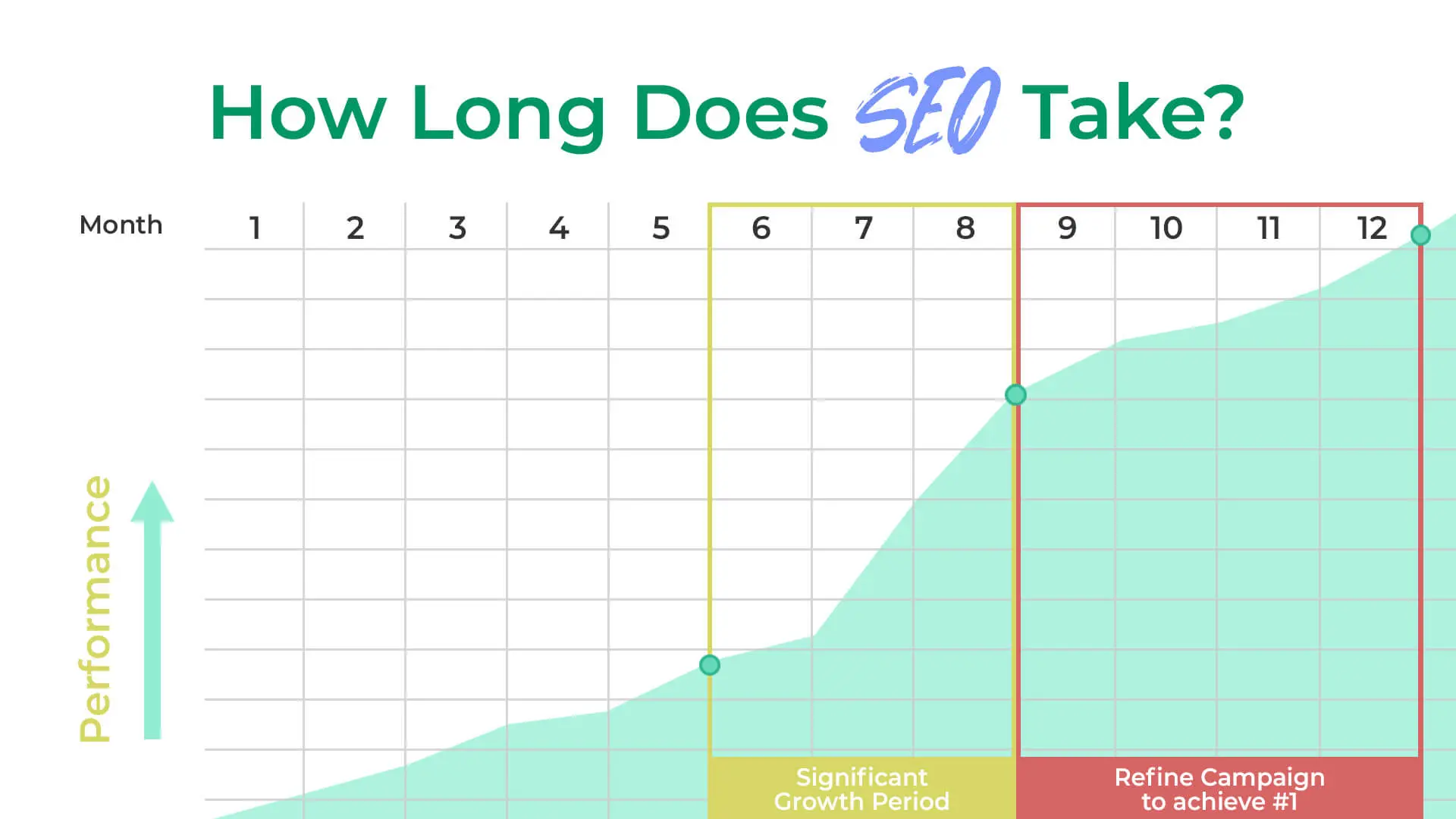
Here is the short version most practitioners agree on. A brand-new site often needs three to six months for noticeable movement. Established sites fixing clear problems can see changes in weeks. Competitive keywords can take six to twelve months or more.
These are ranges, not promises. How long does SEO take depends on your niche, your competition, and your effort. A local plumber faces an easier climb than a new finance blog. Keep that in mind as you read the phases below.
Phase 1: Setup and Discovery (Weeks 1-4)
This is the foundation phase. You fix technical issues, set up tracking, and publish your first content. Google starts discovering your site.
Do not expect traffic here. This phase is about making your site easy to crawl and understand. Common tasks include submitting a sitemap, fixing broken pages, improving page speed, and writing clear titles. It feels boring. It is also the phase most people skip, which is why their later work underperforms.
Phase 2: Early Movement (Months 2-3)
Google begins indexing your pages regularly. You may rank for your brand name and a few very specific phrases. Impressions in Search Console start climbing.
This is where most beginners get discouraged. Traffic is still tiny. But under the surface, Google is learning what your site is about. Pages published in month one may start ranking for long-tail keywords now. Keep publishing and improving. The seeds are sprouting, even if you cannot see much yet.
Phase 3: Noticeable Traction (Months 3-6)
This is when many sites see their first real results. Some pages reach page one for lower-competition keywords. Organic traffic starts forming a clear upward trend.
Backlinks you earned in earlier months start counting. Your content library is big enough that Google sees topical depth. If you did the foundation work well, this phase feels rewarding. If you skipped it, this phase often stalls, and people wrongly blame SEO itself.
Phase 4: Compounding Growth (Months 6-12 and Beyond)
After six months of steady work, results often compound. Old pages keep ranking while new pages rank faster. Each new article benefits from the trust the whole site has built.
This is the phase where SEO becomes a real growth channel. Traffic can double without doubling your effort, because past work keeps paying off. Sites that quit at month four never reach this phase. That is the biggest tragedy in SEO: quitting right before SEO compounding growth kicks in.
How Long Does SEO Take to Work? Your Month-by-Month Plan for Months 1-6
Knowing the timeline is only half the battle. What you do with the time matters more. Here is a practical SEO month by month plan for your first six months. Each month builds on the last.
Month 1: Fix the Foundation
Start with technical health. If Google cannot crawl your site easily, nothing else works well. Check that your site loads fast on phones. Fix broken links and missing pages. Make sure every page has a clear, descriptive title.
Set up Google Search Console and Google Analytics now. Submit your sitemap in Search Console. These free tools show you exactly what Google sees. Without them, you are flying blind. Many beginners skip this step and regret it for months.
Also plan your content. Pick 10 to 20 topics your audience actually searches for. Focus on specific, lower-competition questions first. Broad keywords like “fitness tips” are brutally competitive. Specific ones like “how to stretch after leg day” are winnable.
Month 2: Publish Content That Answers Real Questions
Now publish consistently. Aim for two to four quality articles per month if you are doing this yourself. Each article should answer one search question completely.
Write for beginners in your niche, even if you are an expert. Use short paragraphs and clear headings. Add images with descriptive alt text. Link related articles to each other so readers and Google can move around your site.
Cover the basics of on-page SEO on every post. That means one clear topic per page, the keyword in the title and first paragraph, and headings that describe what each section covers. An on-page SEO checklist can keep you consistent while this becomes habit.
Month 3: Earn Your First Quality Backlinks
By month three, you should have enough good content to promote. Start earning backlinks, which are links from other websites to yours. They are one of Google’s strongest trust signals.
Begin with easy wins. List your business in relevant directories. Reach out to sites with resource pages in your niche. If someone mentions your brand without linking, politely ask them to add a link. These small steps add up.
Do not buy links or join link schemes. Those shortcuts violate Google’s rules and can get your site penalized. A slow stream of real links beats a fast burst of fake ones every time. If you want the full playbook, read a guide on how to build backlinks for a new website.
Month 4: Improve What Already Exists
Go back to your early articles. Some will be ranking on page two or three. Small upgrades can push them onto page one. Add a section that answers a related question. Update any outdated facts. Improve the title so more people click.
Check Search Console for pages with high impressions but low clicks. That pattern means Google shows your page, but searchers skip it. A better title and meta description often fix this in days. This is one of the fastest wins in SEO.
Also keep publishing new content. By now you have a rhythm. Protect it. Consistency in months four through six separates sites that grow from sites that stall.
Month 5: Double Down on What Is Moving
Look at your data and find patterns. Which topics bring the most impressions? Which pages rank highest? Create more content around those winners.
This is called building topical authority. When Google sees you cover a topic deeply, it trusts you more on that topic. Ten connected articles on beginner gardening beat ten random articles on ten subjects. Depth beats breadth for new sites.
Start targeting slightly harder keywords now. You have some trust built up. Pages you publish in month five will often rank faster than pages from month one did. That is compounding in action.
Month 6: Review, Measure, and Set New Goals
At the six-month mark, do a full review. Compare your traffic, rankings, and leads to month one. Most sites doing steady work see clear growth by now, even if it is modest.
Decide what worked and do more of it. Drop tactics that produced nothing. Set goals for the next six months: target keywords, content volume, and link targets. Write them down. Sites with written goals outperform sites winging it.
If results are slower than expected, do not panic. Check the common mistakes section below before changing strategy. Often the fix is small: faster pages, better titles, or more consistent publishing.
Best Practices That Help You Get Results Faster

You cannot skip the waiting entirely. But you can avoid wasting months. These practices keep your timeline as short as honestly possible, and they affect how fast does SEO work for your site.
Publish Helpful Content on a Steady Schedule
Google rewards sites that publish regularly. You do not need daily posts. Two to four solid articles per month beats a burst of ten followed by silence. Pick a pace you can sustain for a year.
Each piece should genuinely help the reader. Ask yourself: after reading this, does the visitor need to search again? If yes, your article is not done. Complete answers earn rankings, links, and return visits.
Make Technical SEO a Habit, Not a One-Time Task
Technical SEO means the behind-the-scenes health of your site. Speed, mobile-friendliness, and clean structure all count. Review these basics quarterly with a free tool like Google’s PageSpeed Insights.
Small technical wins add up. A site that loads in two seconds keeps more visitors than one that loads in six. Visitors who stay longer send positive signals to Google. Fix the basics early and recheck them often. A beginner-friendly technical SEO guide walks through the full checklist.
Target Keywords You Can Actually Win
New sites should not chase the hardest keywords first. Check who ranks on page one for your target phrase. If the results are dominated by huge, established sites, pick a more specific version.
For example, instead of “email marketing,” try “email marketing tips for small bakeries.” Specific phrases have less competition and more motivated searchers. As your site grows, you can climb toward harder terms. This sequencing alone can cut months off your timeline.
8 Common Mistakes That Slow SEO Down
Expecting results in two weeks. SEO is not paid ads. If you judge a one-month-old campaign by ad standards, you will quit right before it starts working. Set a six-month horizon from day one.
Publishing thin content. Short, generic articles that say nothing new rarely rank. One detailed, original guide beats five shallow posts. Quality is the whole game for new sites.
Ignoring search intent. If someone searches “best running shoes” they want a comparison, not a history of running. Match your content to what the searcher actually wants. Check the current top results to see what format Google prefers.
Buying backlinks. Paid links break Google’s rules. Sellers promise fast rankings, but the links come from spammy networks. A penalty can erase months of honest work overnight.
Changing strategy every month. SEO needs time to show what works. If you switch tactics monthly, you never collect enough data to judge anything. Give each approach at least three months.
Neglecting mobile users. Most searches happen on phones. If your site is hard to use on a small screen, visitors leave fast. Google notices and ranks you lower. Test every page on your own phone.
Forgetting to update old content. Articles decay. Facts go stale, links break, and competitors publish fresher versions. Review your top pages twice a year and refresh them. Updated content often jumps in rankings within weeks.
Tracking only vanity metrics. Ranking reports feel good, but they do not pay bills. Track clicks, signups, and sales alongside rankings. A keyword that brings buyers beats a keyword that brings browsers.
Expert Tips That Shorten the Wait

Fix quick wins first. Pages ranking on page two are close to page one. Improving their titles and content can move them up in weeks, not months.
Build internal links deliberately. Link new articles from your older, stronger pages. This passes trust through your own site and helps Google discover new pages faster.
Answer questions directly. Start key sections with a clear, short answer. This helps you win featured snippets, the answer boxes at the top of Google, which can bring traffic even at lower rankings.
Get mentioned where your audience hangs out. Podcasts, newsletters, and community posts in your niche can bring links and direct visitors. These often work faster than waiting for rankings.
Refresh before you expand. Updating ten existing articles often beats publishing ten new ones. Google already trusts the old URLs.
Study the sites outranking you. Open the top three results for your target keyword. Note what they cover that you do not. Then make your page genuinely better, not just longer.
Be patient with new pages. Even great pages can take weeks to settle into their final ranking. Resist the urge to rewrite a page that is only ten days old.
Real-World Examples: How Long SEO Took for 3 Different Sites
Timelines make more sense with concrete stories. These are typical patterns practitioners see again and again.
Example 1: A Local Plumbing Business
A plumber launches a simple five-page website. Competition in his town is low. He claims his Google Business Profile, gets listed in local directories, and publishes one helpful article per month about common plumbing problems.
By month two, he ranks for his business name. By month four, his site appears for “emergency plumber [town].” By month six, calls from Google have doubled. The local SEO timeline often moves fastest because the competition pool is small and location does much of the targeting work.
Example 2: A New Food Blog
A food blogger starts from zero in a crowded niche. She publishes two detailed recipes per week with original photos. She shares them in cooking communities and earns links from a few food roundup sites.
Months one through three bring almost no traffic. In month four, a few recipes rank for specific long-tail phrases. By month seven, her traffic curve bends upward sharply. By month twelve, search is her biggest traffic source. Crowded niches take longer, but consistent quality still breaks through. This is a classic case of SEO for a new website in a competitive space.
Example 3: A B2B Software Company
A small software firm targets competitive industry keywords. They publish in-depth guides, run an original survey, and earn links from industry publications. Their domain is new, so trust builds slowly.
They see first page-one rankings around month five for niche terms. Competitive head terms take nine to twelve months. But the leads from those rankings are high value, so the return justifies the wait. In B2B, fewer visitors can still mean excellent results if each one is worth a lot.
SEO Timelines in 2027: What Changed
SEO fundamentals still apply, but a few 2027 shifts affect how fast you see results.
AI Overviews Changed What “Ranking” Means
Google now answers many questions directly with AI-generated summaries at the top of results. This means fewer clicks for simple questions. Getting cited in these overviews is a new kind of win.
For timelines, this cuts both ways. Simple informational keywords may bring less traffic than before. But detailed, experience-based content gets cited more often. Focus on topics where your real experience adds something AI cannot fake.
Original Experience Matters More Than Ever
AI-generated content flooded the web. Google now rewards content with clear firsthand experience: original photos, real data, and personal testing. Generic articles take longer to rank, if they rank at all.
This is good news for patient creators. Content with genuine experience often ranks faster because it stands out from the flood. Show your work. Share your results. That is the fastest trust-builder available in 2027.
Freshness and Updates Carry More Weight
With so much content competing, recently updated pages have an edge. A guide refreshed in 2027 often outranks a similar guide from 2022. Build updating into your routine from the start.
This also shortens the effective timeline for established sites. A site with fifty articles that refreshes them yearly can see ranking jumps in weeks. New sites do not have that backlog yet, which is one more reason to start publishing now. Your SEO results timeline will look different in year one than in year two, and that is normal.
Important Things to Consider Before You Start

Be honest about your resources. SEO takes consistent effort for months. If you can only publish once every three months, adjust your timeline expectations. Slow input means slow output.
Choose your niche battles wisely. Ranking a brand-new site for “credit cards” is a multi-year war against giants. Ranking for specific questions in a smaller niche is a winnable six-month campaign. Smaller ponds, faster fish.
Do not put all your eggs in one basket. SEO is a great long-term channel, but it is slow at first. Pair it with something faster early on, like social media or email outreach. That way you get feedback and customers while search builds.
Finally, keep learning from official sources. Google’s Search Central blog announces real changes. SEO blogs and forums share tactics. Test everything yourself, because what works for one site may not work for yours.
Search Engine Insight brings together practical digital marketing knowledge, website improvement tips, and SEO resources to help businesses turn online opportunities into measurable growth.
Frequently Asked Questions
How long does SEO take to work for a new website?
Most new websites see noticeable movement in three to six months. Early signs like impressions and long-tail rankings can appear in months two to three. Competitive keywords often need six to twelve months. The timeline depends on your niche, competition, content quality, and how consistently you work at it.
Can SEO work in 30 days?
Rarely in a meaningful way. You might get pages indexed and rank for your brand name within a month. But real traffic from competitive keywords takes longer. Anyone promising page-one rankings in 30 days is likely selling risky shortcuts that can get your site penalized.
Why is my SEO not working after 3 months?
Three months is still early. Common causes of slow progress include thin content, targeting keywords that are too competitive, technical problems blocking crawlers, or inconsistent publishing. Check Google Search Console first. If impressions are rising, your SEO is working and traffic will follow.
How long does it take to rank on the first page of Google?
For low-competition keywords, a new site can reach page one in three to six months. Medium-competition keywords often take six to twelve months. Highly competitive terms can take over a year. Your best move is to win easier keywords first and build toward harder ones. That is the practical answer to how long to rank on Google for most beginners.
Does SEO work faster for local businesses?
Often yes. Local searches have a smaller competition pool, and your location does much of the targeting. A local business with a complete Google Business Profile and a few good reviews can see results in two to four months. Service-area pages and local content speed things up further.
How often should I check my SEO progress?
Check key metrics monthly, not daily. Rankings bounce around naturally, and daily checks create false panic. Once a month, review impressions, clicks, and average position in Google Search Console. Quarterly, do a deeper review of content performance and set goals for the next stretch.
Will SEO keep working if I stop?
For a while, yes. Good rankings can hold for months with no new work. But competitors keep improving, content goes stale, and Google updates its systems. Most sites that stop SEO entirely see a slow decline after six to twelve months. Light maintenance protects your gains.
How long do SEO results last?
Quality SEO results are durable but not permanent. A strong page can rank for years with occasional updates. Pages you never touch will slowly lose ground to fresher competitors. Plan to refresh important pages once or twice a year to keep results lasting.
Is SEO slower than paid ads?
Yes, much slower at the start. Paid ads bring traffic the day you launch a campaign. SEO takes months to build momentum. But ads stop the moment you stop paying, while SEO keeps delivering. Most businesses do best combining both: ads for speed, SEO for lasting growth.
How long does it take Google to index a new page?
It varies widely. On established sites, new pages can be indexed within hours or days. On brand-new sites, it can take one to three weeks. You can speed things up by submitting the URL in Google Search Console and linking to the new page from an already-indexed page on your site.
When should I hire an SEO expert instead of doing it myself?
Consider hiring help if you have no time to publish consistently, if technical issues are beyond your skills, or if you are in a competitive niche where mistakes are costly. Even then, learn the basics first. Knowing how SEO works helps you judge whether an expert is actually delivering value.
Conclusion: How Long Does SEO Take to Work?
Now you have an honest answer to how long does SEO take to work. Most sites see real movement in three to six months, with compounding growth after that. The wait is not empty time. Every month of good work builds trust, content, and links that pay off later.
Start with a solid foundation in month one. Publish helpful content steadily. Earn real backlinks. Fix what is not working and double down on what is. Avoid the shortcuts and the strategy-hopping that waste so many beginners’ first year.
SEO rewards patience paired with consistent effort. Set your six-month horizon today, work the plan, and give Google time to notice. The sites that win are rarely the cleverest. They are the ones still working when everyone else quit.