
Best NIS2 Compliance Platforms for SaaS Companies in 2026
The NIS2 Directive is no longer a future problem. It’s here, it’s being enforced, and for SaaS companies, the pressure is on. Whether you fall directly under the regulations or your big enterprise clients are hounding you for proof of compliance before they sign a contract, you have to deal with it.
Forget tracking your security on messy spreadsheets. Here are the 5 best tools to handle NIS2 compliance in 2026, keeping it quick and painless for your team.
Why SaaS Providers Need a Dedicated NIS2 Tool
Trying to manage cybersecurity rules manually is a quick way to burn out your engineering team. A dedicated compliance platform handles the heavy lifting so you can stay focused on building your product.
A good platform helps your software business by:
- Saving developer time: It automates the routine tasks parts of compliance, like collecting logs and cloud configurations, so your team doesn’t have to take manual screenshots.
- Winning enterprise deals: Big corporate buyers expect instant, audit-ready proof of your security posture before they trust you with their data.
- Avoiding catastrophic fines: The platforms keep you aligned with strict deadlines, like the mandatory incident reporting timeline; a 24-hour early warning, a 72-hour detailed notification, and a final report within one month
- Protecting company leadership: Because NIS2 holds executives personally liable for security failures, these tools keep a clean, digital paper trail to prove your team did things right.
- DataGuard
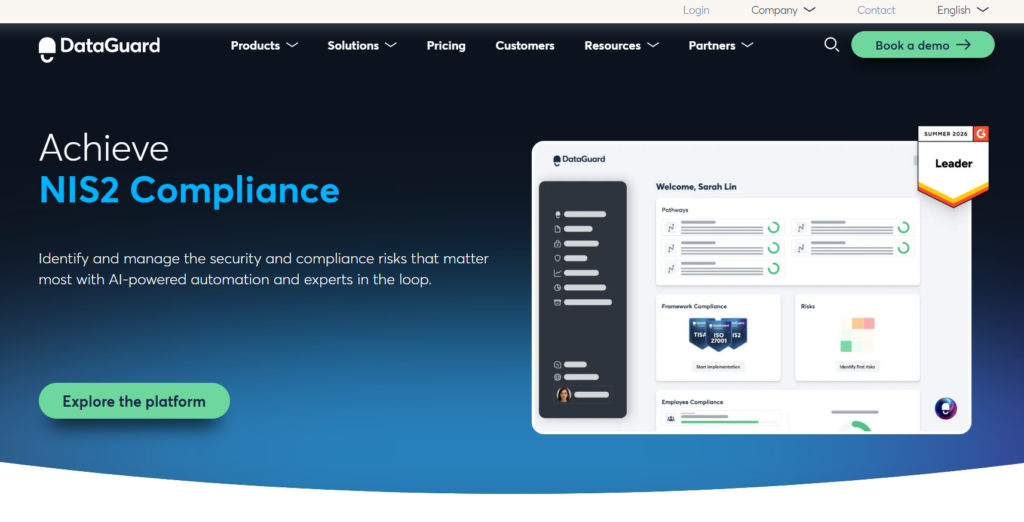
DataGuard is our top pick because they actually understand what it’s like to run a software company. Instead of just handing you an empty dashboard, they mix smart automation with real human expertise to map your exact audit requirements, close gaps fast, and help you produce the evidence auditors actually expect.
Why it’s great for SaaS
Many compliance tools were built primarily for US frameworks like SOC 2 and struggle to map cleanly onto Europe’s regulatory requirements. Dataguard was built with European regulatory compliance at its core, meaning the workflows, controls, and documentation it produces are aligned with what NIS2 and GDPR auditors actually look for.
- Avoid duplicate work: If you already have ISO 27001, DataGuard shows exactly what’s missing for NIS2 and other frameworks, so you build on what’s there instead of starting from scratch.
- Collect evidence automatically: It connects directly to AWS, Google Cloud, GitHub, and HR systems to pull the audit evidence you need without chasing documents manually.
- Protect leadership from risk: NIS2 holds executives accountable for major incidents. DataGuard helps cover that with targeted training, clear accountability tracking, and audit-ready documentation.
- Cover multiple frameworks at once: Manage ISO 27001, NIS2, SOC 2, and more in one place, with shared controls mapped across frameworks; so one implementation effort supports multiple certifications.
Pros
- You get real regulatory experts to guide you through tough legal rules.
- It handles the specific nuances of your country’s privacy laws natively.
Cons
- The dashboard has a learning curve and can feel a bit complex for beginners.
- It can be expensive for small startups since it includes expert human support.
2. Cyberday
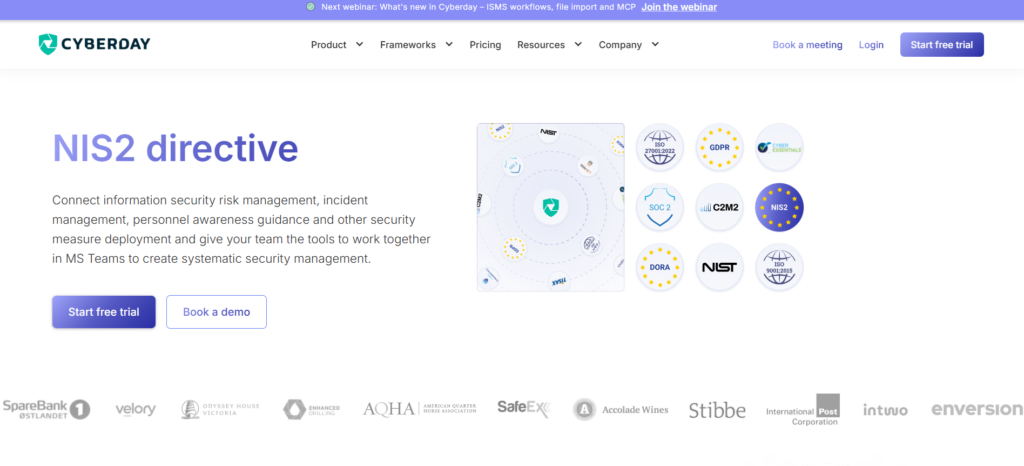
If your software handles highly sensitive data or you sell mostly to heavily regulated sectors like healthcare, energy, or banking, Cyberday is a fantastic, lightweight choice built specifically for modern frameworks.
Why it’s great for SaaS
- Framework-First Architecture: It focuses heavily on linking your day-to-day operations directly to NIS2 and ISO 27001 requirements.
- Living Task List: It turns scary regulatory text into simple, recurring tasks for your developers so security stays active all year round.
Pros &
- Incredibly clean task management that keeps security from becoming a one-time paper exercise.
- Excellent at automatically linking your regular employee tasks to audit-ready evidence.
Cons
- Fewer direct integrations with obscure or niche developer tools compared to the massive global giants.
- Vanta
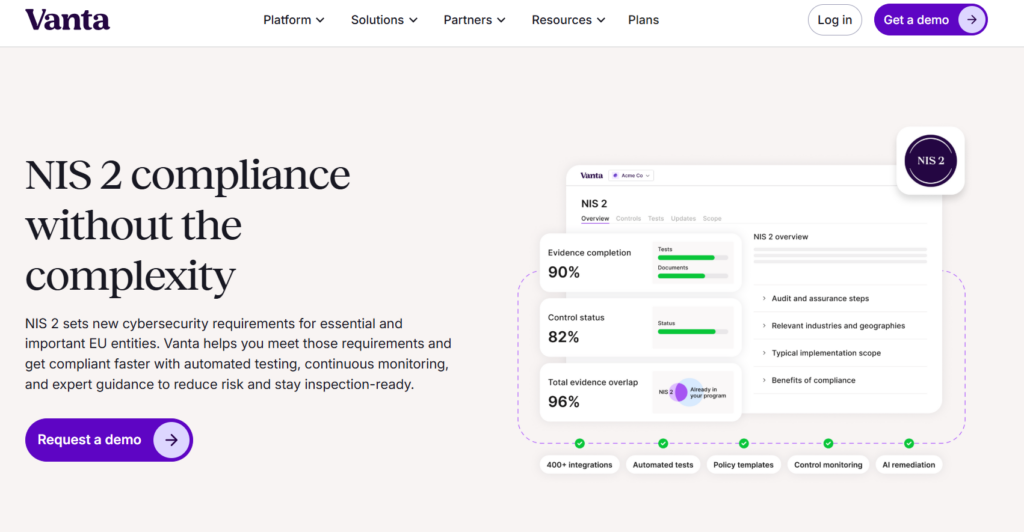
Vanta is a massive name in the compliance space. If you are a fast-growing startup trying to sell to clients in different parts of the world at the same time, this is your best option.
Why it’s great for SaaS
- Dozens of integrations: It connects to almost every software tool out there to monitor your system security 24/7.
- Set it once, use it everywhere: If you fix a security control once, Vanta maps it to NIS2, SOC 2, and ISO 27001 all at the same time.
Pros
- Excellent live scanning means you barely have to take manual screenshots for auditors.
- Unbeatable if you need to pass multiple global compliance standards at once.
Cons
- It expects standard setups; if your cloud architecture is highly customized, fitting it into Vanta can be a pain.
- The automated scanners can occasionally flag minor, irrelevant things as “non-compliant,” causing annoying notifications.
- usecure
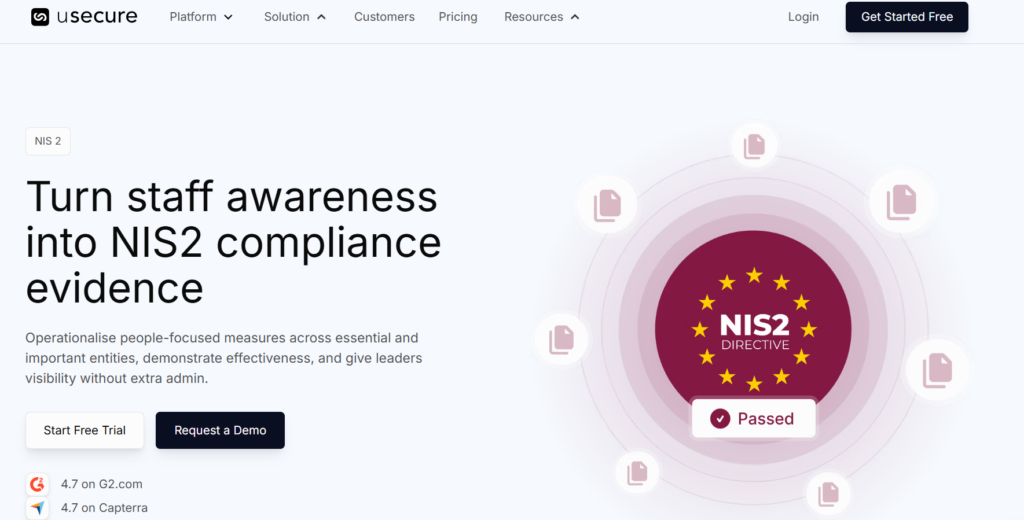
NIS2 places a massive focus on human risk; meaning your staff needs to know how to avoid basic cyber traps. Traditional technical tools miss this, but usecure focuses entirely on it.
Why it’s great for SaaS
- Automated training: It sends bite-sized, simple security lessons to your team and runs safe, fake phishing tests to see who clicks.
- Checks the executive box: NIS2 forces management teams to take regular cybersecurity training. usecure has modules built just for C-level executives.
Pros
- Incredibly affordable, simple to use, and gets your whole team trained in minutes.
- Keeps a clean paper trail of signed security policies for auditors.
Cons
- It doesn’t scan your actual code or cloud infrastructure; you’ll still need a separate technical tool.
- Generating deeply customized, highly formal reporting documents for auditors can be clunky.
- Hyperproof
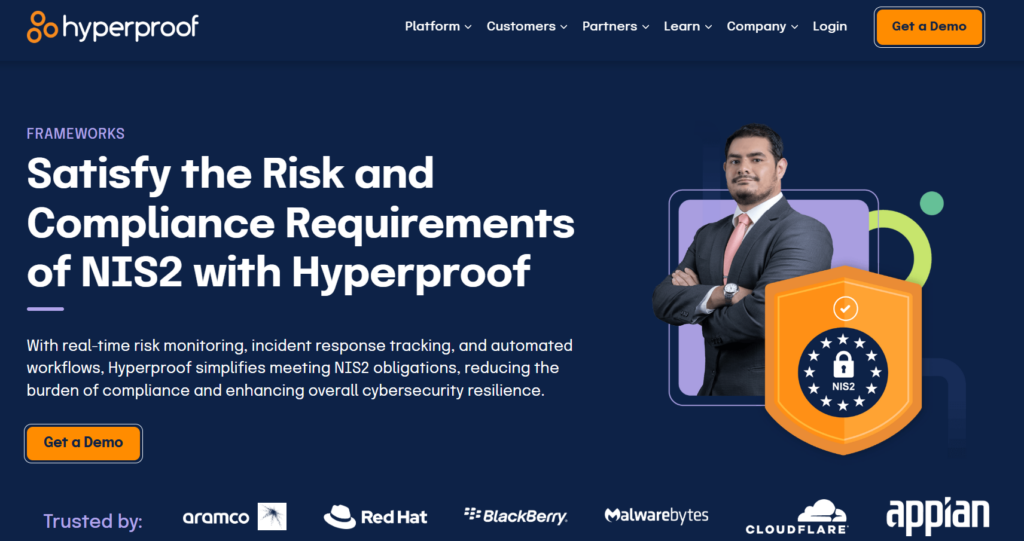
If you run a larger, mature SaaS company with separate DevOps, HR, and legal teams, you will quickly outgrow basic checklists. Hyperproof is built for bigger operations.
Why it’s great for SaaS
- Built for collaboration: You can easily assign different parts of NIS2 to different team members, set deadlines, and track everyone’s progress in one place.
- Vendor tracking: It helps you map out potential security risks within your software supply chain, which is a major focus for NIS2 auditors.
Pros &
- Perfect task management so your teams don’t step on each other’s toes.
- Allows you to build custom security controls that scale across multiple products.
Cons
- The interface can feel sluggish and heavy when managing hundreds of different controls at once.
- Lacks built-in visual graphs; you have to export data to external tools if you want pretty progress charts.
The Verdict
Choosing the right compliance software depends entirely on where your business stands today and who your buyers are. There is no one-size-fits-all answer, but you can easily narrow down your choice by looking at your primary business goal.
Before committing to any platform, consider these important things:
- Whether it covers both technical controls and human risk requirements,since NIS2 demands both
- What is included in the price; expert support, integrations, and multi-framework coverage vary widely between tools
- How well it fits your team’s maturity, whether you need simple task checklists or enterprise-grade workflow management across departments
If you want the fastest path to full NIS2 compliance with built-in regulatory expertise, automated evidence collection, and executive library tracking all in one platform, DataGuard is a solid choice.