What Is Crackle? Complete Streaming Guide
Imagine walking into a movie theater where admission is completely free, but you have to sit through a few commercials before the film starts. That simple concept was essentially the foundation of Crackle, one of the earliest free streaming platforms in the digital entertainment world.
Crackle was an advertising-supported video-on-demand (AVOD) service that allowed users to watch movies, television shows, and original content without paying subscription fees. Unlike premium platforms that required monthly memberships, Crackle offered content entirely free of charge. Revenue came primarily through advertisements shown during programs.
The service earned a loyal following because it arrived long before the modern explosion of streaming platforms. At a time when many consumers were still relying on cable television or DVDs, Crackle presented an appealing alternative. It offered easy access to entertainment through smartphones, smart TVs, gaming consoles, and web browsers.
At its peak, Crackle reportedly reached tens of millions of monthly active users and hosted thousands of hours of content. Industry sources reported approximately 40 million monthly active users in earlier years, highlighting the platform’s significant footprint in the free streaming market.
The History of Crackle
Crackle evolved from Grouper in 2004 into a leading free streaming platform before closing in 2025.
From Grouper to Crackle
Crackle did not originally start under its famous name. The platform began in 2004 as Grouper, a video-sharing website created by entrepreneurs Josh Felser, Dave Samuel, Mike Sitrin, and Aviv Eyal.
During the mid-2000s, online video was still in its infancy. YouTube itself had only recently launched, and streaming technology was far from perfect. Grouper experimented with user-generated content and social sharing before eventually shifting toward professional entertainment content.
The company rebranded as Crackle in 2007 after gaining attention from major media companies looking to establish a foothold in digital entertainment.
Sony’s Acquisition
Sony Pictures recognized the potential of online streaming early and acquired the service in 2006. Under Sony’s ownership, Crackle gained access to a larger library of movies and television programs.
This acquisition represented one of the entertainment industry’s earliest attempts to compete in digital streaming. Sony invested in content licensing and began producing original programming specifically designed for online audiences.
For many users, Crackle became synonymous with free access to Hollywood content. Popular movies, classic television series, and exclusive productions gave the platform a unique identity.
Ownership Changes
Sony eventually sold a majority stake in Crackle to Chicken Soup for the Soul Entertainment in 2019 before divesting its remaining ownership later. Unfortunately, the new parent company struggled financially and eventually filed for bankruptcy in 2024, leading to liquidation proceedings and the eventual shutdown of Crackle.
How Crackle Worked?
Ad-Supported Streaming Model
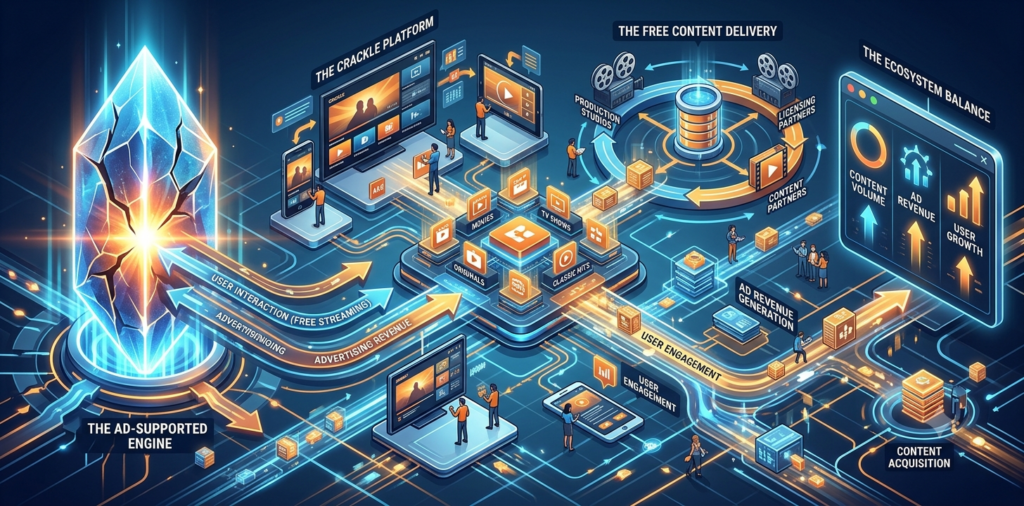
Crackle pioneered what is now widely known as the FAST and AVOD model—Free Ad-Supported Streaming Television.
The concept was remarkably simple:
- Users created a free account or watched anonymously.
- Movies and TV shows streamed instantly.
- Advertisements appeared periodically during playback.
- No monthly subscription fees were required.
Today, this model has become increasingly popular because consumers are experiencing subscription fatigue. Paying for numerous streaming services every month can become expensive, making free platforms increasingly attractive.
Crackle demonstrated that audiences were willing to tolerate advertisements in exchange for free access to entertainment. In many ways, the platform predicted today’s growing trend toward ad-supported streaming tiers.
Supported Devices
Crackle was widely available across multiple platforms, including:
| Device Type | Availability |
| Smart TVs | Yes |
| Android Devices | Yes |
| iPhones & iPads | Yes |
| Roku | Yes |
| PlayStation | Yes |
| Xbox | Yes |
| Web Browsers | Yes |
Its broad device compatibility made it highly accessible and contributed significantly to its popularity.
Features That Made Crackle Unique
Several features helped Crackle stand out in an increasingly crowded streaming environment.
Free Movies and TV Shows
The biggest attraction was obvious: everything was free.
Unlike premium services that constantly raised subscription prices, Crackle offered an extensive collection of entertainment at no cost. For budget-conscious viewers, students, and casual movie fans, this was incredibly appealing.
Original Programming
Crackle also invested heavily in original productions. Some notable titles included:
- The Oath
- StartUp
- Snatch
- Comedians in Cars Getting Coffee
These originals helped build the platform’s identity and demonstrated that free streaming services could produce quality content.
Many users still fondly remember Crackle originals, particularly during the platform’s peak years. Online discussions continue to highlight nostalgic appreciation for the service and its exclusive shows.
Crackle Content Library
Crackle offered a diverse library of free movies, TV shows, and original content across various genres.
Movies
Crackle regularly rotated its movie selection. Users could discover:
- Action films
- Comedy movies
- Horror titles
- Thrillers
- Classic Hollywood productions
- Independent cinema
The rotating nature of the library encouraged users to check back frequently.
Television Series
Television content included:
- Classic sitcoms
- Crime dramas
- Reality programming
- International series
- Cult favorites
Although the catalog was not as extensive as Netflix’s, the completely free access compensated for many limitations.
Exclusive Content
Crackle attempted to differentiate itself through exclusive licensing agreements and original programming.
This strategy was important because competing solely on library size against subscription giants would have been nearly impossible. Instead, Crackle aimed to create unique viewing experiences unavailable elsewhere.
Pros and Cons of Crackle
| Pros | Cons |
| Completely free | Frequent advertisements |
| Easy accessibility | Smaller content library |
| Multiple device support | Limited geographic availability |
| Original programming | Content rotated frequently |
| No subscription commitment | Eventually discontinued |
One of Crackle’s greatest strengths was simplicity. Users could instantly start watching content without worrying about payment information or lengthy registration processes.
Its biggest weakness, however, was maintaining competitive content acquisition while relying entirely on advertising revenue.
Why Crackle Shut Down
The downfall of Crackle illustrates how challenging the streaming business can be.
The streaming industry has become fiercely competitive. Companies now spend billions of dollars annually on original programming, technology infrastructure, licensing agreements, and marketing campaigns.
Chicken Soup for the Soul Entertainment experienced significant financial difficulties, reportedly carrying enormous debt obligations and suffering substantial losses. Bankruptcy proceedings eventually resulted in liquidation and the discontinuation of several company assets, including Crackle.
Several factors contributed to the shutdown:
1. Intense Competition
The market became crowded with major players such as Netflix, Disney+, Prime Video, Hulu, Tubi, and Pluto TV.
2. Rising Content Costs
Licensing premium content became increasingly expensive.
3. Changing Consumer Preferences
Users began expecting larger libraries, better recommendations, and more original programming.
4. Financial Mismanagement
The parent company’s broader financial problems significantly affected Crackle’s sustainability.
Sony support documentation later confirmed that Crackle content was no longer available on supported devices despite remnants of the application remaining in app stores.
Best Alternatives to Crackle
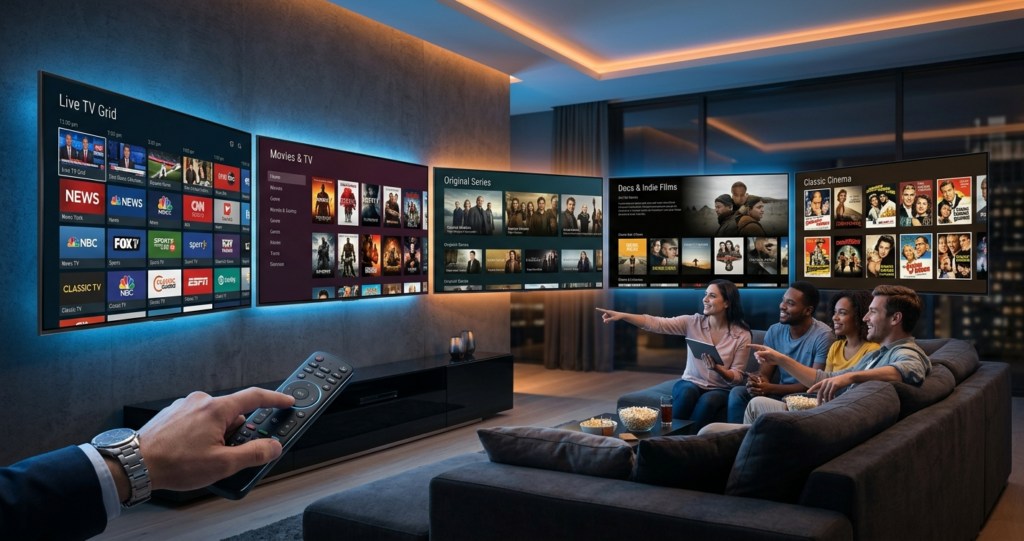
Although Crackle itself may no longer operate, several excellent alternatives exist.
1. Tubi
Tubi has become one of the largest free streaming services in the world.
It offers thousands of movies and television episodes entirely free of charge and has aggressively expanded its content catalog.
2. Pluto TV
Pluto TV combines on-demand entertainment with live streaming channels.
Its experience closely resembles traditional television while maintaining free access.
3. The Roku Channel
The Roku Channel has emerged as another major player in free streaming.
Industry consolidation continues to reshape the streaming landscape, including significant developments involving Roku and other media companies.
Comparison Table
| Platform | Free | Live TV | Original Content | Ads |
| Tubi | Yes | Limited | Yes | Moderate |
| Pluto TV | Yes | Yes | Some | Moderate |
| Roku Channel | Yes | Yes | Yes | Moderate |
| Former Crackle | Yes | No | Yes | Moderate |
The Future of Free Streaming Services
Crackle may have disappeared, but its influence remains visible everywhere.
Today’s media industry increasingly recognizes that many consumers prefer free entertainment supported by advertising rather than maintaining numerous expensive subscriptions.
FAST and AVOD services are rapidly expanding because they address growing concerns about subscription fatigue and rising entertainment costs.
In many ways, Crackle was ahead of its time. It introduced millions of users to the concept of free digital streaming years before it became mainstream.
Its business model has now become one of the fastest-growing segments of the streaming industry.
The future will likely involve hybrid entertainment ecosystems where consumers combine premium subscriptions with free ad-supported services. This trend suggests that while Crackle itself may be gone, its underlying vision continues to shape modern streaming.
Conclusion: What Is Crackle?
Crackle was one of the pioneers of free online streaming. Starting as Grouper before evolving into a major ad-supported entertainment platform, it introduced millions of viewers to the idea that quality movies and television could be accessed without subscription fees.
The service enjoyed years of popularity under Sony ownership and later under Chicken Soup for the Soul Entertainment. Despite reaching millions of users and producing notable original content, financial difficulties and fierce competition eventually led to its shutdown.
Its legacy remains important because it helped establish the free streaming model that companies like Tubi, Pluto TV, and The Roku Channel now successfully use.
Although Crackle may no longer be available, its impact on digital entertainment is undeniable. It proved that free streaming could attract massive audiences and fundamentally changed how people think about online entertainment.