How Mobile Medical Units Are Changing Healthcare Outreach and Digital Discovery
Healthcare organizations are expanding access through mobile medical vehicles while simultaneously rethinking how patients discover and engage with these services online. The intersection of physical outreach and digital visibility has created new challenges for providers trying to reach underserved populations, coordinate community health events, and maintain a strong online presence that reflects their mobile capabilities.
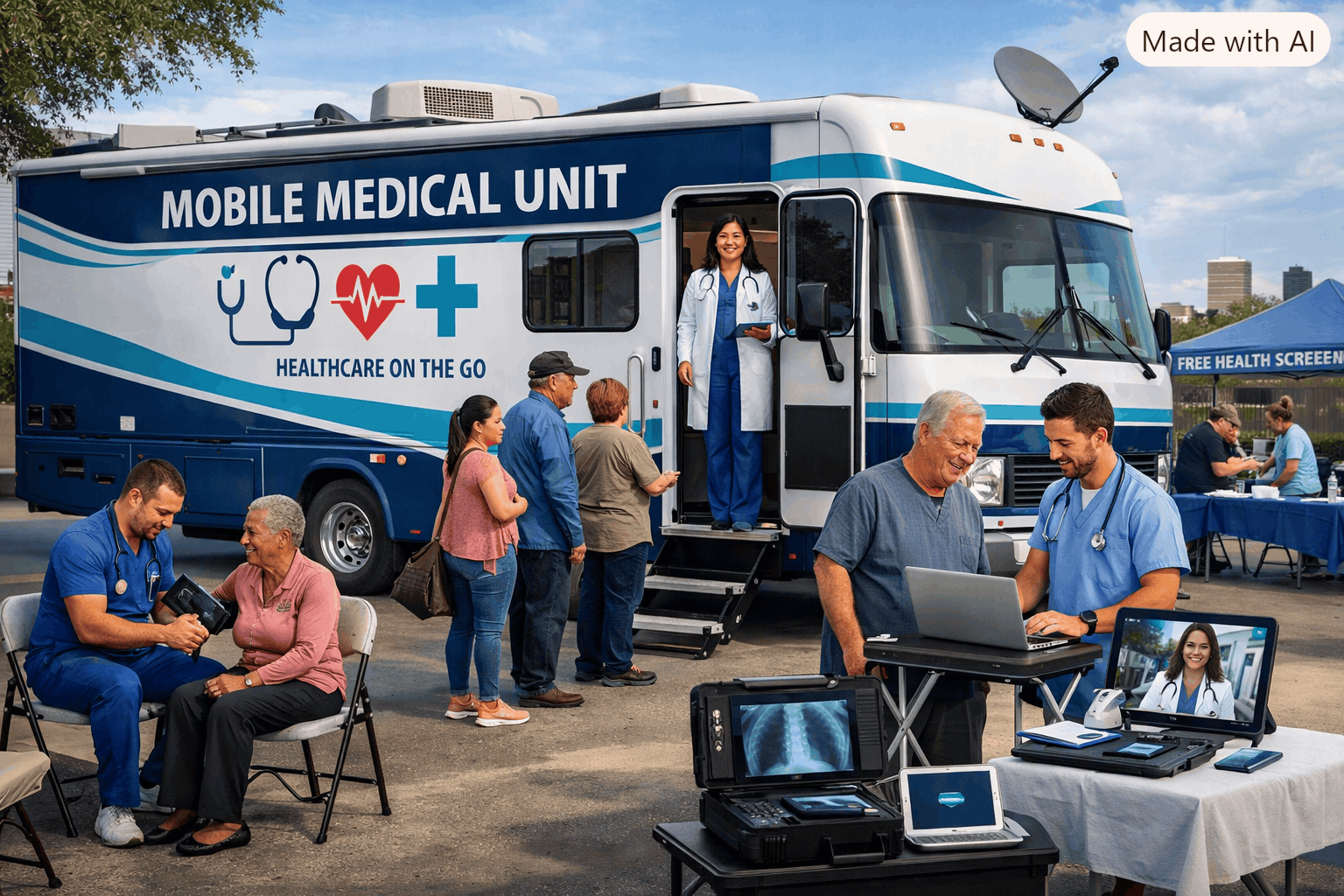
Mobile medical units have evolved from basic exam rooms on wheels to sophisticated diagnostic centers equipped with imaging equipment, laboratory facilities, and telehealth connections. This evolution parallels changes in how people search for healthcare services, with local search queries increasingly including terms like “mobile clinic near me” or “community health van schedule.” The vehicle itself becomes a physical manifestation of a brand’s commitment to accessibility, but that commitment means little if the target population cannot find information about services, locations, or schedules through search.
The Physical Footprint: What Makes Mobile Medical Vehicles Effective
A well-designed mobile medical vehicle serves multiple functions beyond basic transportation. The exterior wrap acts as a moving billboard, building brand recognition across communities where the unit operates. High-contrast graphics with clear service descriptions help potential patients understand what the vehicle offers at a glance. Interior layout determines workflow efficiency, patient comfort, and the range of services that can be delivered in a confined space.
Specialized fabrication for medical applications requires attention to power systems, HVAC for equipment and pharmaceuticals, medical gas installations, waste management, and accessibility features that comply with ADA standards. Organizations looking to deploy these units can source new and used mobile medical vehicles from fabrication companies that understand the regulatory and operational requirements of mobile healthcare delivery. The choice between new construction and refurbished units often depends on budget constraints, desired customization level, and timeline for deployment.
Fleet vehicles typically range from compact vans for basic screenings to full-size buses or semi-trailers for comprehensive diagnostic services. Smaller units offer maneuverability in urban environments and lower operating costs, while larger vehicles provide space for multiple exam rooms, waiting areas, and specialized equipment like mammography machines or dental chairs. The vehicle class affects licensing requirements, driver qualifications, and parking logistics at deployment sites.
Branding That Moves: Vehicle Wraps as Marketing Assets
Vehicle wraps transform mobile medical units into 24-hour advertisements. Unlike stationary signage, these graphics travel through diverse neighborhoods, appear at community events, and park in high-traffic areas where they generate thousands of impressions weekly. Effective wrap design balances brand identity with functional information: contact numbers, website URLs, and service lists must remain legible from a distance and in motion.
Professional wrap installation involves surface preparation, precise vinyl application, and post-installation inspection to prevent bubbling, lifting, or premature wear. Vinyl wrap techniques require skill to navigate curves, rivets, windows, and door seams without compromising the design or creating weak points where weather can penetrate. Quality materials and professional installation typically provide five to seven years of service life, though high-use vehicles or harsh climates may require earlier replacement.
Color psychology plays a role in medical branding. Blues and greens convey trust and calm, while warmer tones can make services feel more approachable. High-contrast combinations improve visibility in varied lighting conditions. Organizations should consider how wrap colors photograph for social media, appear in news coverage, and read in black-and-white for accessibility purposes.
Search Visibility for Mobile Services
Mobile healthcare presents unique search engine optimization challenges because service locations change regularly. Traditional local SEO assumes a fixed address, but mobile clinics operate across multiple zip codes, often on rotating schedules. Organizations must structure their digital presence to accommodate this fluidity while still appearing in location-based searches.
Effective strategies include maintaining a detailed schedule page with upcoming locations, creating neighborhood-specific content that describes where and when services appear, and using structured data markup to help search engines understand service areas. Google Business Profile listings for mobile services should emphasize the service area rather than a single address, and regular posts about upcoming stops help maintain engagement and visibility.
Content marketing for mobile health services benefits from answering specific patient questions: what to bring to an appointment, how long visits typically take, whether walk-ins are accepted, and what insurance plans are honored. This informational content serves dual purposes—it reduces administrative burden by pre-answering common questions and provides keyword-rich material that improves search rankings. The same principles that drive effective content strategy for digital platforms apply to healthcare outreach, with the added complexity of coordinating physical presence with online discovery.
Measuring Impact Beyond Impressions
Mobile medical programs require different metrics than traditional brick-and-mortar clinics. Vehicle wrap impressions can be estimated using traffic counts and parking duration at deployment sites, but translating visual exposure into patient acquisition requires tracking referral sources during intake. Simple questions like “How did you hear about us?” provide baseline data, while unique phone numbers or URLs on vehicle graphics enable more precise attribution.
Digital metrics include search volume for branded terms after vehicles appear in new areas, website traffic spikes corresponding to deployment schedules, and social media engagement with posts announcing upcoming locations. Organizations should monitor search queries that include their mobile unit branding alongside location terms, as these indicate successful brand recognition from physical vehicle sightings.
Patient volume per stop, repeat visit rates, and service mix data help optimize routing and scheduling. If certain neighborhoods show consistently high demand for specific services, organizations can adjust staffing, equipment, or visit frequency. Geographic data also informs broader health system planning by revealing underserved areas where permanent facilities might be warranted.
Coordination Across Channels
The most successful mobile medical programs integrate vehicle operations with digital marketing, community partnerships, and traditional media. A mobile unit announcement should appear simultaneously on the organization’s website, social media channels, community calendars, and partner organization communications. Email lists segmented by geography allow targeted outreach when units visit specific neighborhoods.
Local news coverage provides credibility and reach beyond paid advertising. Press releases about new mobile units, expanded service areas, or special community health events often result in coverage that introduces the program to audiences who might not follow the organization’s own channels. Vehicle branding should be camera-ready for news segments, with clean graphics and clear organizational identification that reads well on screen.
Fleet management software that tracks vehicle location, service history, and maintenance schedules can feed data to public-facing schedule displays, ensuring patients see accurate, up-to-date information. Integration between operational systems and content management systems reduces the manual work of updating multiple platforms and decreases the risk of publishing outdated or conflicting information.
Long-Term Brand Building Through Consistent Presence
Mobile medical vehicles build trust through repeated presence in communities. Unlike one-time marketing campaigns, a vehicle that appears monthly in the same neighborhood becomes a familiar resource. This consistency requires operational discipline—cancelled stops or irregular schedules erode the reliability that drives patient adoption. Organizations must balance ambitious coverage goals with sustainable operations that staff can maintain year-round.
Vehicle appearance matters for brand perception. Regular cleaning, prompt wrap repairs, and well-maintained equipment signal professionalism and care. A weathered, poorly maintained mobile clinic sends unintended messages about organizational priorities. Scheduled wrap replacement before visible degradation maintains brand standards and prevents the gradual decline that operators might not notice day-to-day.
As mobile healthcare continues expanding to address access gaps, the organizations that succeed will be those that treat their vehicles as integrated marketing platforms rather than simple transportation. The physical presence of a well-branded mobile unit, combined with coordinated digital visibility and community engagement, creates a powerful channel for reaching populations that traditional healthcare delivery often misses.