
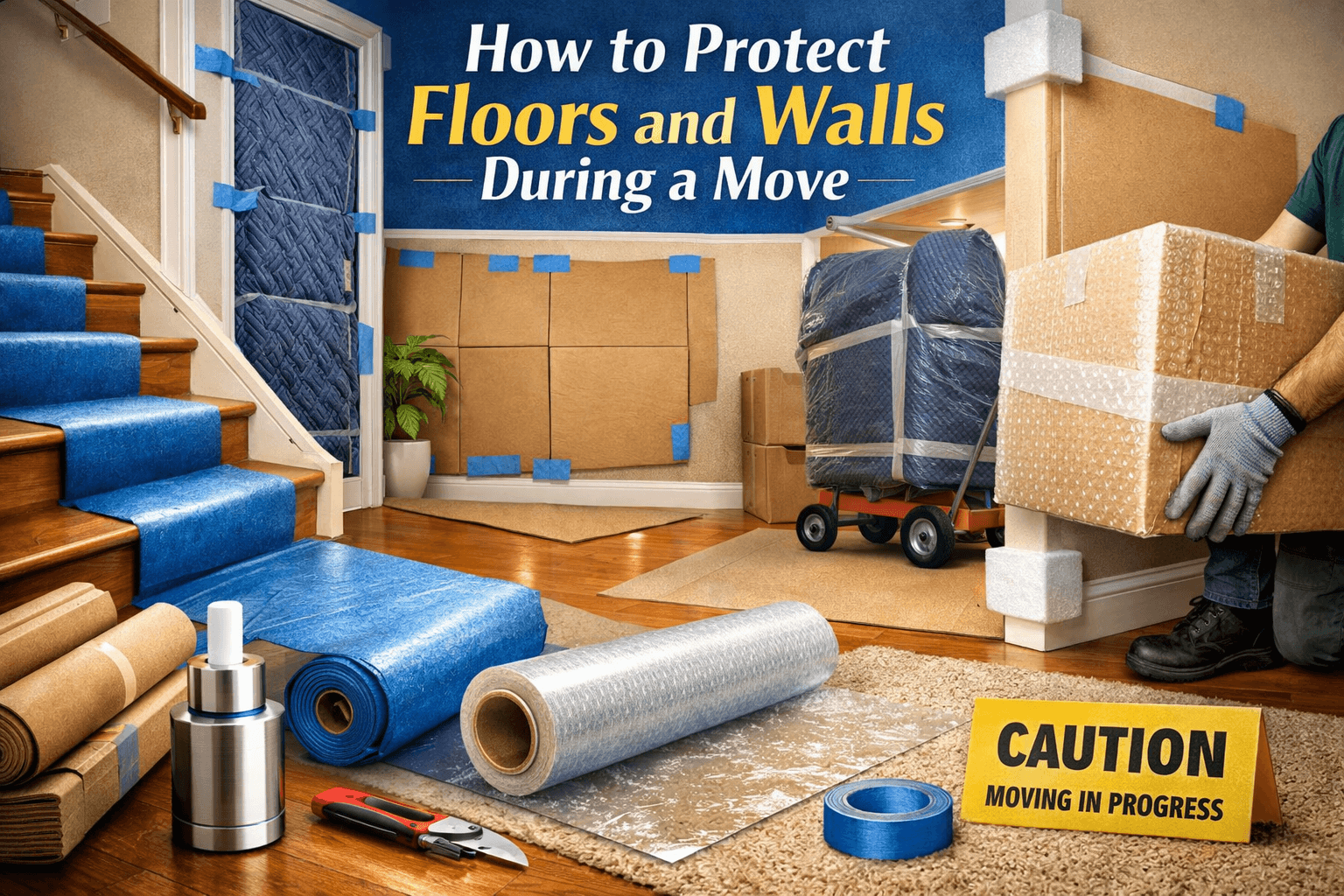
How to Protect Floors and Walls During a Move
Most of a security deposit is lost on move-out day. Not from broken windows or stained carpets — from a few scuff marks on the wall, a scratched stretch of hardwood, a dented doorframe corner. All of those are 100% preventable with $30 of materials and ten minutes of setup before the lifting begins.
Here is the system.
Hardwood floors
Hardwood is the easiest surface to scratch and the most expensive to repair. Two layers of protection work well together:
- Rosin paper or kraft paper — large rolls of brown paper laid across the entire floor route. Tape the edges down so it doesn’t shift.
- Moving blankets on top of the rosin paper at the highest-traffic spots (in front of the door, the turn at the hallway, the spot where boxes will be staged).
Avoid anything plastic on hardwood — plastic traps moisture and can stain the finish over the course of a day.
For especially fragile or older floors, ask the building about Masonite or plywood floor covers. Some NYC co-ops require Masonite over the entire route for any move — confirm with your building. Most full-service nyc moving companies bring rosin paper, blankets and corner guards as standard equipment and install them on arrival.
Tile and stone
Tile is less easy to scratch but easier to crack. The protection:
- Rosin paper or kraft paper as a base layer
- Cardboard sheets at the spots where heavy items will be staged
Grout is the vulnerable part — heavy point loads (a corner of a dresser dropped onto grout) can crack the grout joint. Keep heavy lifts over flat blanket-covered areas, never directly on tile.
Carpet
Carpet stains and tears. Two materials handle both:
- Carpet film (a self-adhesive plastic that sticks to the carpet pile and peels off cleanly afterward) — best for high-traffic protection
- Drop cloths or moving blankets at staging spots
Wear shoe covers if it has been raining. Wet shoes on light-colored carpet creates a trail that doesn’t always come out.
Wall protection — corners are the highest-risk
Walls get damaged at four predictable spots, in this order:
- Doorway corners (especially the corner of the frame opposite the hinges)
- Hallway corners where the route turns
- The wall directly opposite the elevator door
- The spot at the bottom of the stairs where everything bumps
For each of these:
- Apply corner protectors (Tri-fold cardboard or plastic L-channels held with painter’s tape) to the doorway and hallway corners.
- Add moving blankets taped to the wall at the elevator-opposite spot and at the bottom-of-stairs corner.
- Use painter’s tape, not duct or masking — duct tape pulls paint off the wall when removed.
Doorframes specifically
The wooden doorframe of an apartment door is the most-bumped part of the whole move. Move-out damage to doorframes is one of the most common deposit-deductions in NYC.
- Tape thin cardboard sheets to both sides of the doorframe.
- Pay particular attention to the strike plate side — that is where dressers and headboards tend to clip.
- Remove the door from its hinges entirely if a particularly wide piece is coming through (15 minutes of effort, saves a damaged frame).
Elevator pads
Most NYC buildings will install elevator pads (large quilted blankets that hang on the elevator walls) free for any move with a reserved time slot. Confirm with building management that pads will be installed before your move time.
If they are not, ask. The elevator is the single most-banged surface during a move and the pads are designed exactly for this.
Stairwells
For walk-ups:
- Stair-runner pads (rolled-out blanket strips that cover entire flights)
- Cardboard strips taped to handrails (handrails get banged constantly)
- Corner blankets at every landing
For buildings without an elevator, this is the most time-intensive prep — but also the most necessary. Damage to stairwell paint is exactly the kind of small claim that ends up on a deposit deduction.
Cleanup is part of the protection
Pull everything down within 24 hours of the move. Adhesives left up longer can pull paint when removed. Rosin paper, painter’s tape, blankets — all come down together at the end.