
Amazon Prime Pricing 2026: Every Plan, Cost & Membership Benefit Explained
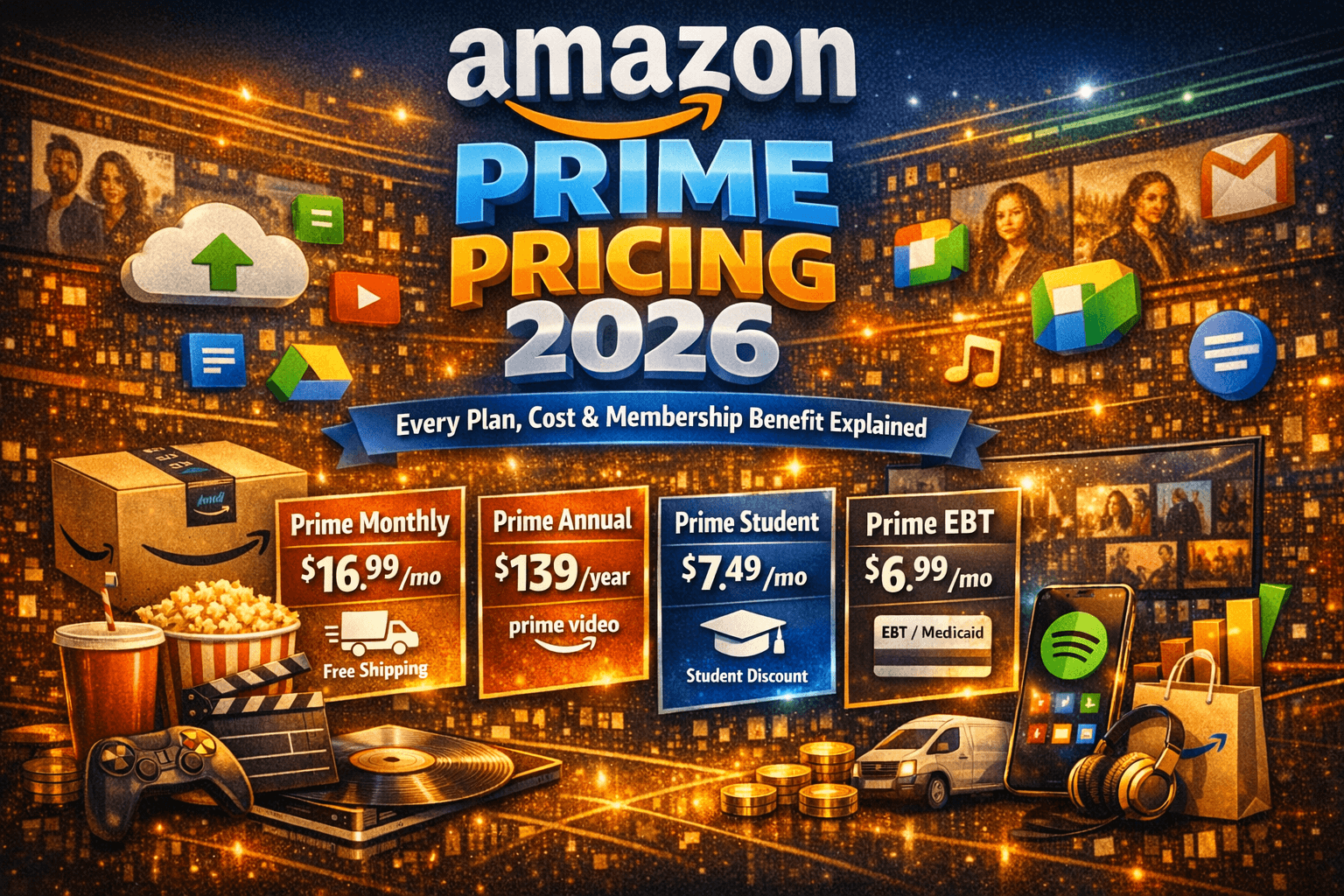
In 2026, Amazon Prime costs $14.99 per month or $139 per year for a standard membership, saving you around $41 annually on the yearly plan. Discounted plans include Prime Student at $7.49/month ($69/year) and Prime Access at $6.99/month for EBT or Medicaid recipients. A 30-day free trial is available for new members.
Amazon Prime Pricing 2026: Plans, Costs & Membership Benefits
If you’ve typed ‘how much is Amazon Prime’ into a search bar recently, you’re not alone. With subscription costs rising across nearly every platform in 2026, more consumers are scrutinizing every recurring charge on their credit card statements — and Amazon Prime, at $139 per year, is rarely invisible on that list.
Read More: Cutout Pro Review (2026) Features, Pros & Cons & Pricing
What makes the question more nuanced than it seems is that Amazon Prime is no longer a single, simple product. Between standard memberships, student discounts, government-assistance plans, the newly revamped Prime Video Ultra tier, and a growing list of add-ons, the real cost of Prime in 2026 depends heavily on who you are and how you use it.
This guide covers every plan, every price, and every benefit — with honest context about what the membership is actually worth for different types of households.
Amazon Prime Pricing at a Glance: Full Plan Breakdown for 2026
Amazon Prime’s core pricing structure has stayed stable since February 2022 — a year that saw a major jump from $119 to $139 annually. As of April 2026, the base annual and monthly rates remain unchanged, though Amazon introduced a significant new streaming tier in mid-April that changes the calculus for video-focused subscribers.
| Plan | Monthly Cost | Annual Cost | Best For | Free Trial |
| Standard Prime | $14.99/mo | $139/yr | Most households | 30 days |
| Prime Student / Young Adults (18-24) | $7.49/mo | $69/yr | College students | 6 months |
| Prime Access (EBT/Medicaid) | $6.99/mo | N/A (monthly only) | Low-income households | 30 days |
| Prime Video Only | ~$8.99/mo | N/A | Streaming-only users | 30 days |
| Prime Video Ultra (add-on) | +$4.99/mo | +$45.99/yr | 4K & ad-free viewers | Included w/ Prime trial |
| Prime Shipping Only | ~$13/mo | ~$99/yr | Shipping-only users | 30 days |
A few important notes before diving deeper into each plan:
- All prices are for U.S. memberships. International pricing varies significantly by country.
- Sales tax may apply depending on your state.
- Prime Video Ultra launched April 10, 2026, replacing the former $2.99 ad-free add-on with a more feature-rich $4.99 tier that includes 4K/UHD and Dolby Atmos.
Read More: What is instalooker?
Standard Amazon Prime: $14.99/Month or $139/Year
The standard membership remains the flagship choice for most U.S. households, and it’s the one most people mean when they say ‘Amazon Prime.’ At $14.99 per month or $139 per year, the annual plan works out to roughly $11.58 per month — a savings of about $41 compared to paying month-to-month over the same period.
That $41 gap is not trivial. It’s the equivalent of nearly three months of a Spotify subscription or several months of Apple iCloud storage. If you know you’ll use Prime for 10 or more months in a year, the annual plan is mathematically the more rational choice. The monthly option makes more sense only in specific scenarios — like signing up for Prime Day in July and planning to cancel right after, or using it for a concentrated holiday shopping stretch in December.
Read More: What is zoechip alternative
The 30-day free trial for new members (or those who haven’t held a membership in the past 12 months) gives you full access to every standard benefit before committing. This is particularly useful if you’re on the fence about whether you’ll actually use the streaming or music features, or if you want to test delivery speeds in your area before paying.
Who Should Choose the Standard Plan
- Frequent Amazon shoppers who place two or more orders per month
- Households that stream video content regularly and don’t already pay for a service like Netflix or Disney+
- Families who want to share benefits across multiple household members
- Anyone who values time savings from fast, free delivery over small cost differences
Amazon Prime Student & Prime for Young Adults: $7.49/Month or $69/Year
For college students and young adults aged 18 to 24, the Prime Student plan — also called Prime for Young Adults — is one of the best-value subscriptions available in 2026. After a full six-month free trial, members pay just $7.49 per month or $69 per year — approximately 50% of the standard rate — for nearly the same suite of benefits.
To qualify, you need to be enrolled at an accredited college or university (verifiable with a .edu email address or enrollment documentation), or simply be between 18 and 24 years old and able to prove it with a government-issued ID. Amazon caps the discounted period at roughly four years total, after which the account rolls over to standard Prime pricing if you don’t cancel.
The student plan includes free two-day shipping, Prime Video, Amazon Music Prime, Prime Reading, Prime Gaming, and Grubhub+. The only major differentiator from the standard plan is the inability to share shipping benefits with other adults via Amazon Household — a minor trade-off given the significant cost difference.
Read More: ss youtube video downloader
Annual re-verification is required. Amazon sends an email to confirm continued eligibility. If you miss the window, your account typically auto-converts to full price, though there’s often a short grace period of around 60 days to submit proof and receive a credit.
Steps to Sign Up for Prime Student
- Visit amazon.com/prime/student from your university email address
- Create or sign in to your Amazon account
- Verify eligibility via your .edu email or upload enrollment documentation
- Start your 6-month free trial — no charge until the trial ends
- After the trial, the discounted rate of $7.49/month or $69/year begins automatically
Prime Access (EBT / Medicaid): $6.99/Month
Prime Access is Amazon’s most affordable plan, designed specifically for households receiving government assistance. At $6.99 per month, it delivers the full benefits of a standard Prime membership — including all shipping perks, Prime Video, Amazon Music, and Prime Gaming — at less than half the standard monthly price.
Qualifying for Prime Access is straightforward. You must be enrolled in one of Amazon’s recognized government assistance programs, or your household income must fall at or below 200% of the federal poverty guideline. Qualifying programs include SNAP (Supplemental Nutrition Assistance Program), Medicaid, SSI (Supplemental Security Income), Temporary Assistance for Needy Families (TANF), Women Infants and Children (WIC), LIHEAP, and several others.
Verification is secure and handled through a third-party partner. For program-based eligibility, you’ll upload a photo of your EBT card or benefit letter. For income-based qualification, you’ll submit a pay stub, benefits statement, or IRS transcript. Amazon’s customer service notes that documentation images are deleted after the verification process for privacy.
Read More: What is instanavigation?
Like the student plan, Prime Access requires annual re-verification to confirm continued eligibility. It’s available for up to four years before members would need to transition to standard pricing or re-qualify. Importantly, Prime Access members can share certain benefits — including delivery and streaming — with other adults in their Amazon Household.
Prime Video Only & Prime Video Ultra: The New Streaming Tiers
One of the most significant pricing changes to hit the Prime ecosystem in 2026 was the April 10th launch of Prime Video Ultra, which replaced the former $2.99 per month ad-free add-on. The new tier costs $4.99 per month (or $45.99 per year, a newly introduced annual option), and it comes loaded with meaningful upgrades for home theater enthusiasts.
Prime Video Ultra includes: complete ad removal (with the caveat that live sports and select ad-supported events may still carry ads), 4K/UHD streaming quality, Dolby Vision and Dolby Atmos audio, up to 100 offline downloads (up from the previous limit of 25), and support for up to 5 simultaneous streams (up from 3).
Standard Prime Video — still included with any Prime membership at no extra cost — continues to offer access to the full Prime Video library, original series, and live sports content, but now defaults to 1080p resolution. The shift of 4K streaming to the Ultra tier has been a point of friction for many longtime members, particularly those who invested in 4K television setups expecting the included tier to support them.
For users who want Prime Video but not the full Prime membership, Amazon offers a standalone Prime Video subscription at approximately $8.99 per month. This stripped-down option provides no shipping, music, or gaming benefits, but it’s a reasonable choice for international users or households that already have fast shipping covered through another service.
Is Prime Video Ultra Worth the Extra $4.99/Month?
The answer depends almost entirely on your viewing setup and household size. If you own a 4K television and regularly watch content with family members in different rooms, the Ultra tier effectively removes two major pain points simultaneously: ads and resolution caps. Paying $60 more per year for a household of three or four streamers can easily justify itself. However, if you watch on a laptop or a 1080p TV alone, the standard included tier likely serves your needs without the extra spend.
Read More: Instagram story viewer iganony
What Do You Actually Get? Amazon Prime Benefits in 2026
The annual price of Amazon Prime is $139. The estimated annual value of those benefits, when you price each one individually, has been calculated by financial analysts at over $1,400 — and while most households will never use every single perk, even using half of them delivers substantial returns relative to the cost.
| Benefit Category | What You Get | Est. Standalone Value/yr |
| Free Shipping | 2-day, 1-day, same-day on millions of items | $120-$200+ |
| Prime Video | Movies, series, originals, live sports (NFL TNF) | $100+ (like Netflix) |
| Amazon Music Prime | Shuffle play on 100M songs, ad-free podcasts | $60-$80 |
| Prime Gaming | Free monthly PC games + Twitch sub | $60-$100+ |
| Amazon Photos | Unlimited full-res photo storage | $20-$36 |
| Prime Reading | 1,000s of eBooks, magazines, comics | $60-$120 |
| Grubhub+ | Free food delivery (normally $9.99/mo) | $119/yr |
| Whole Foods / Fresh | Exclusive in-store & online discounts | $50-$150+ |
| Pharmacy Discounts | Savings at 60,000+ pharmacies | $Varies |
| Gas Savings | 10¢/gal at 7,500+ bp, Amoco, ampm stations | $60-$100 |
| TOTAL EST. VALUE | $650–$1,000+ per year |
Shipping Benefits: Still the Core of the Offer
Free two-day shipping on millions of items remains the most-used feature and the one that drives most renewal decisions. In 2026, Prime’s shipping network also covers free one-day delivery on more than 15 million items, same-day delivery in eligible zip codes on over 3 million items, and ultrafast grocery delivery through Amazon Fresh and Whole Foods Market.
The math is simple: the average non-Prime shipping fee on Amazon ranges from $5 to $10 per order. A household placing just two Prime-qualifying orders per month avoids $120 to $240 in shipping costs annually — covering the membership fee entirely on shipping alone, before any other benefit is counted.
Entertainment: Prime Video, Music, Gaming & Reading
Prime Video has matured into a top-tier streaming platform. Original series like Fallout, Reacher, The Boys, and The Lord of the Rings: The Rings of Power regularly compete for cultural conversation alongside Netflix originals. On the sports side, Thursday Night Football on Prime (NFL), NBA games, WNBA, NASCAR, NWSL, and The Masters give sports fans substantial live content without a separate cable subscription.
Read More: FiveM Review 2025: The GTA V Multiplayer Mod That Changes Everything
Amazon Music Prime provides shuffle-mode access to over 100 million songs ad-free, making it a solid background music solution. Full on-demand control requires an upgrade to Amazon Music Unlimited at $10.99 per month for Prime members — a separate but Prime-discounted subscription.
Prime Gaming (formerly Twitch Prime) delivers free PC games that you keep permanently, in-game loot for popular titles including League of Legends, Valorant, and Apex Legends, and one free Twitch channel subscription per month. For active gamers, the monthly free games alone often exceed $10 in value.
Prime Reading gives access to a rotating library of thousands of eBooks, comics, and magazines at no additional cost through the Kindle app or Kindle device. While not as expansive as Kindle Unlimited, it offers consistent value for casual readers.
Lifestyle and Grocery Perks
Whole Foods Market discounts for Prime members include weekly exclusive deals and additional savings on specific product categories. Amazon Fresh similarly offers Prime-exclusive deals and free delivery on grocery orders meeting the minimum threshold. For households that regularly shop for groceries online or at Whole Foods, these discounts can add up to $100 to $200 in annual savings depending on purchasing habits.
The free Grubhub+ membership (normally $9.99 per month) is an often-overlooked gem. At its retail value of roughly $119 per year, it alone offsets a significant portion of the annual Prime fee for anyone who orders food delivery even occasionally. The 10 cents per gallon fuel discount at participating bp, Amoco, and ampm stations — available at over 7,500 locations — adds small but consistent savings for drivers.
A Practical Look: Breaking Down Annual Value by Household Type
To make the pricing decision concrete, consider how the math works out for three different common households.
The Solo Apartment Dweller
A single person in their late 20s living in a city who orders from Amazon 3-4 times per month, watches Prime Video a few nights per week, and occasionally orders food through Grubhub might realistically save $180-$250 in shipping costs, get the equivalent of a mid-tier streaming service included, and avoid paying $9.99/month for Grubhub+. Total estimated annual value captured: $400 to $500. Cost of membership: $139. Net positive: significant.
The Family of Four
A household with two adults and two children who order from Amazon weekly, watch Prime Video as a primary streaming platform (including Thursday Night Football), use Amazon Photos for family photo backup, and shop at Whole Foods regularly will extract substantially more value. Shipping savings alone can reach $300 to $500 per year. Add Prime Video (replacing what might otherwise be a separate Netflix subscription), unlimited photo storage, and Whole Foods discounts, and the value calculation easily reaches $700 or more annually for a $139 investment.
Read More: What is Pixwox instagram?
The Budget-Conscious Student
A college student using the Prime Student plan at $69 per year gains free two-day shipping on textbooks and essentials, access to Prime Video for entertainment during study breaks, Prime Reading for supplemental course materials, and Prime Gaming for downtime. Even if shipping savings only amount to $80 per year, the membership pays for itself before accounting for any streaming or gaming value. For students living on tight budgets, it is genuinely one of the best value subscriptions available.
Amazon Prime vs. Competitors: 2026 Comparison
Amazon Prime no longer exists in a vacuum. Walmart+, Target Circle 360, and bundled services from Apple are all actively competing for the same household budget. Here’s how they stack up in 2026:
| Service | Annual Cost | Shipping Perks | Streaming | Extras |
| Amazon Prime | $139/yr | Free 1-2 day on millions | Prime Video (huge library) | Music, Gaming, Photos, Grocery |
| Walmart+ | ~$98/yr | Free delivery (store orders) | Paramount+ | Fuel discounts, Scan & Go |
| Target Circle 360 | ~$99/yr | Free same-day on $35+ | None included | 5% off purchases |
| Netflix (Standard) | $166/yr | None | Netflix only | No shopping perks |
| Apple One (Individual) | $239/yr | None | Apple TV+ | Music, Arcade, Storage |
The key differentiator Amazon maintains is breadth. No single competitor matches its combination of logistics infrastructure, streaming content, music, cloud storage, gaming perks, grocery discounts, and pharmacy savings under one subscription umbrella. Walmart+ comes closest on the shopping side, and at $98 per year it’s meaningfully cheaper, but the absence of a robust streaming platform or music service leaves it feeling like a narrower product.
The honest conclusion: if your life revolves primarily around Amazon shopping and streaming, Prime is almost certainly worth it. If you primarily shop in person and already pay for Netflix or Disney+, the case weakens and it becomes a question of whether shipping savings and the Grubhub+ benefit tip the balance.
Read More: What is Picnob?
How to Reduce Your Amazon Prime Cost: Legitimate Ways to Save
Even at $139, there are several strategies to reduce what you effectively pay for a Prime membership.
1. Always Pay Annually
The simplest optimization: paying annually instead of monthly saves roughly $41 per year — the cost of nearly three months of membership. There’s no benefit to the monthly plan unless you’re planning a short-term membership and intend to cancel before 10 months are up.
2. Verify Student or Young Adult Eligibility
If you’re 18 to 24 or enrolled in any accredited institution, Prime Student cuts your annual cost to $69 and offers a 6-month free trial before the first charge. Many eligible people skip this out of convenience and end up paying full price for years unnecessarily.
3. Check Prime Access Eligibility
If your household participates in SNAP, Medicaid, SSI, TANF, WIC, or other qualifying assistance programs — or if your household income falls at or below 200% of the federal poverty guideline — you may qualify for Prime Access at $6.99 per month, the lowest available Prime price with full benefits included.
4. Share with Amazon Household
A standard Prime membership allows you to share shipping and streaming benefits with one other adult and up to four children in your Amazon Household. Splitting the $139 annual fee with a partner or household member brings the effective cost per person to around $70 — comparable to the student rate, and an excellent deal for two people.
5. Take Advantage of the Free Trial Before Major Shopping Events
New members who haven’t had a membership in the past 12 months can start a 30-day free trial. Strategically timed around Prime Day (typically mid-July) or Prime Big Deal Days (October), this trial can deliver significant savings on electronics, household goods, and more — even if you cancel afterward.
6. Watch for Gift Card and Credit Card Rewards
Certain Amazon credit cards offer annual Prime membership credits or accelerated rewards that effectively offset the cost. Amazon’s own co-branded Visa offers 5% back on Amazon purchases, and for heavy Amazon shoppers, those rewards can easily cover the entire membership fee within a year.
Read More: What is Picnob?
Frequently Asked Questions: Amazon Prime Pricing 2026
How much is Amazon Prime per month in 2026?
The standard Amazon Prime monthly plan costs $14.99 per month. Discounted plans include Prime Student at $7.49 per month and Prime Access (for EBT/Medicaid recipients) at $6.99 per month. If you pay annually, the effective monthly cost drops to approximately $11.58.
What is the Amazon Prime annual plan cost in 2026?
The standard annual plan costs $139 per year. The Prime Student or Prime for Young Adults annual plan is $69 per year. Prime Access is only available as a monthly plan at $6.99. The annual plan saves you approximately $41 over the monthly equivalent.
Is there an Amazon Prime family plan?
Amazon does not offer a separately priced ‘family plan’ in 2026. Instead, standard Prime members can use Amazon Household to share shipping benefits with one other adult and streaming benefits with one adult and up to four children — all under a single $139 annual membership. This effectively makes a standard Prime membership a family plan at no extra cost.
What is Amazon Prime Video Ultra and how much does it cost?
Prime Video Ultra launched on April 10, 2026. It is an add-on to any existing Prime membership costing $4.99 per month or $45.99 per year. It replaces the old $2.99 ad-free tier and adds 4K/UHD streaming, Dolby Atmos audio, up to 100 offline downloads, and support for 5 simultaneous streams. Note that live sports and select event content may still carry ads even with the Ultra tier active.
Read More: QuillBot Review (2026) – Features, Pros & Cons & Pricing
Can I get Amazon Prime for free?
Amazon does not offer a permanent free tier of Prime. However, new members (or those who haven’t been members in the past 12 months) can start a 30-day free trial with full access to all standard benefits. College students and eligible young adults can start with a 6-month free trial before transitioning to the discounted $7.49/month rate.
Does Amazon Prime price vary by country?
Yes, significantly. Amazon Prime pricing is set independently for each country where the service operates, based on local delivery infrastructure, content licensing costs, and market conditions. Annual fees in countries like India and Poland are considerably lower than the U.S. rate, while prices in some European markets are comparable or slightly higher when converted to USD. Benefits and content libraries also vary by country.
Is Amazon Prime worth it in 2026?
For most frequent Amazon shoppers in the U.S., yes. The break-even point is typically 2 to 3 Amazon orders per month in shipping savings alone. When you add the included value of Prime Video (comparable to a mid-tier streaming service), Grubhub+ (worth $119/year), Amazon Photos storage, and Prime Gaming, the total estimated value of benefits captured by average members exceeds the $139 annual cost by several times over. That said, if you rarely shop on Amazon and already pay for competing streaming and music services, the value case is much weaker.
Will Amazon Prime raise prices again in 2026 or 2027?
As of April 2026, Amazon has not announced a price increase for the core Prime membership. However, industry analysts, including those at J.P. Morgan, have flagged the possibility of a rise to approximately $159 annually as early as late 2026 or early 2027. Amazon has historically raised Prime prices every three to four years to offset logistics investment and service expansion. The last increase occurred in February 2022, from $119 to $139.
How do I cancel Amazon Prime?
You can cancel your Amazon Prime membership at any time. On the website, hover over ‘Account & Lists’ and select ‘Prime Membership,’ then click ‘End Membership.’ On the mobile app, navigate to ‘Your Account,’ tap ‘Manage Prime Membership,’ and select ‘End Membership.’ Paid members who have not used their benefits during the current billing period may be eligible for a full refund of that period’s fee.
What is Amazon Prime Access and who qualifies?
Prime Access is Amazon’s discounted plan for households receiving qualifying government assistance or meeting income eligibility thresholds. Qualifying programs include SNAP, Medicaid, SSI, TANF, WIC, LIHEAP, and others. Households earning at or below 200% of the federal poverty guideline can also qualify by submitting income documentation. The price is $6.99 per month with no annual plan option, and re-verification is required every 12 months.
Read More: Homeworkify Review 2026: Is This AI Homework Helper Worth It?
Can I share my Amazon Prime membership with someone in another household?
Amazon Household sharing for shipping benefits is limited to members of the same household. Shipping benefits cannot be shared with someone at a different address. Streaming benefits (Prime Video, Amazon Music, Prime Reading) can be shared with household members as defined by Amazon’s terms. This represents a policy tightening from earlier years when some informal sharing arrangements were more loosely enforced.
Final Verdict: Which Amazon Prime Plan Is Right for You in 2026?
Amazon Prime in 2026 is more layered than it has ever been. The core offer — $139 per year for fast shipping, Prime Video, music, gaming, photo storage, and a growing suite of lifestyle perks — remains one of the best value subscriptions in the market for households that use it regularly.
The student and Prime Access plans make the service genuinely accessible to people at almost every income level, and the new Prime Video Ultra tier, while an added cost, addresses a legitimate gap for households with 4K televisions and multiple concurrent viewers.
If you are on the fence, the best strategy is always to use the free trial first, track how many Amazon orders you place and how much you use Prime Video during that period, and then make the decision with real usage data rather than projections. The math tends to make the answer obvious.
Read More: Temu App Review 2026 – Inside the Most Trending Shopping App: Worth the Hype?