
From Clicks to Conversions: Shopify Quiz App Ideas That Work
Most Shopify store owners know the pain: solid traffic numbers, a decent product lineup, but a conversion rate that stubbornly refuses to budge past 2–3%. Visitors land, scroll, hesitate – and leave. One format has quietly become one of the most effective ways to break through that ceiling: the product recommendation quiz. Done right, a Shopify quiz app transforms passive browsers into confident buyers by giving them exactly what they came for – help.
Why Product Quizzes Outperform Static Product Pages
A standard product grid puts all the decision-making on the customer. They compare features, second-guess sizes, and eventually hit decision fatigue. A quiz reverses that entirely – acting like an in-store sales associate that asks the right questions and responds with a curated shortlist.
According to Interact’s 2026 Quiz Conversion Rate Report, the overall conversion rate when people start a quiz sits at 40.1%. For product quizzes specifically, that figure reaches 37.6% at the results page –jumping to 55.5% for those who complete it.
The Psychology Behind Why Quizzes Convert
When shoppers answer questions about their needs or goals, they invest mentally in the outcome. By the time the results page appears, they’re not looking at a product – they’re looking at their recommendation. That sense of ownership reduces hesitation and shortens the path to purchase.
Five Shopify Quiz App Ideas Worth Building
The ideas below have proven traction across different Shopify verticals – each built around a specific conversion goal.
1. The “Find Your Best Match” Product Finder
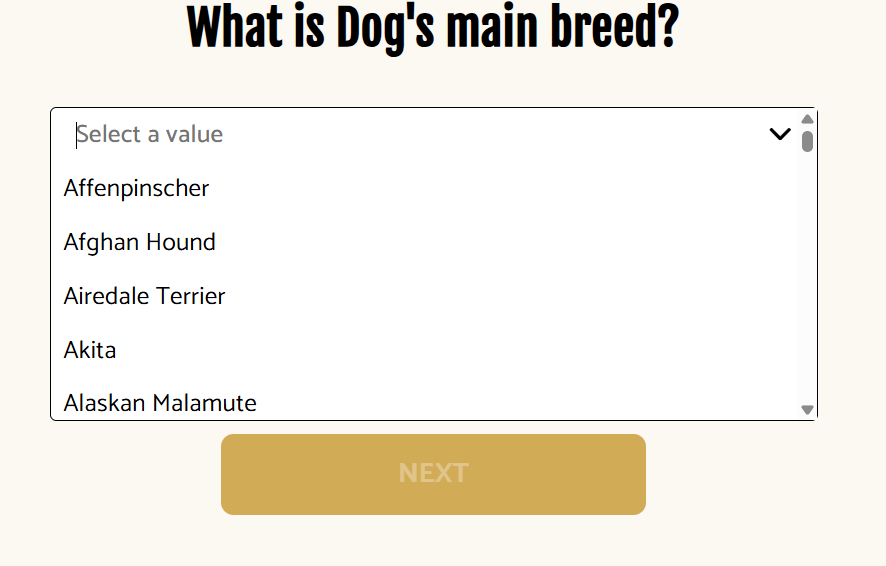
The visitor answers 3–6 questions about their situation or preferences, and the quiz maps those answers to specific products or collections. Team Dog, a premium dog food and supplement brand, uses a meal plan finder quiz on their homepage to guide pet owners through questions about breed, age, activity level, and health goals – removing the need to decode ingredient labels or compare specs. The result page recommends the right food and supplements for that specific dog, making it easy to add to the cart with confidence. Team Dog has earned 4,800+ five-star reviews, in part because customers arrive at the right product the first time.
2. The Skin Type or Hair Type Diagnostic Quiz
Beauty and personal care are among the highest-converting quiz verticals. A diagnostic quiz – one that feels less like a survey and more like a consultation – works especially well here. Key questions typically include:
- Skin type (oily, dry, combination, sensitive)
- Primary concerns (acne, aging, hyperpigmentation, redness)
- Current routine and products used
- Lifestyle factors like water intake or sun exposure
The quiz then recommends a routine, not just a single product – which naturally increases average order value.
3. The Gift Guide Quiz
Gift shoppers have a budget, a deadline, and clear purchase intent. What they lack is product knowledge. This format asks about the recipient, the occasion, and the budget, then delivers a curated shortlist. It works particularly well for large, varied catalogs where choosing the “right” gift feels overwhelming.
4. The Subscription or Bundle Matcher
For stores with subscriptions or tiered product lines, a quiz that matches customers to the right plan eliminates a major friction point. This format is especially effective for:
- Supplement and wellness brands
- Coffee or tea subscription services
- Pet food and pet care products
- Software and digital tools sold through Shopify
5. The Lifestyle Fit Quiz
Rather than leading with product features, this format starts with the customer’s lifestyle and values, then connects those to the right product. It’s softer in tone, more engaging, and works well for apparel, outdoor gear, and lifestyle brands.
What Makes a Shopify Quiz Actually Convert
A quiz that looks good but lacks strategic design will still underperform. Here’s what separates high-converting quizzes from ones that collect dust:
| Element | What to Get Right |
| Question count | 4–7 questions – enough to personalize, not enough to lose interest |
| Branching logic | Skip irrelevant questions based on previous answers |
| Result page | One clear recommendation with a direct “Add to Cart” option |
| Email capture | Optional gate before results – not mandatory |
| Mobile design | Touch-friendly, fast-loading, full-screen layout |
| Analytics | Track completion rates, drop-off points, and conversion per result |
Making email capture mandatory kills completion rates. Framing it as optional (“Get your results emailed too”) preserves goodwill while still building a list. Post-quiz emails achieve 60–80% open rates and 10–20% click-through rates – far above standard ecommerce benchmarks, because the subscriber asked for that recommendation and already trusts it.
Epsilon’s research confirms the broader dynamic: 80% of consumers are more likely to purchase when brands offer personalized experiences, and personalized interactions increase the likelihood of repeat purchase by 44%.
Using Quiz Data Beyond the Results Page
A quiz app Shopify merchants often overlook isn’t just a conversion tool – it’s a zero-party data engine. Every answer submitted is a declared preference, far more reliable than inferred browsing behavior. That data can feed:
- Segmented email flows – trigger personalized Klaviyo or Omnisend sequences based on quiz answers
- Retargeting audiences – build look-alike audiences on Meta from quiz completers with high purchase intent
- Inventory decisions – spot patterns in what customers need vs. what the store currently stocks
- Product development – identify gaps where quiz results can’t find a perfect match
According to McKinsey’s Next in Personalization report, companies that grow faster drive 40% more revenue from personalization than slower-growing counterparts – and 71% of consumers now expect brands to deliver personalized interactions. A quiz is one of the most direct ways to deliver on that at scale.
Choosing the Right Quiz App for Your Shopify Store
A quiz app that Shopify merchants select should match both technical needs and budget. When evaluating options, check for:
- Conditional (branching) logic – without it, every customer gets the same path regardless of their answers
- Native Shopify product mapping – results should pull directly from the store catalog
- Analytics dashboard – completion rates, drop-off questions, and revenue attribution per result
- Email tool integrations – Klaviyo, Omnisend, and similar platforms should connect out of the box
- Customizable design – fonts, colors, and layouts should match the brand without writing CSS
Visual Quiz Builder is worth a look here. Customers report up to 900% more conversions, with a 4.9 rating on the Shopify App Store. The platform supports branching logic, AI-assisted quiz creation, and direct email marketing integrations. Its AI quiz maker builds question flows from the product catalog and auto-tags products to results – useful for stores that need to move fast.
Building Your First Quiz: Where to Start
The simplest version of a quiz – three to five targeted questions with clear product mapping – outperforms no quiz every time. Start there, measure completion and conversion, and iterate.
The highest-performing first quizzes tend to be either a product finder (for stores with 20+ SKUs) or a diagnostic quiz (for products where “fit” matters – skincare, supplements, pet food, apparel sizing). Both shorten the path to purchase and give shoppers the confidence to act.
Every visitor who lands on a Shopify store has some level of intent. A well-designed quiz meets that intent halfway. If adding one is on the roadmap, Visual Quiz Builder is a practical place to start.
Frequently Asked Questions
Q1: Is there a way to create a quiz that matches potential customers with a product on my Shopify store?
Yes – several dedicated apps make this possible without coding. A product recommendation quiz uses branching logic to route customers through relevant questions, then maps answers to specific products or collections. Tools like Visual Quiz Builder let store owners build and publish these quizzes directly within Shopify.
Q2: Does Shopify have a built-in questionnaire or quiz feature?
Shopify does not include a native quiz builder. Store owners add this via third-party apps from the Shopify App Store, ranging from basic survey tools to advanced builders with conditional logic, email integrations, and analytics.
Q3: What is the best quiz app for a Shopify store with a large product catalog?
For large catalogs, prioritize automated product tagging – the ability to link quiz answers to products or collections without manual mapping. Apps with AI-assisted tagging and “most likely match” logic handle scale significantly better than simpler tools.
Q4: Can a Shopify product quiz help grow an email list?
Yes. Most quiz apps include an optional email capture step before or after showing results. Because quiz takers have already invested in the experience, opt-in rates tend to run higher than standard pop-ups – and the resulting segments are precisely targeted.
Q5: How many questions should a Shopify product recommendation quiz have?
High-converting quizzes typically fall in the 4–7 question range. Fewer than four may not gather enough for a meaningful result; more than seven risks drop-offs. Only include questions that actually change what gets recommended.